
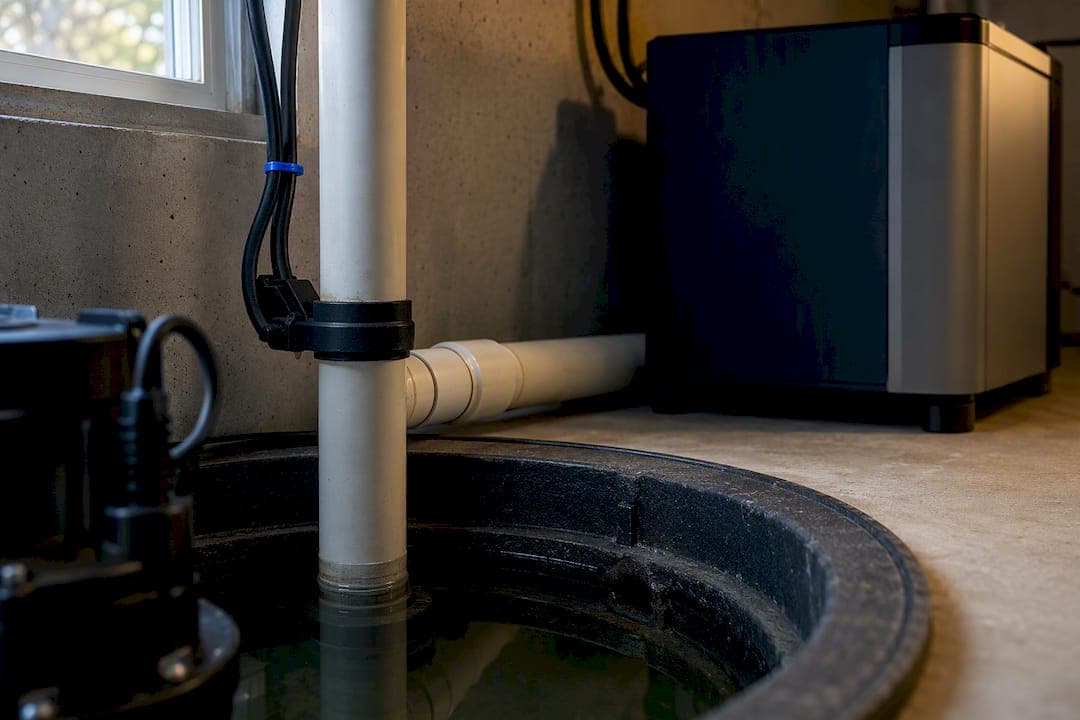
For most homes, the most reliable unattended protection is a dedicated battery backup pump or a UPS-capable power station sized for the pump's startup surge, with automatic transfer built in. Two things separate a system that works from one that fails at 2 a.m. during a storm: enough surge capacity to actually start the motor, and enough battery runtime to outlast the outage. Skip either one, and the rest of the setup doesn't matter.
TL;DR:
- A backup sump pump system must have sufficient surge capacity to start the motor and enough battery runtime to handle prolonged outages; skipping either risks failure.
- Proper sizing involves calculating surge wattage based on locked-rotor amperage and ensuring the battery has enough watt hours, adjusted for the pump’s duty cycle, to provide hours of operation.
- For typical homes, a dedicated battery backup pump is usually sufficient unless outages are long, frequent, or involve multiple critical circuits, which may require a hybrid or engineered system.
- Monthly testing and regular battery maintenance, including voltage checks and timely replacement, are essential to ensure backup reliability during emergencies.
- DIY sizing suits simple setups, but complex situations like well water or estate-scale properties require professional evaluation and custom-designed systems.
Table of Contents
- What Types of Sump Pump Backup Power Exist?
- How Do Battery Backup Systems Work for Sump Pumps?
- How Do I Choose the Right Backup System?
- How Do I Install, Test, and Maintain a Backup System?
- When Is a Battery Backup Enough, and When Do You Need More?
- Our Take: Match the System to the Outage, Not the Marketing
- How Prime Microgrid Approaches Sump Pump Backup Power
- Sources
- FAQ
What Types of Sump Pump Backup Power Exist?
Homeowners typically choose from five approaches, and all trades cost, effort, and runtime differently.
- Dedicated battery backup pumps: A second pump sits in the same pit, wired to a 12V deep-cycle battery, and switches on automatically the moment the primary pump loses power or can't keep up. Consumer Reports identifies these as the most common backup type, typically running on 75 to 120 Ah batteries that provide several hours of intermittent pumping.
- Portable power stations with UPS mode: These plug in ahead of the primary pump and switch to battery power instantly when the grid drops, similar to a computer UPS. They cost more but can also run a sump alarm, a phone charger, or a few lights during the outage.
- Inverter generators and standby generators: Portable inverter generators need someone home to start them and refuel them, while whole-house standby units start automatically but require a transfer switch, scheduled maintenance, and a fuel source.
- Water-powered backups: These use municipal water pressure to create suction and never run out of "charge," but they don't work on well water systems and use a meaningful amount of household water during operation.
- Combo units: Some manufacturers bundle a primary AC pump and a battery-backup pump in one housing, which makes sense when you're replacing an aging primary pump anyway.
How Do Battery Backup Systems Work for Sump Pumps?
Sizing a battery backup comes down to two numbers: how much power the pump needs to start, and how much energy the battery can deliver. Get either wrong and the system either fails to start the motor or runs out of power halfway through a storm.
Surge first. Every pump motor draws far more current at startup than while running, an effect called locked-rotor amperage (LRA). When a manufacturer doesn't publish LRA, sizing guidance from GeneratorChecker recommends multiplying running watts by 3 and adding a 1.15 safety buffer on top. A pump drawing 800 running watts could need a surge rating above 2,760 watts to start reliably.

Read the nameplate. Multiply the pump's rated amps by 120 volts to get running watts. A 1/3 HP pump often draws around 6 to 7 amps (roughly 720 to 840 watts running), while a 1/2 HP pump can draw 9 to 10 amps (about 1,080 to 1,200 watts running). Apply the 3× rule and the 1.15 buffer to each, and you'll see why a 1,500-watt inverter that seemed generous on paper can still fail to start a larger pump.
Then do the battery math.
- Convert amp hours to watt hours: Ah × battery voltage. A 100 Ah, 12V battery holds 1,200 Wh on paper.
- Apply a debate, since batteries never deliver their full rated capacity in practice. GeneratorChecker's guidance applies roughly 0.70, leaving about 840 usable Wh from that same battery.
- Divide usable Wh by average running watts, adjusted for duty cycle (how much of each minute the pump actually runs).
Pro Tip: A pump that runs 20 seconds out of every two minutes has a duty cycle near 17%. Multiply your pump's running watts by that duty cycle before dividing into usable watt hours. That single adjustment is often the difference between a battery estimated to last two hours and one that actually lasts eight.
A 1/3 HP pump on an 840 Wh usable battery, running at a modest duty cycle, can often run intermittently for many hours. Doubling the battery size roughly doubles that runtime, all else equal. Soft-start devices, which smooth out motor startup, typically cut inrush current substantially and can let a smaller inverter handle a pump that would otherwise need a much bigger surge rating.
How Do I Choose the Right Backup System?
Before comparing products, walk through what your pit, pump, and outage history actually demand.
Checklist:
- Pump specs: horsepower, running amps, and LRA if published
- Pit dimensions and vertical lift (how far water has to travel to the discharge line)
- Realistic outage duration for your area, not just a worst-case guess
- Whether you need fully automatic switchover or can tolerate manual startup
- Available indoor space and ventilation for batteries or a generator
- Budget for both the initial system and ongoing battery replacement
Decision flow:
- If you only need the pump protected during typical outages with nobody home, a dedicated battery backup pump sized to the surge and runtime math above is usually sufficient.
- If you want to power other devices too, or outages regularly run long, a UPS-capable power station or a properly sized generator makes more sense.
- If outages are frequent, extended, or you're protecting an estate-scale property with multiple critical circuits, an engineered battery or hybrid system is worth evaluating instead of stacking consumer devices.
Watch for these red flags: well water (rules out water-powered backups entirely), a cramped pit that can't fit a second pump, a high-surge pump that outgrows a modest inverter, or outages that regularly stretch past a day. Any project involving a transfer switch, hardwired panel connection, or local permit should go to a licensed electrician or plumber, not a weekend DIY job.
How Do I Install, Test, and Maintain a Backup System?
Getting the hardware right matters less than whether the system actually works when the power goes out unannounced.
Installation basics. Mount battery chargers 3 to 4 feet above the basement floor to reduce flood exposure, per NDSU Extension guidance, and keep batteries in a sealed box. Never backfeed a generator into household wiring without a transfer switch, and confirm any power station's pass-through mode actually switches automatically before you rely on it.
Monthly test procedure:
- Unplug or shut off the primary pump
- Let the pit fill naturally, or manually raise the float
- Confirm the backup pump starts within a few seconds
- Check that voltage holds steady under load rather than sagging
Maintenance schedule. Check battery voltage under load every six months, and replace any battery reading below 11.6 volts under load, based on extension research. AGM and gel batteries tolerate basement conditions better than flooded lead-acid, which needs more frequent watering and cleaning. Replacement intervals vary by chemistry, with sealed lead-acid and AGM typically lasting 3 to 5 years and LiFePO4 batteries often lasting considerably longer under the same duty cycle.
In a genuine emergency, a car battery or a borrowed inverter generator can buy time, but neither is a real substitute: a car battery isn't built for repeated deep discharge, and a portable generator needs someone present to start and refuel it. Homeowners tackling discharge line work alongside a backup install may also find value in seasonal plumbing commissioning guidance to make sure the whole water path is ready before storm season.
When Is a Battery Backup Enough, and When Do You Need More?
The engineering priorities for sump pump protection are simple to state and easy to get wrong in practice: size for surge, not average draw, and never assume "automatic" without verifying it. A pump that starts fine on a bench test can still fail in the field if the inverter's surge rating was calculated from running watts alone.
Circuit-level prioritization is the piece most homeowners overlook. A whole-home battery system without load management can shed the sump pump exactly when it's needed most, because the system doesn't know the pump is more urgent than a hallway light. Smart panels and load-management controls solve this by keeping the pump ahead of less critical circuits in the priority order, so a shrinking battery reserve protects the basement before anything else.
Weather-related power outages are becoming more frequent, according to Climate Central's analysis, which raises the stakes for homes that depend on a single backup pump with no larger power strategy behind it.
A dedicated battery backup pump handles the common case: a storm knocks out power for a few hours while nobody's home to intervene. But homes with well systems, finished basements, multiple sump pits, or a pattern of multi-day outages usually outgrow what a single battery and inverter can deliver. That's the point where sizing calculations stop being a homeowner project and become an engineering one, factoring in hybrid generator and battery integration and whole-property load priorities rather than one pump in isolation.
Estate-scale properties, farms with well pumps, and homes with recurring extended outages are the clearest candidates for a custom-engineered approach rather than another stack of consumer batteries.
Our Take: Match the System to the Outage, Not the Marketing
The gap between a backup pump that sounds adequate and one that actually performs comes down to two numbers most buyers never check: surge rating and usable watt hours after derate. Run those calculations honestly for your specific pump before comparing products. For straightforward cases, that math and a monthly test routine are genuinely enough. For anything more complex, a professional evaluation catches sizing mistakes before a storm does.
— Prime Microgrid
How Prime Microgrid Approaches Sump Pump Backup Power
If your situation goes beyond a single battery and inverter, Prime Microgrid designs systems around your property's actual electrical demand rather than a generic package. That means system design, battery retrofits for existing setups, hybrid generator integration, and circuit prioritization that keeps a sump pump running ahead of less critical loads during an extended outage.
DIY sizing works well for a single pump with modest surge needs. An on-site evaluation makes more sense once you're dealing with well water, multiple pits, finished-basement stakes, or a property with other critical circuits competing for the same battery reserve. Prime Microgrid's engineers review each site's demand and constraints before recommending a system, rather than starting from a fixed product list. Explore Estate Microgrid Systems, Battery Retrofit Systems, and Hybrid Generator Systems to see which approach fits your property, and request a site evaluation to get sizing numbers specific to your home.
Sources
- Sump Pump Backup System Buying Guide
- Electric backup sump pumps for houses (NDSU Extension)
- Sump pump battery backup: power station sizing for flood protection
- Weather-related power outages rising (Climate Central)
FAQ
Are Sump Pump Battery Backups Worth It?
Yes, for most homes a battery backup is worth the cost because it protects against basement flooding during the exact scenario, a power outage during a storm, when your primary pump is most likely to fail. Weather-related outages are becoming more frequent, which makes unattended protection increasingly valuable rather than optional.
How Long Will a Sump Pump Run on a Battery Backup?
Runtime depends on battery capacity and duty cycle, but a typical 75 to 120 Ah deep-cycle battery can provide several hours of intermittent pumping, according to Consumer Reports. Larger batteries and lower duty cycles extend that runtime, while high-surge pumps and frequent cycling shorten it.
How Do I Keep My Sump Pump Running During a Power Outage?
The most reliable method is a dedicated battery backup pump or a UPS-capable power station sized for the pump's startup surge with automatic transfer. Homes with recurring multi-day outages or multiple critical circuits often need a hybrid generator and battery approach instead of relying on one small battery.
Can I Add a Battery Backup to My Existing Sump Pump?
Yes, most existing sump pump setups can accept a battery backup pump added to the same pit, provided there's enough physical space and the pit depth accommodates a second unit. Check your pit dimensions and your primary pump's amperage before choosing a battery and inverter, since undersized surge capacity is the most common reason a retrofit backup fails to start.
What Does Prime Microgrid Charge for a Backup Power System?
Pricing depends on the scope of the system, which is typically engineered around a property's specific demand. Current details are available by requesting a system evaluation.