
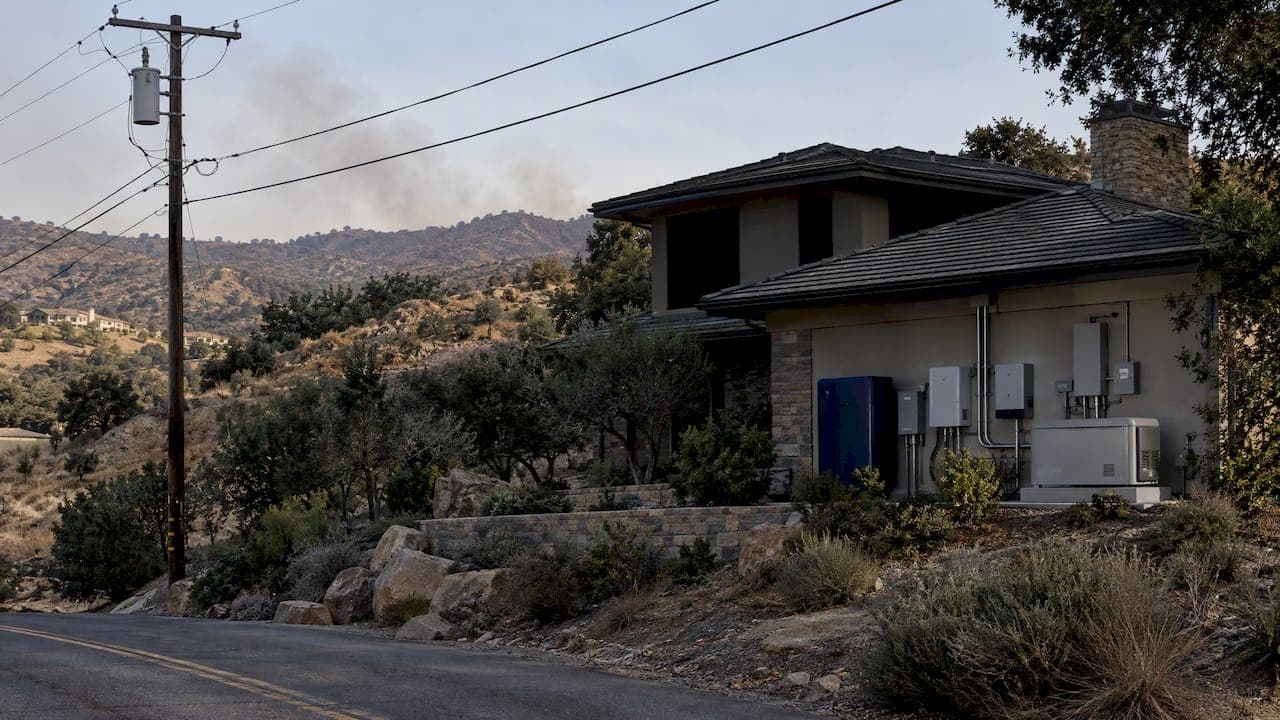
A planned power shutoff, often called a Public Safety Power Shutoff or PSPS, is a temporary, targeted outage that a utility may use to cut wildfire risk during dangerous weather. If your address is listed, check your utility's outage map and sign up for alerts now. Utilities try to give advance notice, but the actual notice window can shrink fast if conditions change.
TL;DR:
- Utility maps show affected areas by color and should be checked regularly for circuit-specific outage info rather than relying on town names.
- Advanced registration for alerts, medical baseline registration, and monitoring Red Flag Warnings are crucial for timely preparation before a PSPS event.
- Power restoration involves careful inspection and can take hours to days, with critical services like internet, gas pumps, and traffic signals often affected.
- Temporary power solutions such as generators or battery backups are vital, but longer-term resilience may require hybrid systems or microgrids for critical loads.
- Community support and personal preparedness, including emergency kits and safe generator use, significantly reduce risks during extended outages.
Table of Contents
- How to check current status and get alerts
- What is a PSPS and why utilities use planned shutoffs
- How utilities decide and the notification timeline
- What to expect during a PSPS: duration and community impacts
- Household preparedness checklist before and during a shutoff
- Safety details and pitfalls to avoid
- Longer-term resilience: batteries, hybrid systems, and microgrids
- PSPS as a public-safety tool and a prompt for resilience
- How we help homeowners stay powered through PSPS events
- FAQ
- Sources
- Authoritative status and preparedness resources
How to check current status and get alerts
Every major utility that uses PSPS publishes an outage map showing which circuits are de-energized, under consideration, or already restored. These maps use colored polygons to mark affected zones, so look for your address inside a shaded area rather than relying on your town's name alone. Utility dashboards, like the one Chelan PUD maintains for its service area, typically show current PSPS status alongside restoration estimates.
Getting ahead of an outage takes a few minutes of setup:
- Register your address for text, email, and phone alerts through your utility's customer portal.
- Sign up for medical baseline status if you or someone in your home depends on powered medical equipment.
- Follow your county's emergency alert system for broader evacuation or safety updates.
- Check National Weather Service Red Flag Warnings, which signal the fire weather conditions that often precede a shutoff.
If your address gets flagged, the first hour matters. Charge every device, locate flashlights and batteries, and confirm your vehicle has enough gas to reach a shelter or resource center if needed.
What is a PSPS and why utilities use planned shutoffs
A PSPS is a preventive measure utilities use to cut power to specific circuits when wildfire risk spikes, not a decision to shut down the broader grid. The goal is simple: a live wire that snaps or sparks during high wind can ignite dry vegetation, so cutting power to that stretch of line removes the ignition source until conditions calm down.
The decision hinges on a mix of weather and ground conditions. Strong sustained winds, low humidity, and dry vegetation fuel loads all raise the risk score for a given circuit. Many utilities now use pole-top weather stations and predictive fire-behavior models to narrow down exactly which lines are most likely to cause an ignition, rather than cutting power broadly across a whole region.
It helps to keep the scope in perspective. A PSPS affects specific circuits serving specific neighborhoods, not entire states or the national grid. Your neighbor three miles away on a different circuit might keep power while your block goes dark, which is frustrating but reflects how narrowly these decisions are targeted.
How utilities decide and the notification timeline
Utilities build their PSPS decisions around a staged forecasting process that gets more precise as the event approaches. Early in the week, meteorologists flag a developing weather pattern, like an approaching wind event, and utilities start modeling which circuits could be affected. As the forecast sharpens, so does the map.
A typical notification sequence looks like this:
- 4 to 7 days out: Early watch notices go to customers in broad potential-impact zones based on long-range forecasts.
- 3 days out: Utilities refine the impact area as models improve, narrowing the list of likely circuits.
- 1 to 2 days out: More specific notices go out as wind and humidity forecasts firm up, often with estimated start times.
- 1 to 4 hours before shutoff: Final notices confirm the decision, since last-minute shifts in wind speed or direction can still change which circuits are cut.
Impact areas can shift right up until the shutoff begins, since wind forecasts in mountainous or canyon terrain are notoriously hard to pin down days in advance. That is why a circuit listed as "possible" on day five might drop off the list entirely, or a circuit that seemed safe might get added at the last minute.
Restoration follows its own careful process. Crews cannot simply flip power back on once wind dies down. They have to physically patrol every mile of de-energized line, looking for downed branches, damaged poles, or debris before re-energizing. Power typically comes back in stages, circuit by circuit, with status updates posted as each section clears inspection.

What to expect during a PSPS: duration and community impacts
Most planned shutoffs last somewhere between several hours and a few days, though the exact length depends heavily on how long the dangerous weather persists and what crews find once they start patrolling lines. A fast-moving wind event might clear in half a day, while a multi-day red flag period combined with storm damage can stretch restoration out considerably longer.
Several everyday services tend to go down along with the power. Cell towers without battery backup can lose signal within hours, home internet and Wi-Fi routers stop working immediately, gas station pumps that rely on grid power can't dispense fuel, and traffic signals go dark, turning intersections into informal four-way stops.
Communities in high-risk areas often set up resource centers during extended shutoffs, offering device charging, water, air conditioning or heating, and basic supplies for residents who lose power for more than a day. Checking your county's emergency management page before an event tells you where the nearest center will be if one opens.
When power finally returns, be aware that re-energization can send a brief surge through your home's wiring. Sensitive electronics left plugged in during the outage are more vulnerable to this than appliances that were unplugged or switched off beforehand.
Household preparedness checklist before and during a shutoff
A little preparation before a red flag warning goes up saves a lot of scrambling once the lights go out. Start with the basics: sign up for utility and county alerts, charge your phone and any backup battery packs, back up important documents or photos to the cloud, and fill your vehicle's gas tank if a shutoff looks likely in your area.
Refrigeration deserves special attention. According to Ready, a full freezer can hold a safe temperature for about two days if the door stays closed, while a refrigerator keeps food safe for several hours. Keep a thermometer inside both appliances, use dry ice for extended outages if available, and follow the standard rule from Foodsafety: if perishable food sits above 40°F for two hours or more, throw it out rather than risk it.
A short priority list covers most households:
- Keep refrigerator and freezer doors closed as much as possible to preserve cold air.
- Fill a cooler with ice as backup storage for medications or baby formula that need refrigeration.
- Register medical devices and prescriptions requiring refrigeration with your utility's medical baseline program.
- Keep a battery-powered or hand-crank radio for updates if cell service drops.
- Plan ahead for pets: extra food, water, and a carrier in case you need to relocate.
For backup power, a portable charger or your car's outlet can keep phones alive for basic communication. If you own a generator, Ready.gov guidance on safe placement and ventilation applies directly, which we cover in detail in the next section.
Pro Tip: Keep a printed list of emergency contacts and medication names in your go-bag, since a dead phone means you can't pull that information from an app.
For homes with older residents, young children, or anyone on powered medical equipment, build in extra buffer time and backup options rather than cutting things close. Our guide on critical home systems to power off-grid walks through which circuits matter most when you're deciding what to prioritize.
Safety details and pitfalls to avoid
Generator misuse sends people to emergency rooms every year, and the rules for avoiding it are straightforward but easy to overlook in the rush of an outage. Official guidance from Ready.gov is clear that generators belong outdoors, at least 20 feet from windows, doors, or vents, with heavy-duty extension cords rated for outdoor use.

A working carbon monoxide detector with battery backup is one of the most reliable safeguards against the invisible risk generators create indoors. Test it before an outage, not during one.
A short list of safety basics prevents most common mistakes:
- Run generators only outdoors, never in a garage even with the door open.
- Install or test a battery-backed carbon monoxide detector before wind season starts.
- Unplug sensitive electronics before the shutoff begins and wait a few minutes after power returns before plugging back in.
- Never use a gas oven or stovetop as a heat source.
- Let a generator cool fully before refueling, and keep it dry during wet weather with a generator tent or cover rated for ventilation.
Longer-term resilience: batteries, hybrid systems, and microgrids
Short-term fixes like a portable generator or a phone charger get you through a single event, but homeowners who face repeat shutoffs often start looking at options that last longer and demand less manual effort. The choice generally breaks into four tiers:
- Portable generator: Cheapest option, but limited by fuel storage, noise, and the need for someone to manually start and refuel it.
- Battery backup: Quiet and automatic, but duration is capped by battery capacity and there's no onsite fuel to extend runtime during a multi-day event.
- Hybrid generator and battery: Combines battery runtime with generator backup for extended outages, reducing how often the generator needs to run.
- Custom microgrid: Integrates generation, storage, and controls engineered around the property's actual critical loads, built for properties that need days of reliable backup rather than hours.
A full microgrid tends to make sense for larger properties, homes with medical equipment that can't tolerate gaps, or anyone in a region where PSPS events happen several times a season. We go into the tradeoffs between battery-only and hybrid setups in more depth on our battery backup comparison page.
PSPS as a public-safety tool and a prompt for resilience
Utilities face a genuinely hard tradeoff: cutting power inconveniences entire neighborhoods, but a single spark on a dry, windy day can destroy a community. We think the honest response is acceptance paired with preparation, not resentment. Check on elderly neighbors during an outage, share a cooler or a charger if someone needs one, and treat your own preparedness checklist as a standing habit rather than a last-minute scramble before the next red flag warning.
— Prime Microgrid
How we help homeowners stay powered through PSPS events
We design custom microgrid and backup power systems for homeowners who want more reliable power during planned shutoffs. Our Estate Microgrid Systems, battery retrofit projects, and hybrid generator systems are each engineered around your property's actual critical loads rather than sold as a generic package.

This approach tends to fit large properties, rural homes on frequently affected circuits, and households with medical equipment that can't tolerate repeated gaps in power. The process starts with a site assessment where electrical demand, property layout, and backup priorities are reviewed before proposing a system.
- Systems are sized for whole-property continuity, not just a few outlets.
- Resilience is designed to account for well pumps, refrigeration, and outbuildings.
- Critical-load circuits can be prioritized from the design stage.
If repeated planned outages have you thinking past the next generator purchase, explore our systems or review case studies from completed projects.
FAQ
Is America at risk for a blackout?
Some U.S. regions face elevated risk for electricity shortfalls during extreme weather conditions, according to EIA reporting on NERC assessments. This risk varies by region and season rather than applying uniformly across the country.
Is there going to be a blackout in 2026 in the USA?
No single source can predict a specific blackout date, but regional reliability assessments flag certain areas as more vulnerable during extreme summer or winter conditions. Planned power shutoffs remain a separate, more localized tool utilities use specifically for wildfire prevention rather than general grid shortfalls.
Can the entire US power grid be shut down?
No, the U.S. grid is divided into regional interconnections and countless individual circuits, and planned power shutoffs target specific circuits rather than shutting down the grid nationally. A PSPS in one utility's service area has no direct effect on power delivery in another region.
How do I find out about planned power cuts in my area?
Check your utility's outage map and status page, such as the one Chelan PUD publishes, and sign up for address-based text or email alerts. County emergency management pages and National Weather Service Red Flag Warnings offer additional early signals.
Sources
- Ready
- Foodsafety
- NERC reports some U.S. regions at risk for energy shortfalls in extreme summer conditions - EIA
Authoritative status and preparedness resources
- Ready
- Foodsafety
- NERC reports some U.S. regions at risk for energy shortfalls - EIA
- Public Safety Power Shutoff | Chelan PUD
- Prime Microgrid