
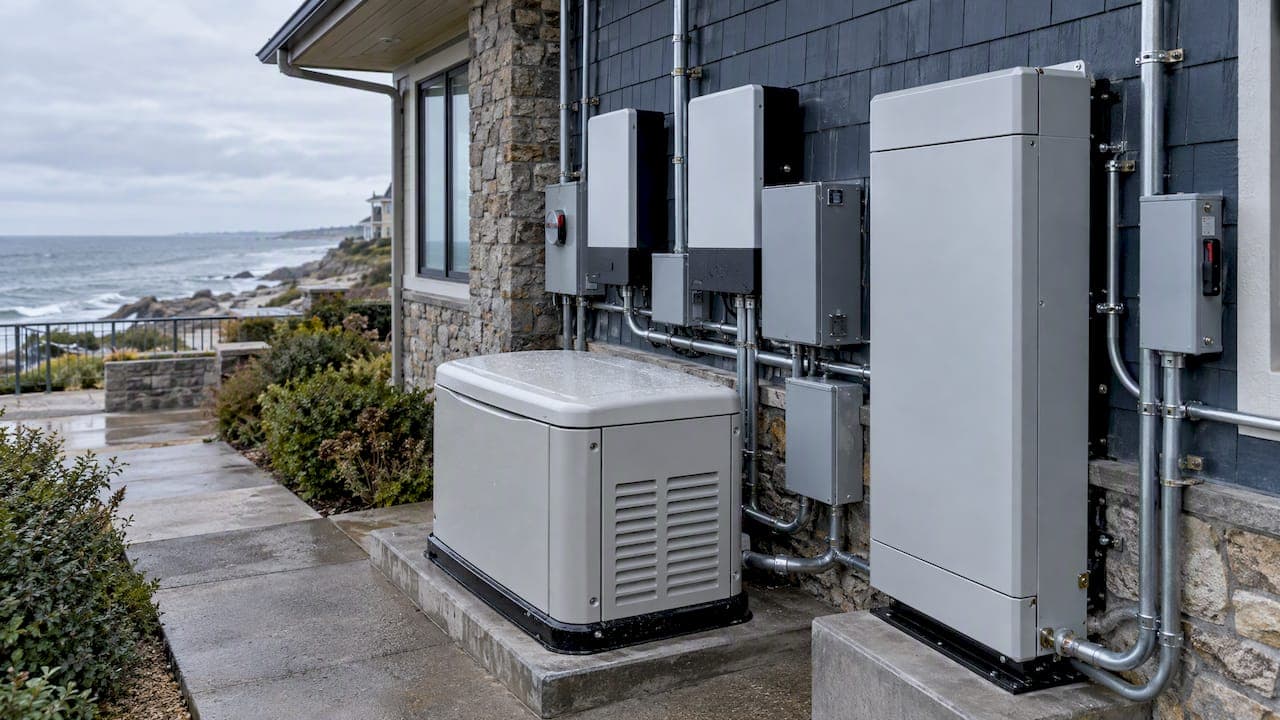
Salt air does require special corrosion protection because it creates a persistent electrolyte film that keeps metal surfaces electrochemically active far longer than homeowners expect. The three most effective defenses are choosing corrosion-resistant materials, applying correct surface preparation with marine-grade coatings, and keeping a short inspection and cleaning routine. Skip any one of the three and the other two usually fail early.
TL;DR:
- Salt deposits near the coast can stay moist and cause corrosion at humidity levels as low as 11%, accelerating damage even when surfaces look dry.
- Using Type 316 stainless steel fasteners and applying multi-coat systems with zinc-rich primer, epoxy, and polyurethane topcoat significantly improves durability in high-chloride environments.
- Regular inspections of fasteners, electrical connections, and paint blisters are essential, especially monthly in humid months, to catch early signs of corrosion and prevent failures.
- Proper surface preparation, including chloride removal and multi-coat applications, is crucial for coating longevity; simple homeowner-grade paint typically fails within two to three years.
- For mission-critical systems, designing coastal-specific microgrids with corrosion-resistant enclosures and marine-grade hardware is often more cost-effective than repeated repairs.
Table of Contents
- How salt air causes corrosion at the molecular level
- Materials and design choices that actually reduce salt-air corrosion risk
- Coatings and surface preparation for coastal exposures
- Maintenance and inspection checklist for coastal properties
- Protecting common homeowner assets near the coast
- Protecting backup power and microgrid equipment near the coast
- Advanced monitoring and detection techniques for early-stage corrosion
- Long-term costs and benefits of different protection methods
- Why prevention beats repairs: a short field perspective
- An honest alternative for mission-critical coastal power
- Sources
- FAQ
How salt air causes corrosion at the molecular level
Salt deposits near the coast are hygroscopic, meaning compounds like magnesium chloride and sodium chloride pull moisture out of the air itself, even when the weather looks dry. Research on sea salt aerosol proxies found sustained corrosion at humidity levels as low as 11% relative humidity for magnesium chloride and 23% for artificial seawater deposits, both well below the thresholds most maintenance schedules assume are safe. That means a metal surface near the coast can stay effectively "wet" for corrosion purposes almost year round.
This changes where damage shows up. Salt films concentrate in crevices, under gaskets, and at joints between dissimilar metals, driving pitting and crevice corrosion in spots a visual walk-around never reaches.
- Chloride films conduct electricity and sustain corrosion cells long after surfaces appear dry.
- Crevices and fastener threads trap salt and moisture, accelerating localized attack.
- Dissimilar metal joints (aluminum against steel, for example) speed up galvanic corrosion.
Sustained corrosion has been measured down to 11% relative humidity for magnesium chloride deposits, a level most coastal properties experience nearly every day, which is why sub-film corrosion often advances unseen inside enclosures and around fasteners long before paint blisters appear.
Materials and design choices that actually reduce salt-air corrosion risk
Material selection is the first line of defense, and the choice often comes down to aluminum versus stainless steel. Aluminum resists surface rust well and costs less, but it can pit under chloride exposure if the protective oxide layer breaks down. Type 304 stainless steel holds up reasonably well inland but struggles directly on the coast, while Type 316 stainless, with added molybdenum, resists pitting and crevice corrosion far better in salt spray zones.
Fasteners and connectors deserve particular attention because they fail before the structures they hold together. Technical guidance on coastal connectors recommends upgrading to Type 316 stainless or G185 hot-dip galvanizing rather than the standard G90 coating, since the thicker zinc mass in G185 survives years longer in salt air before base metal exposure begins.
- Match metals at joints to avoid galvanic pairs, or isolate them with nonconductive washers.
- Design for drainage so water and salt do not pond in crevices or fastener recesses.
- Specify sealed, gasketed enclosures or raised mounts to keep critical components above splash and spray zones.
Pro Tip: When budgets force a tradeoff, spend the upgrade dollars on fasteners and connectors first: they're cheaper to specify correctly than to replace after they seize or fail.
Coatings and surface preparation for coastal exposures
A coating is only as good as the surface underneath it, and this is where most homeowner-grade paint jobs fail early. Industry guidance calls for near-white metal cleanliness, described in ISO 8501-1 as Sa 2.5, along with complete removal of chloride residue before any primer goes on. Painting over invisible salt contamination is one of the most common causes of premature blistering, since trapped chlorides keep drawing moisture under the film.
For coastal steel and equipment, a single coat of hardware-store paint rarely lasts. Field evaluations of coating systems on chloride-exposed steel found that multi-coat systems, such as a zinc-rich primer paired with an epoxy intermediate coat and a polyurethane topcoat, consistently outperformed simpler one- or two-coat approaches in high-chloride environments.
- Wash and test for residual chlorides before any coating work begins.
- Use a zinc-rich primer for galvanic protection, followed by an epoxy coat for barrier resistance.
- Finish with a UV-stable polyurethane topcoat to protect the epoxy layer and hold color.
A three-coat zinc-rich, epoxy, and polyurethane system has shown measurably better durability in high-chloride field trials than single-coat alternatives, which matters most for railings, structural steel, and equipment housings you don't want to repaint every other year. Complex assets, high chloride meter readings, or critical equipment like generator enclosures are worth handing to a certified coatings contractor rather than a weekend project.
Maintenance and inspection checklist for coastal properties
A short, consistent routine catches problems while they are still cheap to fix. The goal is to get past the paint and look at what salt actually attacks first.
- Inspect fasteners, hinges, welds, and gasket seals for rust streaks or looseness.
- Open electrical enclosures and check terminal connections for green or white corrosion residue.
- Look for blistering paint near welds and joints, a sign of sub-film corrosion underneath.
- Rinse accessible metal surfaces with fresh water on a regular schedule to remove accumulated salt.
- Run a chloride test or call a professional inspector when readings or visual signs suggest contamination beneath coatings.
Properties within a mile of open saltwater should inspect monthly during warm, humid months and quarterly otherwise; homes farther inland can usually stretch to a semiannual routine. Treat any rust bleeding from a fastener head or a blistered patch near a weld as a red flag that needs attention before the next storm season, not at the next scheduled checkup.
Pro Tip: Keep a simple log of inspection dates and findings. Patterns that show up over two or three cycles, like the same hinge rusting every summer, tell you where to invest in a permanent fix instead of a repeat repair.
Protecting common homeowner assets near the coast
Different assets fail in different ways, so the fixes are specific rather than one-size-fits-all.
- AC units: mount condensers on elevated pads, protect coils with a factory or aftermarket coastal coating, and seal control boxes and electrical terminals against airborne salt.
- Generators and battery enclosures: specify gasketed, sealed housings with marine-grade stainless fasteners, and consider coastal upgrade packages for radiators and terminal blocks where offered.
- Cars: rinse the undercarriage and wheel wells regularly, maintain wax or clear coat on painted surfaces, and wipe down chrome and trim after drives near open water.
- Outdoor fixtures and fences: choose stainless steel or aluminum for anything intended to last decades, since mild steel fixtures typically need repainting every year or two on the coast.
A dry ice blasting approach can also remove accumulated salt and surface contaminants from metal without damaging existing coatings, an option worth considering for equipment with delicate finishes where chemical cleaners or abrasive methods would do more harm than good.
Protecting backup power and microgrid equipment near the coast
Backup power equipment often sits outdoors year round, which puts it squarely in the path of salt exposure that indoor electrical systems never see. Design priorities for coastal power assets center on corrosion-resistant enclosures, marine-grade fasteners throughout, and layouts that keep future service technicians from fighting seized hardware.
Retrofits that extend service life on existing equipment include upgrading enclosure seals and gaskets, adding targeted coatings to radiators and structural mounts, and, where the manufacturer supports it, sacrificial anode options for reducing galvanic attack on metal housings.
- Choose enclosures rated for coastal or marine duty rather than standard outdoor ratings.
- Replace standard fasteners with 316 stainless or G185 galvanized hardware during any service visit.
- Budget for a coastal-grade coating package on radiators and mounts rather than bare metal.
When a generator or battery system has failed from corrosion more than once, or when the property depends on uninterrupted power, it's worth exploring backup power strategies built for coastal flooding and salt exposure rather than repeating the same retrofit cycle.
Advanced monitoring and detection techniques for early-stage corrosion
Catching corrosion before it becomes visible requires tools that go beyond a flashlight and a screwdriver. Chloride contamination test kits, used on metal surfaces before and after cleaning, give a quantitative reading of residual salt that a visual check simply cannot provide. These are inexpensive enough for a homeowner to keep on hand and are standard practice before any coating work on coastal structures.

For equipment with accessible electrical terminals, an infrared thermal camera can spot hot spots caused by corroded or loosening connections before they cause an outage or a fire risk, since corrosion increases electrical resistance at a joint long before it causes visible damage. Ultrasonic thickness gauges, more common in professional inspections, measure metal loss on tanks, pipes, and structural members without needing to cut or disassemble anything.
Ongoing monitoring matters because atmospheric research on sea salt aerosols suggests that standard time-of-wetness assumptions, the industry's traditional way of estimating how long a surface stays corrosive, may understate real risk in coastal settings. That means a property that looks fine on a dry, sunny day can still be experiencing active corrosion at the microscopic level. For critical assets like generators or structural steel, an annual professional inspection using these tools catches problems that a homeowner's seasonal walk-around will miss, particularly inside sealed enclosures where salt film accumulates out of sight.
Long-term costs and benefits of different protection methods
The cheapest option up front is rarely the cheapest option over ten years, and coastal corrosion protection makes that tradeoff obvious. A basic paint job on structural steel or fixtures might cost a fraction of a proper multi-coat system, but it typically needs full redo within two to three years in salt air, while a correctly prepared and coated three-coat system can last well over a decade before major recoating is needed.

The same logic applies to fasteners and connectors. Standard G90 galvanized hardware costs less initially than Type 316 stainless or G185 galvanizing, but coastal exposure can cause standard hardware to show base metal corrosion within a few years, forcing repeat replacement labor that often costs more than the material difference would have. Specifying the upgrade once, during original construction or a planned retrofit, avoids that repeat expense entirely.
Equipment retrofits follow a similar pattern. Adding coastal-grade coatings, sealed enclosures, and marine-grade fasteners to a generator or battery system after the fact is possible but generally costs more than specifying those options at installation, since retrofit work often requires disassembly and downtime that a new installation avoids. For homeowners deciding where to spend a corrosion protection budget, the most reliable savings come from getting fasteners, coatings, and enclosure specifications right the first time on anything that would be expensive or disruptive to replace, backup generators and structural connectors especially.
Why prevention beats repairs: a short field perspective
The homeowners who spend the least on corrosion over time are the ones who specify correctly up front, not the ones who repair the most aggressively afterward. A seized fastener or a corroded generator terminal rarely announces itself before it fails, and failures at the coast tend to happen during the exact storm events when backup power matters most.
— Prime Microgrid
An honest alternative for mission-critical coastal power
Good materials, correct coatings, and a disciplined inspection routine will protect most outdoor fixtures, AC units, and vehicles for years. But when a property has lost a generator or battery system to corrosion more than once, or when the power supply itself needs to be engineered for coastal conditions rather than retrofitted after the fact, routine maintenance stops being enough.

Custom coastal microgrid and hybrid generator systems can be designed with corrosion-resistant enclosures, marine-grade fasteners, and serviceable layouts from the start, as demonstrated in a coastal estate microgrid project in Delaware. If repeated corrosion failures or storm outages have become a pattern rather than a one-time problem, it's worth a conversation about whether a custom-engineered system makes more sense than another round of repairs.
Sources
For deeper technical detail, consult ISO 8501-1 surface preparation standards, peer-reviewed humidity and salt aerosol research, and municipal technical bulletins on coastal fasteners before hiring a contractor or inspector.
- Effect of relative humidity on corrosion of steel under sea salt aerosol proxies (IOPscience)
- Corrosion protection for metal connectors and fasteners in coastal areas
- ISO 8501-1: Surface preparation standards (overview)
- Coating performance field evaluations and guidance (DOT/bridge studies)
FAQ
What is the best corrosion inhibitor for saltwater use?
There is no single best product for every situation, but for metal hardware and fasteners, upgrading to Type 316 stainless steel or G185 hot-dip galvanizing provides stronger protection than standard coatings in direct saltwater or salt spray exposure. For painted surfaces, a zinc-rich primer system offers galvanic protection as the first line of defense.
How do I protect an AC unit from salt air?
Mount the condenser on an elevated pad away from ground-level salt spray, and choose a unit with coil coatings or an aftermarket coastal protection kit. Seal the electrical control box and terminals, and rinse the unit with fresh water on a regular schedule to remove accumulated salt film.
How do I protect my car from salt air?
Rinse the undercarriage and wheel wells with fresh water regularly, and keep a wax or clear coat layer maintained on painted surfaces to block salt contact. Wipe down chrome and metal trim after drives near open water, since those surfaces show pitting fastest.
Will aluminum corrode in salt air?
Aluminum can corrode in salt air, particularly through pitting once its protective oxide layer is compromised by chloride exposure. It generally performs better than untreated steel in coastal settings, but for critical fasteners and connectors, Type 316 stainless or heavy hot-dip galvanizing typically outlasts standard aluminum hardware.
How often should coastal properties inspect for corrosion?
Properties within about a mile of open saltwater should inspect monthly during warm, humid months and quarterly the rest of the year. Homes farther inland from the coast can generally use a semiannual inspection schedule, with immediate checks after major storms.