
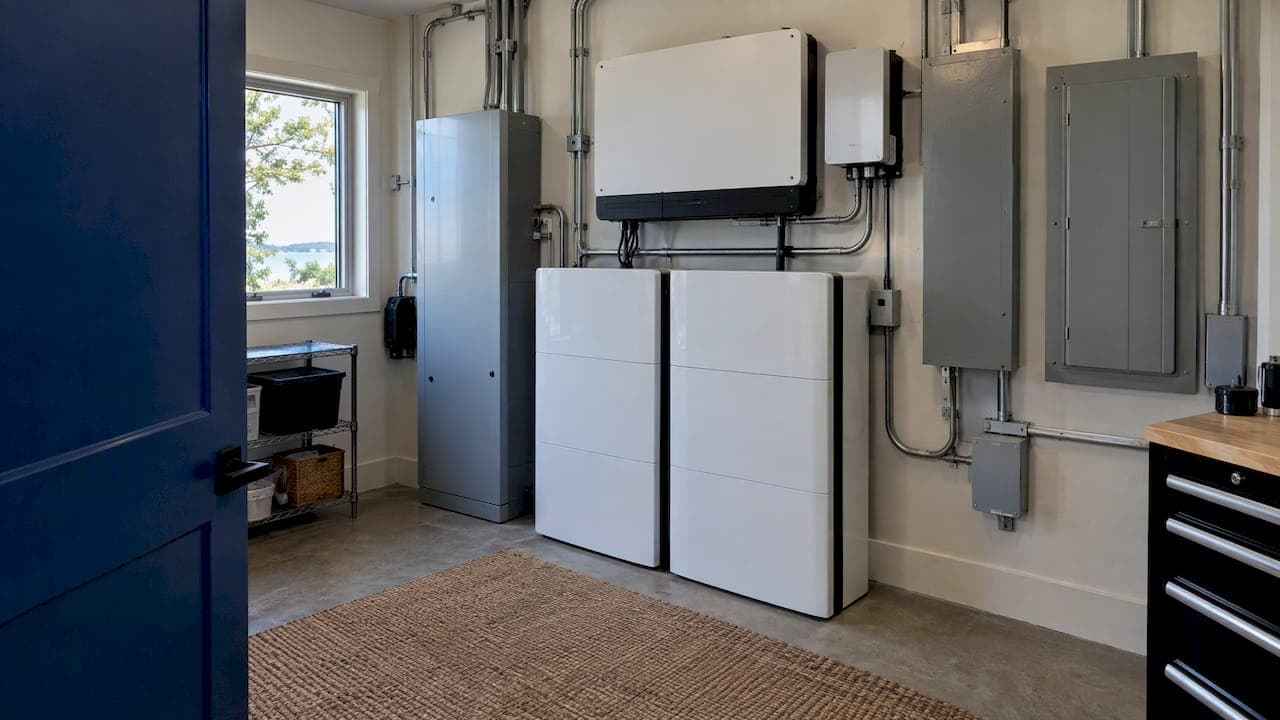
Residential home battery systems are generally safe when you use a UL-listed product and a code-compliant installer. Before signing a proposal, verify the equipment carries a UL 9540 or UL 9540A listing and confirm the installer is a licensed electrician familiar with NFPA 855. Those two checks catch most of the problems that lead to safety incidents down the road.
TL;DR:
- Home energy storage fires occur in roughly 0.005% of installations annually, versus about 0.28% for general house fires, but they can burn more intensely.
- UL 9540 certifies the complete system, while UL 9540A tests its behavior during thermal runaway; cell or module tests alone do not establish containment.
- Outdoor placement generally improves ventilation and fire access, while indoor systems need stricter clearances; confirm permits, inspection sign off, and detection plans before installation.
- Keep the battery within its stated temperature range, inspect monthly for swelling, odors, damage, or alerts, and never alter wiring or use incompatible chargers.
- If gas vents, the enclosure hisses, or stays hot after use, evacuate, call 911, identify the battery system, and stay clear because fires can reignite.
Table of Contents
- Thermal Runaway and Other Failure Modes Homeowners Should Know
- Which Standards and Certifications Actually Matter
- Siting and Installation Checklist for Homeowners Evaluating Proposals
- Daily-Use and Long-Term Maintenance to Reduce Failures
- Recognizing Danger Signs and What to Do During an Incident
- What a Safety-First Installer Does
- Balancing Safety and Long-Term Investment
- How We Help Homeowners Install Safely
- FAQ
- Sources
Thermal Runaway and Other Failure Modes Homeowners Should Know
Thermal runaway is the central risk in any lithium battery system. It happens when a cell overheats, triggers a chemical chain reaction inside itself, and then spreads that heat to neighboring cells. Once it starts, it is hard to stop and can release flammable, toxic gases, according to the National Park Service.
What makes this risk easy to underestimate is that a battery does not need to be charging, or even plugged in, for it to start. Common triggers include:
- Physical damage from impact, drops, or crushing
- Exposure to excessive heat or direct sunlight
- Manufacturing defects in the cells themselves
- Charging faults, including overcharging or using an incompatible charger
A quantitative analysis found that home energy storage system fires occur in roughly 0.005% of installations per year, compared with about 0.28% for general house fires. That gap matters: these incidents are rare, but when they do happen, they tend to be more intense and harder to extinguish than a typical house fire.
Lithium iron phosphate, or LFP chemistry, is more thermally stable than older lithium chemistries and has become the standard for most home storage products. It is not immune to failure, though, and the U.S. Department of Energy notes that chemistry alone does not eliminate the need for sound system design and monitoring.
Which Standards and Certifications Actually Matter
Marketing claims are not the same as third-party evidence. A few specific standards separate a system you can trust from one that just sounds impressive on a spec sheet.
NFPA 855 is the fire code that governs where and how battery systems can be installed, covering clearances, fire separation, and ventilation. UL 9540 certifies the complete battery system, not just individual cells, while UL 9540A is the fire test that shows how a system behaves during thermal runaway and whether its design contains the hazard. The DOE/DNFSB testing record found that cell- and module-level testing alone can still induce thermal runaway, which is why system-level containment data matters more than chemistry claims on a datasheet.
Before accepting a proposal, ask for:
- The product's UL 9540 listing number, not just a mention of "UL components"
- A copy of the UL 9540A test report for the specific system model
- Confirmation that the installation permit and inspector sign-off are part of the contract
- Written answers distinguishing vendor marketing from independent lab results
Pro Tip: Ask your installer to show you the UL 9540A test report before you sign anything. A vendor who cannot produce one is asking you to trust a claim instead of evidence.
Siting and Installation Checklist for Homeowners Evaluating Proposals
Where a battery sits on your property affects both performance and risk. Outdoor installations generally offer better ventilation and easier fire access, while indoor placements require stricter clearance and containment measures under NFPA 855.
- Confirm the unit is separated from exit doors, windows, and other egress paths.
- Check that clearance from combustible materials, stored fuel, or vehicles meets your local fire code.
- Verify the contractor pulls a permit and that a licensed electrician performs the wiring and commissioning.
- Ask whether the system includes smoke or heat detection tied to your home's alarm system.
- For larger systems, ask whether automatic suppression is recommended and how shutdown procedures work.
The EPA's guidance on battery energy storage systems recommends site design that supports remote monitoring and clear coordination with local first responders, something worth raising directly with your installer rather than assuming it is included.
Pro Tip: Walk the proposed install site with your contractor and physically measure clearances yourself. A drawing on paper and the reality of your garage wall do not always match.
Daily-Use and Long-Term Maintenance to Reduce Failures
Most battery failures trace back to conditions that build up slowly, not sudden defects. Keeping the system within its manufacturer's temperature range, away from direct sun and uninsulated hot garages, does more to prevent problems than any single inspection.
- Check monthly for physical damage, swelling, unusual odors, or warning alerts from the battery management system.
- Keep the unit's area clear of stored boxes, fuel, or debris that could restrict airflow.
- Never use a charger or cable other than what the manufacturer specifies, following the same basic rule the National Park Service applies to portable lithium devices.
- Avoid DIY modifications to wiring, enclosures, or firmware settings.
- At end of life, arrange decommissioning and transport through a certified recycler rather than disposing of the unit as household waste.
A quick seasonal check, especially before summer heat and after any storm that could have caused impact damage, catches most issues before they become hazards.
Recognizing Danger Signs and What to Do During an Incident
Thermal runaway rarely happens without warning. Catching the early signs and acting fast matters more than anything else in this section.
- Watch for white or gray gas venting, a hissing sound, or a battery enclosure that stays hot long after use.
- Evacuate the area immediately and move people and pets away from the structure.
- Call 911 and specifically tell the dispatcher there is a home energy storage system involved.
- Keep clear of exits and do not attempt to fight the fire yourself or reenter the area.
Fire service testing shows battery fires carry re-ignition and stranded energy risks that can require extended monitoring well after visible flames stop. Firefighters may not treat the scene as resolved immediately, and that caution is appropriate given how these fires behave. Sharing your system's location and shutdown procedure with your local fire department ahead of time, as the USFA recommends, gives first responders information many residential crews do not otherwise have.
What a Safety-First Installer Does
A properly engineered installation starts with a site assessment that accounts for your home's electrical load, structural layout, and local fire code, not a one-size-fits-all package. We design each system around the property it serves, then commission it with documented testing before it goes live.

Homeowners should expect commissioning records, system labeling for first responders, and monitoring integration that flags faults before they escalate. Ask any installer for these documents directly; a contractor confident in the work will have them ready.
Balancing Safety and Long-Term Investment
Battery safety is not a one-time checkbox, it is a lifecycle practice that spans chemistry choice, containment design, and ongoing monitoring. Certified equipment and professional installation cost more upfront, but they are the tradeoff that protects both your property and the resilience you are paying for.
— Prime Microgrid
How We Help Homeowners Install Safely
A safe system is also a well-engineered one. We design residential battery storage around your property's actual electrical demand, then handle permitting, licensed electrical work, and commissioning so the documentation exists before you ever need it.

What a consultation with us includes:
- A site assessment that reviews clearances, ventilation, and local code requirements
- System design using certified, UL-listed equipment matched to your home's needs
- Installation and commissioning with documented testing and monitoring setup
- Guidance for coordinating emergency shutdown information with your local fire department
If you are comparing options for backup power or full energy independence, our systems overview walks through the configurations we build, from battery retrofits to full estate microgrids.
FAQ
Can a lithium battery catch fire if it's not plugged in?
Yes. Thermal runaway can start from physical damage, exposure to high heat, or an internal manufacturing defect, regardless of whether the battery is connected to power, according to the National Park Service. This is why proper storage conditions matter as much as charging habits.
Is it safe to keep lithium-ion batteries in your house?
Lithium-ion batteries are generally safe indoors when they are UL-listed and installed according to manufacturer and code guidance. Home energy storage fires are rare, occurring in an estimated 0.005% of systems annually, but proper clearance from living spaces and combustibles still matters.
How can I make sure a lithium battery doesn't catch fire?
Choose equipment with a UL 9540 listing and a UL 9540A test report, have it installed by a licensed electrician following NFPA 855 clearances, and keep the unit within its manufacturer's temperature range. Regular inspection for swelling, odors, or battery management system alerts catches most problems early.
What are the odds of a lithium-ion battery exploding?
Documented data on home energy storage fires specifically, rather than explosions, puts the annual incident rate at roughly 0.005%, far below the rate of general house fires. Risk drops further with certified equipment, correct siting, and routine maintenance.
Sources
- Quantitative analysis comparing HSS fires with general house fires
- Lithium-ion battery safety — National Park Service
- Responding to fires that include energy storage systems — USFA/FEMA
- Energy Storage Safety Strategic Plan — U.S. Department of Energy
- Battery energy storage systems — EPA guidance