
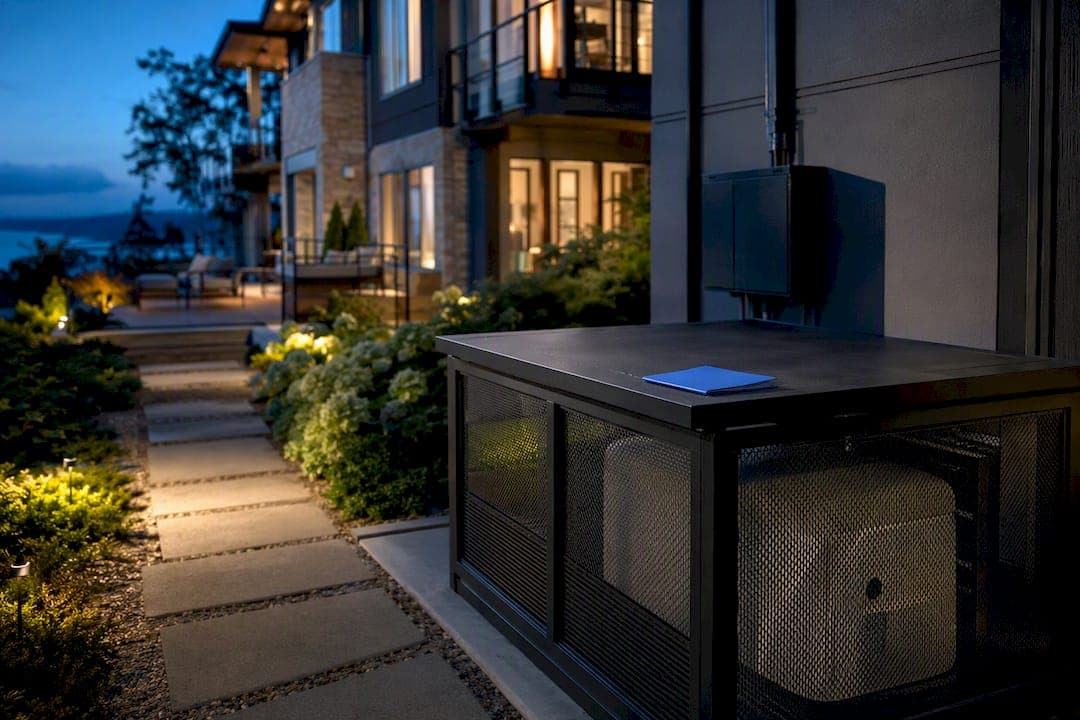
No, most HOAs cannot legally ban a permanently installed standby generator outright, though they can regulate its placement, screening, and noise. Before you file anything, do three things: read your community's CC&Rs and architectural review committee (ARC) rules in full, gather your generator's manufacturer specs and sound rating, and call your local building or fire department to get the permit checklist for your Authority Having Jurisdiction (AHJ).
TL;DR:
- Most HOAs cannot completely ban permanently installed standby generators but can regulate their placement, screening, and noise levels within code limits.
- Proper documentation—including site plans, manufacturer specs, contractor credentials, and technical exhibits—significantly accelerates ARC approval.
- State laws in Texas and Florida limit HOAs from prohibiting or overly restricting generators if they meet certain criteria, like location costs and safety standards.
- HVAC approvals and municipal permits are separate steps requiring compliance with fire, electrical, and fuel codes, which are outside HOA jurisdiction.
- Clear communication of noise ratings, proper planning for setbacks, and engaging engineers before application submission reduce delays and prevent denials.
Table of Contents
- Understanding HOA Rules for Generators and Their Legal Limits
- What Documents Will the HOA Ask For?
- Which Technical Documents Speed Up ARC Approval?
- What Permits and Inspections Does the AHJ Require?
- How Close Can a Generator Sit to Your House?
- How State Law Overrides Restrictive HOA Generator Policies
- How to Avoid Delays or Fight a Denial
- Why Engineering Documentation Reduces HOA Friction
- Get an ARC-Ready Generator Packet From Prime Microgrid
- Sources
- FAQ
Understanding HOA Rules for Generators and Their Legal Limits
Your Covenants, Conditions & Restrictions (CC&Rs) give the ARC authority over aesthetics: paint colors, fence styles, and yes, where a generator sits and how it's screened. What CC&Rs generally cannot do is override a state statute that protects a homeowner's right to install specific equipment. That's the gap most homeowners never check before assuming the board's word is final.
Municipal permitting sits outside HOA rules for generators entirely. Your city or county's AHJ enforces electrical and fuel code regardless of what the ARC decides, and it doesn't answer to your board.
Typical HOA authority covers:
- Where the unit sits relative to setbacks and property lines
- What screening or fencing hides it from the street
- Noise limits and testing windows
- Aesthetic finishes (color, enclosure material)
If a board denies you and can't produce a written policy, or has approved similar units for other homeowners without objection, that inconsistency is worth documenting. Ask for the ARC's written generator policy and a record of past approvals before you resubmit anything.
What Documents Will the HOA Ask For?
Most architectural committees follow a similar packet structure, closely mirroring the checklist found in real ACC generator bulletins issued by community associations. Assemble these before you submit anything:
- Product photos and the manufacturer's brochure, including exact model, dimensions, and decibel (dB) rating.
- A scaled site plan showing the pad location, distance to windows, doors, and neighboring structures.
- A materials list, covering the concrete pad spec, fuel tank size and type, and any proposed screening (fencing, landscaping, lattice).
- Contractor credentials: license number, insurance certificate, and company contact information.
- A screening and installation timeline, so the board knows when work starts and finishes.
Some HOAs also require a refundable construction deposit, typically held until the board confirms the finished install matches the approved plan.
Pro Tip: Submit your packet as one PDF, not five separate emails. Boards that review dozens of ARC requests a month move faster on complete, single-file submissions and slower on anything requiring follow-up.
Which Technical Documents Speed Up ARC Approval?
A thin application invites questions and delays. A packet with the right technical exhibits usually gets approved on the first pass. Include:
- A scaled lot survey marking the pad, clearances from doors and windows per the manufacturer's manual, and distance from any utility easement.
- Excerpts from the installation manual covering required clearances, exhaust direction, and the manufacturer's recommended maintenance and self-test schedule.
- Proof of contractor licensing and, if you've already started the permit process, your preliminary municipal permit application.
- For hybrid or engineered systems (generator paired with battery storage), a simple one-line power diagram and load-calculation summary showing how the system integrates with your home's electrical panel.
That last item matters more than most homeowners realize. Boards unfamiliar with hybrid setups often stall applications simply because they don't understand what they're looking at. A one-page diagram removes the guesswork, and homeowners exploring residential battery storage paired with a generator should expect the ARC to ask for it.
What Permits and Inspections Does the AHJ Require?
ARC approval and municipal permitting are two separate processes, and getting one doesn't satisfy the other. Standby generators commonly require an electrical permit for the transfer switch, a mechanical or plumbing permit for fuel lines and tanks, and a building permit for the concrete pad or enclosure. Propane installations may need separate fire department sign-off.

Your AHJ enforces manufacturer clearances, National Fire Protection Association (NFPA) and International Residential Code (IRC) compliance, and exhaust and carbon monoxide safety. None of that falls under HOA jurisdiction. File your permit application early, ideally alongside your ARC packet, so a rejected inspection doesn't force you to redesign a layout the board already approved. Reworking an ARC-approved plan to satisfy a permit rejection is one of the most common causes of installation delays.
How Close Can a Generator Sit to Your House?
Clearance requirements vary by manufacturer and model, and the differences are not small. One unit might require 18 inches of side clearance from a combustible wall, while another demands 5 feet from any operable window or door. The manufacturer's installation manual and your local AHJ inspector are the only authoritative sources for that number. Anything you read online, including this article, is background, not code.
Most HOAs prefer generators placed in rear or side yards, away from street-facing elevations or shared common areas. Boards rarely allow installation on association-owned land, even when it's the most logical spot on paper.
Noise is the other flashpoint. Provide the unit's dB rating up front, propose a limited testing window (many boards default to daytime weekday hours), and commit to a monthly self-test schedule rather than open-ended runtime. Preempting the noise conversation with data heads off complaints before they start.
Pro Tip: If your generator's dB rating sits below 65 dB at 23 feet, a common quiet threshold for standby units, lead with that number in your application. It often defuses screening demands before the board raises them.

How State Law Overrides Restrictive HOA Generator Policies
Some states have decided HOAs went too far in blocking backup power, and passed laws limiting board authority. Texas and Florida are the two clearest examples, and both are worth knowing even if you live elsewhere, because they show how courts and legislatures view the balance between association control and homeowner rights.
- Texas Property Code §202.019 prevents HOAs from prohibiting permanently installed standby generators altogether. It also makes location or screening rules unenforceable if they raise installation cost by more than 10 percent, or line-connection costs by more than 20 percent, according to the statutory text added by HB939. Practical guides on how Texas law applies to HOA generator disputes confirm boards can still require screening and manufacturer compliance, just not a location mandate that busts that cost threshold.
- Florida Statute §720.3035 treats exterior fixed generators as hurricane protection equipment. Once a board formally adopts written hurricane-protection specifications, it cannot deny a conforming request, though it may still set appearance and screening standards within those adopted rules, as explained in this breakdown of whether an HOA can deny a standby generator.
If you're in either state and facing resistance, get a written contractor estimate showing the true cost of the board's preferred location versus your proposed one. That estimate is your evidence if the restriction crosses the statutory line.
How to Avoid Delays or Fight a Denial
- Request a pre-application meeting with the ARC before you submit formal paperwork, and give neighbors a heads-up if the unit will be visible or audible from their property.
- File preliminary permit paperwork with your AHJ in parallel with your ARC packet, so you're not waiting on one process to start the other.
- If denied, ask for the specific reasons in writing and request an alternate location or remediation path rather than accepting a flat no.
- Document any inconsistent enforcement. If a neighbor's similar unit was approved without the same screening demand, that record matters in an appeal.
- Consider a Fair Housing Act accommodation request if the generator supports a medical necessity, such as powering refrigerated medication or medical equipment, and consult an attorney if the board still won't budge.
Expect roughly two to four weeks for ARC review, a similar window for municipal permits depending on your jurisdiction, and one to two days for installation once permits clear.
Why Engineering Documentation Reduces HOA Friction
Boards approve what they understand. A one-line power diagram and a plain-language installation narrative, explaining why the unit sits where it does and how screening addresses noise and sightlines, resolves most ARC questions before they're asked. Engineered systems with runtime-reducing control strategies, like a generator paired with battery storage that limits exercise-mode noise, give homeowners a stronger case for reduced testing hours or lighter screening requirements. Engaging an engineer before you submit, not after a denial, is the difference between one ARC round and three.
— Prime Microgrid
Get an ARC-Ready Generator Packet From Prime Microgrid
Prime Microgrid offers services including system design, preparation of engineering documentation for ARC review, and coordination of AHJ permits to simplify the approval process.

Our process includes system design, preparation of one-line diagrams and load calculations for ARC packets, licensed installation, and coordination with local building departments. Whether you're weighing a standalone standby unit or a hybrid system with battery backup for a large home, our Estate Microgrid Systems and Hybrid Generator Systems are built around your property's actual load, not a generic package. Request a consultation and we'll scope your system and documentation needs before you file a single form.
This article is general information, not a substitute for advice from a qualified lawyer. Consult a qualified legal professional about your own circumstances before acting on anything here.
Sources
- HB00939F — Texas legislative bill text (adds §202.019)
- Texas HOA standby generator rights: What the law allows (HOA Notes)
- Can an HOA deny a standby generator? (The HOA Guide)
FAQ
Are Generators Allowed in HOA Communities?
Yes, in most cases. HOAs can regulate placement, screening, and noise, but state laws in places like Texas and Florida limit or block outright bans on permanently installed standby units. Always check your CC&Rs and your state's specific statute before assuming a ban is enforceable.
What Is the 5 Foot Clearance Rule for Generators?
There's no universal rule. Clearance requirements come from the specific manufacturer's installation manual and your local AHJ, and they vary by model, with some units requiring 18 inches from a wall and others requiring several feet from any window or door. Treat any "standard" clearance number you see online as a starting point, not a code requirement, and confirm the actual figure with your unit's manual.
Can a Generator Be a Noise Complaint in an HOA?
Yes. Ongoing generator noise, especially during self-test cycles or extended outages, is one of the most common HOA complaints. Providing your unit's dB rating and proposing a limited testing window in your ARC application usually prevents the complaint before it starts.
Can I Install a Generator in a Townhome With an HOA?
Generally yes, though shared walls and tighter setbacks make screening and clearance requirements stricter. Townhome associations often require additional documentation on sound attenuation and exact placement relative to a neighbor's unit, so a complete technical packet matters even more than it does for a detached single-family home.
Does Prime Microgrid Handle HOA Paperwork for Generator Installs?
Yes. Prime Microgrid prepares the engineering documentation, including one-line diagrams and load calculations, that ARC committees typically request for generator and hybrid system applications. Pricing depends on system scope and is available by requesting a consultation.