
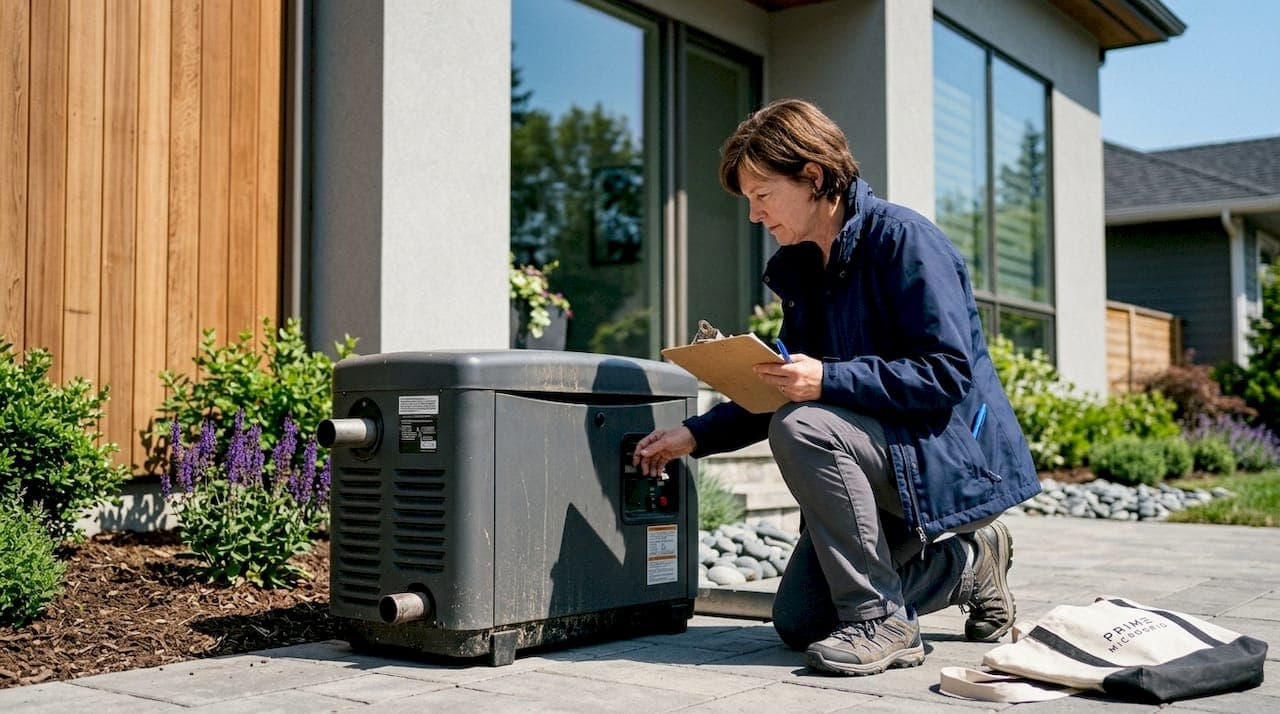
A standby power system is an automatic electrical backup setup that supplies power to selected loads when utility service is interrupted, restoring electricity within seconds without any manual action from you. Unlike a portable generator you drag out of the garage, a standby system is permanently installed, connected directly to your home's electrical panel, and ready to operate the moment the grid goes down. The National Electrical Code governs these systems under Articles 700, 701, and 702, each with distinct requirements based on how critical the loads are. For homeowners and property managers, understanding what a standby power system is and how it works is the first step toward choosing the right emergency power supply for your property.
How does a standby power system work?
A standby power system operates through an automatic transfer switch (ATS) that continuously monitors incoming utility voltage. The moment the ATS detects a power loss, it signals the generator to start and transfers your home's electrical loads from the utility to the generator, all without you touching a switch.
Here is the typical sequence of events when your utility power fails:
- Utility power drops. The ATS senses the loss within milliseconds and begins the startup command.
- Generator cranks and stabilizes. Most standby generators reach operating voltage and frequency within 10 to 30 seconds.
- Load transfer occurs. The ATS disconnects your home from the utility and connects it to the generator output.
- Generator runs your home. Lights, HVAC, refrigerators, and other connected loads continue operating normally.
- Utility power returns. The ATS detects stable utility voltage, transfers loads back, and the generator cools down before shutting off automatically.
Fuel type determines how long and how reliably your system can run. Standby generators run on diesel, natural gas, or propane, each with trade-offs. Natural gas connects to your municipal supply line, so you never run out during a multi-day outage. Propane requires an on-site tank that needs periodic refilling. Diesel offers high energy density but requires fuel storage and rotation. Most residential standby generators are rated for limited annual runtime, typically 200 to 500 hours, because they are designed for emergency backup rather than continuous daily use.
Pro Tip: Schedule a monthly self-test run of at least 20 to 30 minutes under load. Most modern standby generators have a built-in exercise timer, but confirming it actually runs and checking for fault codes takes less than five minutes and can catch problems before an actual outage.
What are the types of standby power systems?
The National Electrical Code draws a clear line between three categories, and that line determines the technical requirements your system must meet.
| System type | NEC article | Transfer time | Typical application | Life safety governed by |
|---|---|---|---|---|
| Emergency power | Article 700 | 10 seconds maximum | Hospitals, exit lighting | NEC Art. 700 + NFPA 110 |
| Legally required standby | Article 701 | 60 seconds maximum | Heating, ventilation, sewage | NEC Art. 701 + NFPA 110 |
| Optional standby | Article 702 | No code-mandated limit | Residential homes, offices | NEC Art. 702 only |
NEC Articles 701 and 702 define standby power system classifications as distinct from emergency power under Article 700. That distinction matters because it determines the inspection requirements, transfer timing, and load types your system must serve.

Legally required standby systems must supply power within 60 seconds after normal supply failure. These systems appear in commercial buildings, large apartment complexes, and facilities where heating, ventilation, or sewage pumps are critical to occupant safety. They carry stricter installation and testing requirements than residential systems.
Optional standby systems, governed by NEC Article 702, are intended for non-life safety applications where the goal is avoiding inconvenience or economic loss rather than protecting human life. This is the category that covers virtually every residential standby generator installation. The NFPA 110 standard governs emergency and legally required standby systems but excludes optional standby systems entirely. For homeowners, this means your residential system has more installation flexibility, but you still need to comply with local building codes and utility interconnection rules.
The practical takeaway: most homeowners are installing optional standby systems under NEC Article 702. You are not subject to the 60-second transfer mandate, but a quality ATS will still transfer power in under 30 seconds in most cases.
What are the benefits and limitations of standby power systems?
Standby power systems offer reliable automatic backup during outages, protection of critical systems, and reduced financial losses tied to power interruptions. They cost more than portable generators upfront, but the gap closes quickly when you factor in what an unplanned outage actually costs.
Key benefits for homeowners and property managers:
- Automatic operation with no manual intervention required
- Protection of critical home systems including HVAC, sump pumps, refrigerators, and medical equipment
- Continuous power for home offices, security systems, and smart home devices
- Increased property value and marketability, particularly in outage-prone regions
- Compatibility with battery backup integration and solar systems for layered resilience
Common limitations to plan around:
- Higher upfront cost compared to portable generators, often ranging from several thousand dollars for installation and equipment
- Ongoing fuel supply requirements, especially for propane and diesel systems
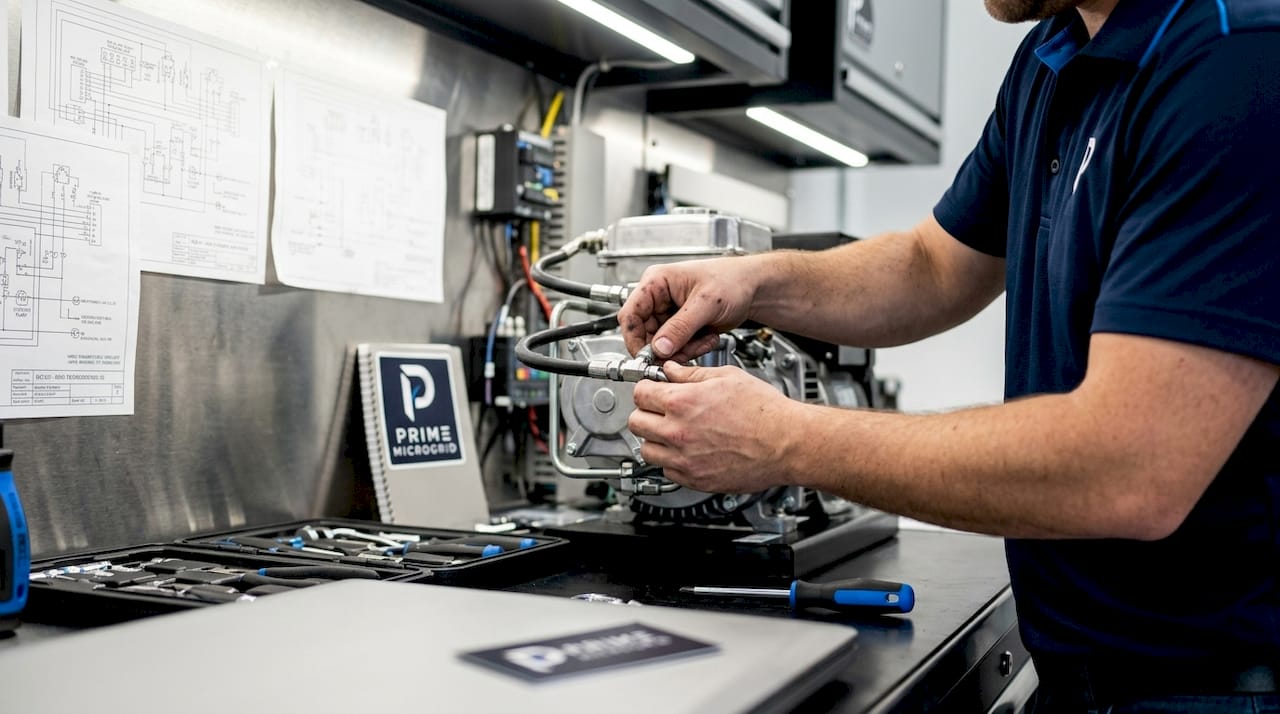
- Regular maintenance including oil changes, filter replacements, and annual inspections
- Permit and inspection requirements that vary by municipality
- Noise output during operation, which may be a factor in dense neighborhoods
A properly selected standby system enhances home safety, convenience, and readiness for unexpected utility outages. For property managers overseeing multiple units or facilities, the calculus shifts further toward standby systems because a single outage affecting tenants can trigger liability, lost rental income, and spoiled inventory simultaneously.
Pro Tip: Before purchasing a system, list every load you want backed up and its wattage. HVAC systems, well pumps, and electric water heaters are the biggest draws. Sizing your generator too small means the ATS may need to shed loads, and sizing it too large wastes fuel and money.
How to choose and maintain an effective standby power system
Choosing the right system comes down to four variables: load size, fuel availability, transfer switch quality, and your maintenance commitment. Getting any one of these wrong undermines the others.
-
Calculate your load requirements. Add up the running wattage of every circuit you want backed up, then add 25% for startup surge capacity. A whole-home system for a 2,500-square-foot house with central air conditioning typically requires 20 to 22 kilowatts of generator capacity.
-
Match fuel type to your property. Natural gas is the most convenient option for homes with existing gas service. Propane works well for rural properties without gas lines. Diesel suits commercial properties with high runtime demands and secure fuel storage.
-
Invest in a quality automatic transfer switch. The entire system chain, including ATS and load selection, determines compliance and reliability beyond just the generator itself. A cheap ATS is the most common point of failure in otherwise well-specified systems.
-
Prioritize critical loads. Load management techniques ensure prioritized, adequate power supply within code-mandated timeframes. For residential use, this means programming your ATS to power life-safety and comfort loads first, with discretionary loads like EV chargers coming online only if capacity allows.
-
Commit to a maintenance schedule. Change the oil every 100 to 200 hours of runtime or annually, whichever comes first. Replace air and fuel filters on the manufacturer's schedule. Have a licensed technician perform a full inspection once a year, including battery condition, coolant levels, and transfer switch operation.
For backup power in large homes, a single generator may not be the most efficient solution. Pairing a standby generator with a battery storage system lets the batteries handle short outages and peak shaving while the generator handles extended events, reducing total runtime hours and maintenance frequency.
How do standby generators compare to other backup power options?
Not every backup power situation calls for a standby generator. Understanding where each option excels helps you make a decision you will not regret two years later.
| Option | Automatic operation | Typical runtime | Fuel required | Best for |
|---|---|---|---|---|
| Standby generator | Yes, via ATS | Days to weeks | Natural gas, propane, diesel | Whole-home backup, extended outages |
| Portable generator | No, manual setup | Hours per tank | Gasoline | Occasional, short outages |
| Battery backup system | Yes, instant | Hours (4 to 12 typical) | None (grid or solar charged) | Short outages, sensitive electronics |
| Solar plus battery | Yes, with inverter | Hours to days (weather dependent) | Solar input | Daily energy offset plus short backup |
| Microgrid system | Yes, fully managed | Indefinite with fuel or solar | Multiple sources | Full energy independence, long-term resilience |
Portable generators require manual setup, outdoor placement, and extension cords or a manual transfer switch. They are a reasonable short-term solution but create real safety risks, including carbon monoxide exposure, when used improperly. Battery backup systems like those discussed in solar vs. microgrid comparisons respond instantly and silently but are limited by storage capacity.
The most capable residential setup combines a standby generator with battery storage. The batteries cover the first few hours of any outage and handle brief interruptions without ever starting the generator. When an outage extends beyond battery capacity, the generator takes over. This hybrid approach, central to how generators enhance hybrid energy design, reduces generator runtime, cuts fuel costs, and extends equipment life.
Key takeaways
A standby power system is the most reliable form of residential backup power because it combines automatic operation, permanent installation, and sufficient capacity to run an entire home through extended outages.
| Point | Details |
|---|---|
| Automatic operation is the core advantage | An ATS detects utility failure and transfers power without any manual action from the homeowner. |
| NEC Article 702 governs most homes | Residential standby systems are optional standby under NEC 702, with more flexibility than legally required systems. |
| Fuel choice shapes long-term reliability | Natural gas is the most convenient residential fuel; propane and diesel suit off-grid or commercial properties. |
| System sizing determines real-world performance | Calculate total running wattage plus 25% surge capacity before selecting generator size. |
| Pairing with battery storage maximizes value | A generator plus battery system reduces runtime hours, fuel costs, and maintenance frequency over time. |
Why standby power deserves more respect than it gets
I have talked with hundreds of homeowners who treat standby power as a luxury purchase, something to consider after the solar panels and the kitchen remodel. That thinking gets reversed fast after the first multi-day outage with a sump pump running dry, a freezer full of spoiled food, and a home office that went dark mid-deadline.
What surprises most people is how much of the value in a standby system comes from the automatic transfer switch, not the generator itself. The generator is the obvious piece of equipment, but the ATS is what makes the system actually work without you being home. I have seen well-specified generators paired with undersized or poorly programmed transfer switches fail to restore power correctly, while modest generators with quality ATS units performed flawlessly through 72-hour outages.
The other misconception I hear constantly is that battery backup alone is sufficient for most homes. For short outages under four hours, that is often true. But for the outages that actually cause real damage, the ones that last two to five days after a major storm, battery-only systems run out of capacity long before the grid comes back. The homeowners who sleep well during those events are the ones who invested in a layered system: batteries for the first stretch, a generator for the long haul.
My honest advice is to treat standby power as infrastructure, not a product. The right system, sized correctly and maintained annually, will outlast two or three rounds of consumer electronics and protect assets worth far more than its purchase price. Invest in quality installation, use a licensed electrician familiar with your local codes, and do not skip the annual inspection.
— David
How Primemicrogrid can take your backup power further
If a standby generator is the foundation of residential backup power, a microgrid is the full structure built on top of it.
Primemicrogrid designs customer-sited energy systems that integrate standby generators, battery storage, solar, load management, and smart controls into a single coordinated setup. Instead of managing separate systems that do not communicate with each other, you get one system that automatically decides when to draw from batteries, when to run the generator, and how to prioritize your most critical loads. For homeowners in the Mid-Atlantic region, residential microgrid solutions from Primemicrogrid are designed around your specific property, load profile, and outage risk. The result is backup power that is more reliable, more fuel-efficient, and more capable than a standalone generator ever could be.
FAQ
What is a standby power system in simple terms?
A standby power system is a permanently installed electrical backup that automatically supplies power to your home when the utility grid fails. It uses an automatic transfer switch and a generator to restore electricity within seconds, with no manual action required.
How is a standby system different from a portable generator?
A standby system activates automatically via an ATS and is connected directly to your home's electrical panel, while a portable generator requires manual setup and extension cords or a manual transfer switch. Standby systems also run on piped natural gas or large propane tanks, eliminating the need to store and refuel gasoline.
What NEC code covers residential standby power systems?
Most residential standby systems fall under NEC Article 702, which covers optional standby systems designed to prevent inconvenience or economic loss rather than protect life safety. This is distinct from NEC Article 700 (emergency systems) and Article 701 (legally required standby), which apply to commercial and institutional facilities.
How long can a standby generator run during an outage?
A natural gas standby generator can run indefinitely as long as the municipal gas supply remains active, which is typical even during extended power outages. Propane and diesel systems are limited by on-site fuel storage, usually providing several days to a week of runtime depending on load and tank size.
Can a standby power system work with solar or battery storage?
Yes. Pairing a standby generator with a home battery backup system creates a layered backup strategy where batteries handle short outages instantly and the generator takes over for extended events. This combination reduces total generator runtime and fuel consumption while providing faster response than a generator alone.