
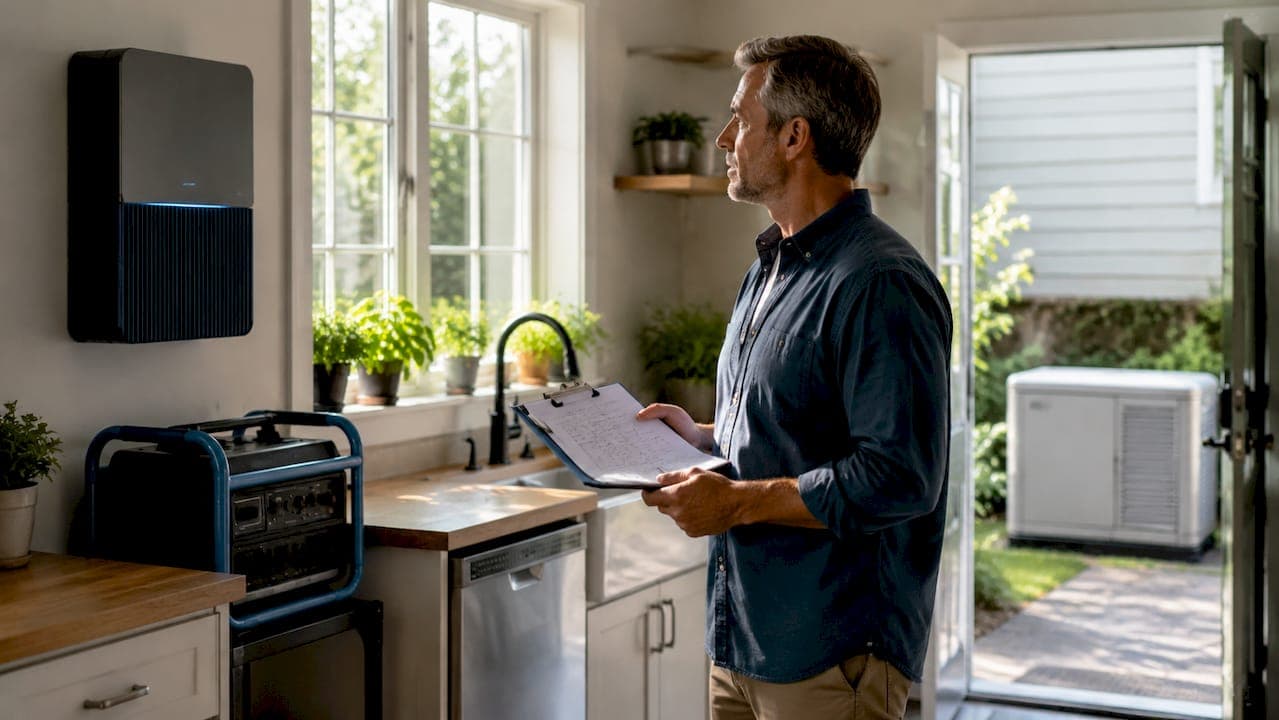
Evaluating home backup power options in 2026 means comparing portable generators, standby generators, battery storage systems, and residential microgrids based on your home's size, outage history, budget, and energy goals. The right choice is never obvious from a spec sheet alone. Popular systems like the Tesla Powerwall 3, Generac Guardian series, and Anker SOLIX F3800 each solve a different version of the same problem. This guide walks you through how to assess your needs, compare technologies side by side, and make a decision you won't regret when the grid goes down.
How to evaluate home backup power options in 2026
Before comparing products, you need to know what you're actually backing up. Start by listing every appliance you consider non-negotiable during an outage: refrigerator, sump pump, medical equipment, HVAC, lighting, and phone charging. Add up their running wattages, then identify which ones have motors, since motor-driven appliances like air conditioners and well pumps draw two to three times their running wattage at startup.
- List essential loads. Write down every appliance you need during an outage and note both running watts and startup watts.
- Calculate daily kWh. Multiply each appliance's running wattage by estimated daily hours of use, then add them together. A typical whole-home target is 15 to 25 kWh per day.
- Factor in autonomy days. Decide how many days of backup you need without grid or generator input. Multiply your daily kWh by those days, then divide by 0.80 to account for usable battery depth of discharge.
- Size for surge power. Your inverter's surge rating must exceed the startup wattage of your largest motor load. Battery sizing should consider both kWh capacity and inverter surge rating, since inverter limits often define backup system effectiveness for motor loads.
- Account for outage patterns. If your region sees frequent short outages, a battery system handles them silently. If you face multi-day outages from hurricanes or ice storms, you need either a large battery bank or a generator to recharge it.
Pro Tip: Always size your generator or battery system 10 to 20% above your calculated peak load. This generator oversizing practice handles motor startup surges and reduces wear on the equipment over time.
Comparing backup power technologies: generators, batteries, and microgrids
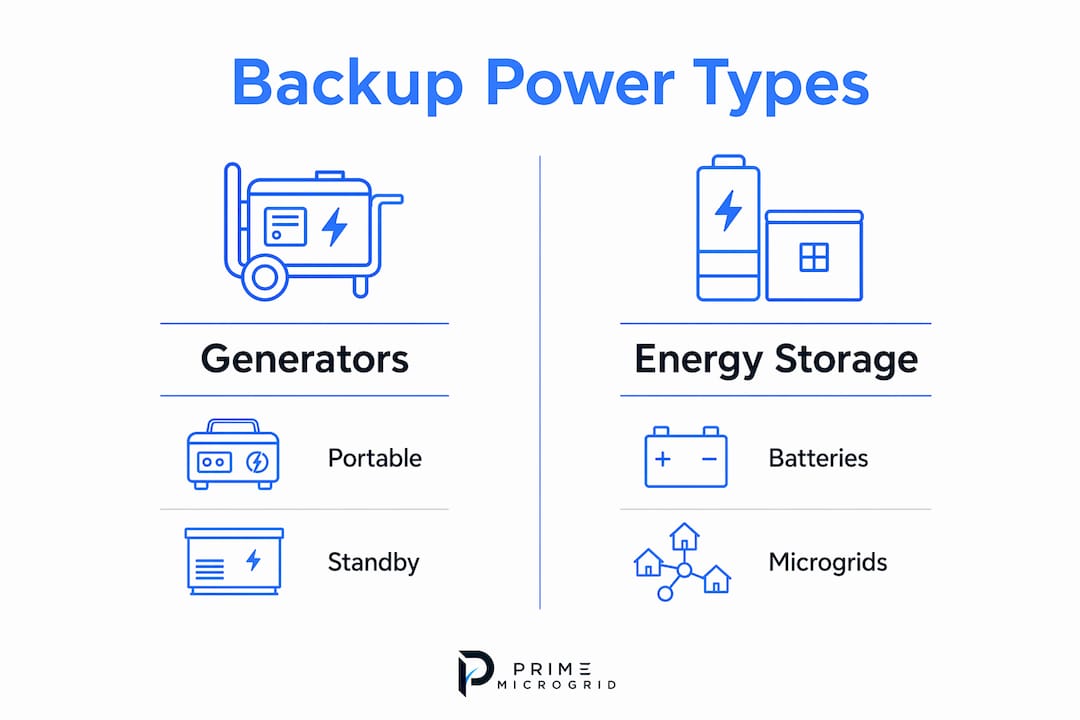
No single backup solution fits every home. Each technology has a distinct cost profile, operational character, and set of trade-offs worth understanding before you spend a dollar.
Portable generators cost between $500 and $2,000 and run on gasoline or propane. They're loud, require manual setup, need outdoor operation for carbon monoxide safety, and consume fuel continuously. They work well for short outages when you only need to power a few circuits. The Anker SOLIX F3800 is a high-capacity portable power station that bridges the gap between a traditional generator and a battery system, offering 6,000 watts of output with zero emissions indoors.
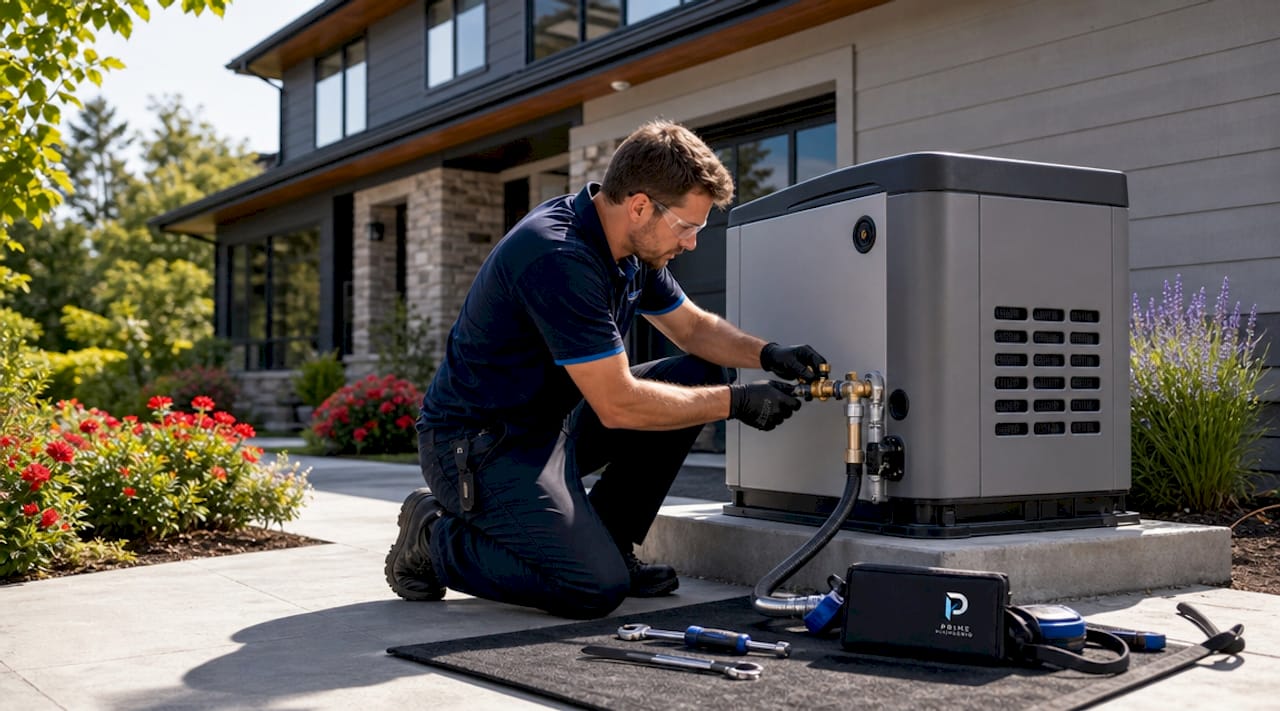
Standby generators like the Generac Guardian series are permanently installed, connect to natural gas or propane, and start automatically within seconds of a power failure. Standby generator costs run from $5,000 to $25,000 for equipment alone, with installation often matching or exceeding equipment cost. They're the right call for homes with more than five outages per year or for households that cannot tolerate any manual intervention.
Battery backup systems using LiFePO4 chemistry, such as the Tesla Powerwall 3, offer silent operation, zero emissions, and seamless integration with solar panels. LiFePO4 batteries are preferred indoors due to enhanced fire safety and longer cycle life. Whole-home battery systems range from $25,000 to $50,000 depending on home size and usage. Solar battery systems increasingly close the performance gap with traditional generators, making them attractive in urban and suburban settings where noise and emissions matter.
Residential microgrids combine batteries, generators, solar, and smart controls into a single managed system. They represent the most capable and most expensive tier of home backup power, but they also enable participation in virtual power plants for financial returns.
| Technology | Typical cost | Noise level | Fuel required | Auto-start | Best for |
|---|---|---|---|---|---|
| Portable generator | $500–$2,000 | Loud | Gasoline/propane | No | Short outages, low budget |
| Standby generator | $5,000–$25,000+ | Moderate | Natural gas/propane | Yes | Frequent or long outages |
| Battery system | $25,000–$50,000 | Silent | None (or solar) | Yes | Solar homes, urban areas |
| Residential microgrid | $30,000+ | Silent | Varies | Yes | Full energy independence |
How to choose the right backup power option for your home
Choosing between these technologies comes down to four practical filters: outage frequency, budget, lifestyle, and future plans.
- Outage frequency. Experts recommend standby generators for homes with more than five outages per year. For homes with fewer outages, a battery system paired with a portable generator covers most scenarios at lower total cost.
- Budget realism. Installation costs for standby generators are often comparable across sizes, meaning the jump from a smaller to a larger unit costs less than most homeowners expect. Factor in fuel and maintenance costs over a ten-year horizon, not just the purchase price.
- Noise and emissions. If you live in a neighborhood with noise ordinances, or if you have young children or light sleepers in the house, a battery system's silent operation is worth a significant price premium. Solar battery systems can often be installed without costly permits and operate safely indoors, which further reduces total project cost.
- Hybrid approaches. A battery handles short outages silently and instantly, while a generator recharges the battery during extended grid failures. Hybrid backup systems combining batteries with generators provide silent instant switchover and extended outage capacity. This layered strategy is often the most cost-effective path for homes in storm-prone regions.
Pro Tip: Buy a battery system with expansion slots even if you don't fill them immediately. Energy storage prices continue to fall, and a system designed for future scalability will cost far less to upgrade than one that requires full replacement.
Installation and maintenance considerations
Getting a backup system installed correctly is as important as choosing the right technology. Skipping steps here creates safety risks and can void warranties.
- Choose the right transfer switch. A manual transfer switch requires you to physically switch circuits during an outage. An automatic transfer switch (ATS) detects grid failure and switches your home to backup power within seconds. Standby generators and battery systems both require an ATS for seamless operation.
- Pull the necessary permits. Standby generator installations require electrical permits in most jurisdictions. Battery systems installed indoors without grid-tie connections often avoid this requirement, but check with your local authority having jurisdiction (AHJ) before assuming.
- Plan for fuel storage. Propane standby generators require a tank on your property. Natural gas units depend on utility supply, which can fail during major disasters. Gasoline portable generators need fresh fuel with stabilizer added for storage beyond 30 days.
- Schedule routine maintenance. Standby generators need annual oil changes, spark plug checks, and load bank testing. Battery systems require firmware updates and periodic capacity checks. Neglecting maintenance is the leading cause of backup system failure during actual outages.
- Use monitoring tools. Most modern battery systems, including the Tesla Powerwall 3 and Generac PWRcell, include Wi-Fi monitoring apps. These apps track state of charge, usage history, and system health. Smart load management features let you prioritize which circuits receive power first during an outage.
What are residential microgrids and why do they matter in 2026?
A residential microgrid is a localized energy system that can operate independently from the utility grid. It combines distributed energy resources, including solar panels, battery storage, a backup generator, and an intelligent controller, into a single managed network. In 2026, backup power is classified into five tiers, from portable power stations at Level 1 to virtual power plant participation at Level 5. Residential microgrids occupy the top tiers of this framework.
The benefits extend beyond outage protection:
- Energy independence. A microgrid can island from the grid during outages and run indefinitely when paired with solar and sufficient storage.
- Financial returns. Virtual power plant participation allows homeowners to export excess energy and earn credits or payments from utilities.
- AI-managed optimization. Smart controllers forecast weather, utility rates, and usage patterns to charge and discharge storage at the lowest cost.
- Resilience stacking. Unlike a single generator or battery, a microgrid has redundant sources, so no single component failure leaves you without power.
Microgrids are not for every homeowner. They require a larger upfront investment, a qualified installer, and a property with enough roof space or land for solar generation. Regional availability of virtual power plant programs also varies. For homeowners in areas with high electricity rates or frequent outages, the long-term economics are compelling.
Key takeaways
Choosing the right home backup power system requires matching your outage risk, daily energy needs, and budget to the technology that delivers the best long-term reliability, not just the lowest sticker price.
| Point | Details |
|---|---|
| Size before you shop | Calculate daily kWh needs and surge wattage before comparing any product. |
| Layered systems win | Combining a battery with a generator covers both short and extended outages better than either alone. |
| Installation costs matter | Standby generator installation often equals equipment cost; factor this into every budget comparison. |
| LiFePO4 is the indoor standard | This battery chemistry offers the best safety and cycle life for residential use in 2026. |
| Microgrids offer the highest ceiling | AI-managed residential microgrids provide energy independence and financial returns beyond basic backup. |
Why I think most homeowners are solving the wrong problem
Most homeowners I talk to frame backup power as a one-time purchase decision. They pick a product, install it, and move on. That framing leads to expensive regrets within five years.
The real question is not "which generator should I buy?" It's "what does my home's energy resilience look like in ten years?" A $1,500 portable generator solves today's problem but creates tomorrow's frustration when you realize it can't power your EV, your heat pump, or the battery system you'll want to add when solar prices drop further.
I've seen homeowners spend $8,000 on a mid-size standby generator, then spend another $15,000 two years later on a battery system that doesn't integrate cleanly with it. A generator versus battery storage comparison done upfront would have saved them both money and a second installation project.
The uncomfortable truth is that the cheapest backup option almost never stays cheap. Fuel costs, maintenance contracts, and the eventual need to upgrade all add up. If your budget allows any flexibility, invest in a system with expansion capacity from day one. The homeowners I've seen make the best decisions are the ones who treat backup power as infrastructure, not a product.
— David
How Primemicrogrid designs backup power for real homes
Primemicrogrid builds customized residential energy systems that go beyond a single generator or battery. Whether you need a whole-home battery backup, a hybrid generator-battery setup, or a full residential microgrid in the Mid Atlantic region, Primemicrogrid designs the system around your actual load profile, outage history, and long-term energy goals. Every system includes smart controls, load management, and the option to integrate solar, EV charging, and grid participation. If you're ready to move past guesswork and get a system sized correctly from the start, explore Primemicrogrid's microgrid vs. generator comparison or contact the team directly for a residential consultation.
FAQ
What is the most cost-effective home backup power option?
A battery plus portable generator combination delivers the best balance of cost and coverage for most homes. Experts recommend this hybrid approach for silent essential load backup during short outages and extended capacity during longer grid failures.
How much battery storage does a whole home need?
Most whole homes require 15 to 25 kWh per day for essential loads. For one to two days of autonomy, size your battery bank between 28 and 55 kWh of usable capacity, accounting for 80% depth of discharge.
Are standby generators worth the cost in 2026?
Standby generators are worth the investment for homes with more than five outages per year. For lower-frequency outage areas, a battery system often delivers better value when you factor in fuel savings and zero maintenance on combustion components.
What is a residential microgrid?
A residential microgrid is a localized energy system combining solar, battery storage, a backup generator, and a smart controller that can operate independently from the utility grid. At the highest tier, it enables virtual power plant participation and financial returns from exported energy.
Can I install a home battery system without an electrician?
Some plug-and-play solar battery systems avoid the permit requirements of standby generators and can be set up with minimal professional help. However, whole-home battery systems that connect to your main panel require a licensed electrician and, in most jurisdictions, an electrical permit.