
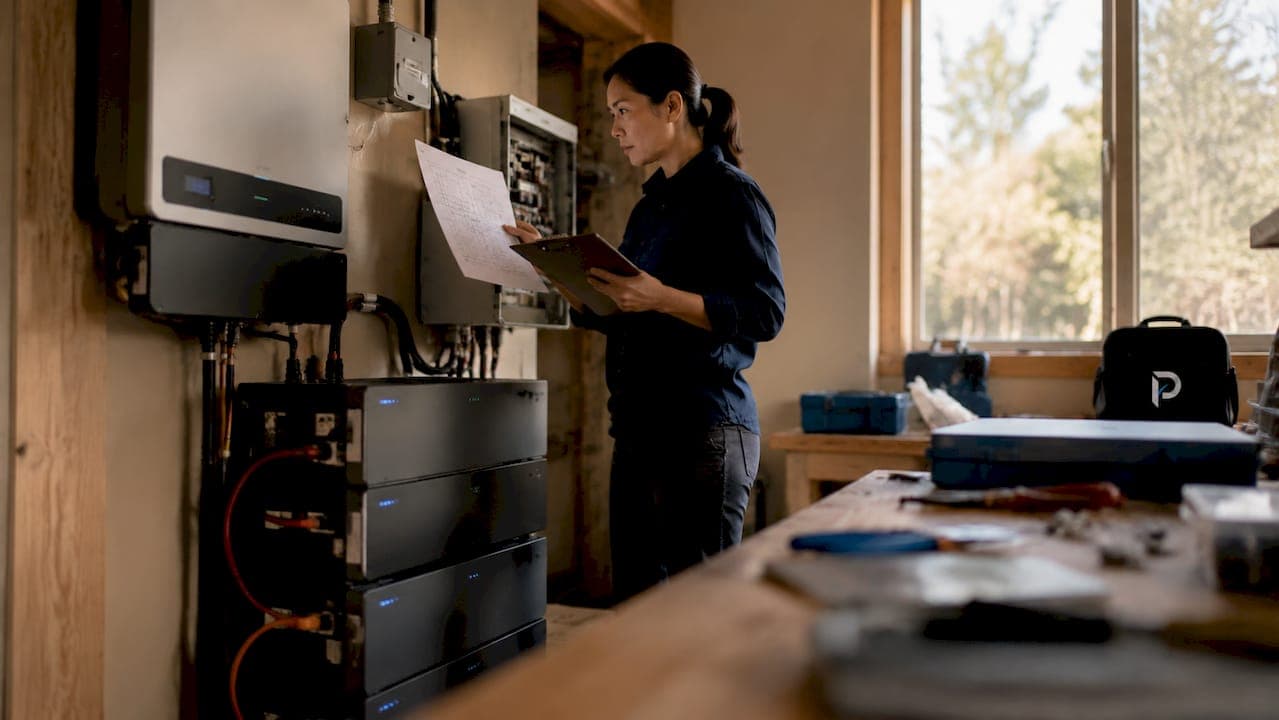
Solar-plus-storage integration is the process where a battery system captures electricity produced by solar panels during peak daylight hours and releases it when the sun isn't shining or when household demand spikes. How solar generation integrates with storage determines whether your panels actually deliver energy independence or just reduce your daytime bill. The coupling method you choose, the inverter configuration, and the commissioning software all shape how well your system performs. This guide breaks down the two primary integration topologies, the technology options available in 2026, and the practical factors that separate a well-designed system from one that underperforms.
How solar generation integrates with storage: DC vs. AC coupling explained
Two fundamental wiring topologies define how a battery connects to a solar array: DC coupling and AC coupling. Each has a distinct power flow path, and the right choice depends on whether you're building a new system or retrofitting an existing one.
DC coupling places the battery on the DC side of the system, upstream of the main inverter. Solar panels charge the battery directly before any DC-to-AC conversion happens. A single hybrid inverter then converts power for household use. The key advantage is efficiency: DC-coupled systems recover clipped energy that the inverter would otherwise waste when the solar array produces more power than the inverter's rated capacity. That recovered energy flows into the battery instead of being lost. The trade-off is hardware. DC coupling almost always requires replacing an existing string inverter with a hybrid unit, which adds cost and may void warranties on original equipment.
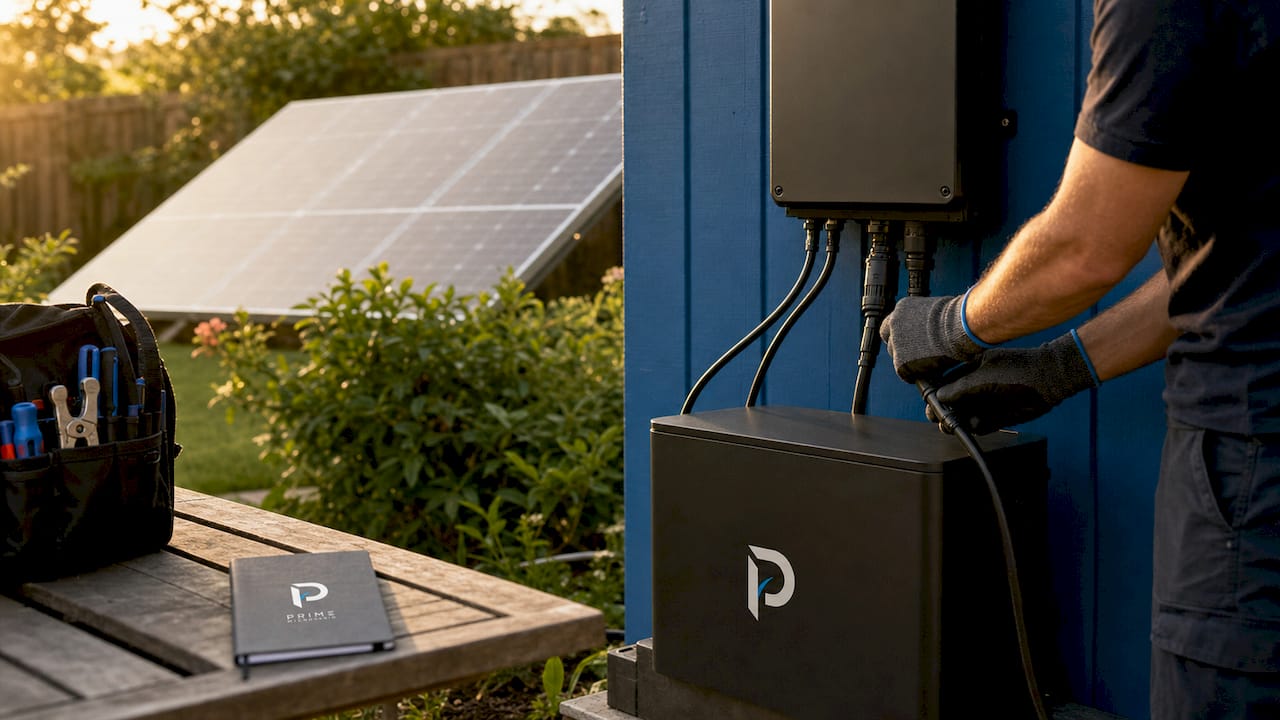
AC coupling connects the battery inverter on the AC side, after the existing solar inverter. Most residential retrofits use AC-coupled batteries positioned between the PV inverter and the utility meter, preserving the original solar hardware entirely. This makes AC coupling the practical default for homeowners who installed solar years ago and now want to add storage. The downside is a double conversion penalty: solar DC converts to AC through the PV inverter, then converts back to DC to charge the battery, then converts to AC again for use. Each conversion step loses a small percentage of energy.
Here is a quick comparison of the two approaches:
- DC coupling: Higher efficiency, clipping recovery, single inverter, requires inverter replacement for retrofits
- AC coupling: Easier retrofit, preserves existing hardware, supports grid charging, extra conversion losses
- DC coupling best for: New installations, high inverter loading ratio systems, maximum efficiency goals
- AC coupling best for: Existing solar systems, budget-conscious retrofits, systems combining wind and solar inputs
AC coupling allows charging from the grid and participation in ancillary markets, which makes it the preferred topology for hybrid systems that combine multiple generation sources.
Pro Tip: Before committing to DC coupling on a retrofit, check whether your existing solar inverter manufacturer offers a compatible hybrid upgrade path. Some brands allow a swap within the same product family, which can preserve monitoring data and reduce rewiring costs.
How does solar-plus-storage improve energy resilience?
Without storage, solar electricity must be consumed instantly or curtailed. A battery changes that equation entirely by time-shifting energy from midday surplus to evening demand. The practical result for a homeowner is that solar panels become a 24-hour power source rather than a daytime-only one.
The resilience benefits extend well beyond convenience. Here is how storage strengthens a solar-powered home:
- Time-shifting: The battery charges during peak solar production, typically 10 a.m. to 3 p.m., and discharges during the evening demand peak when grid electricity is most expensive.
- Curtailment reduction: Storage enables solar to contribute beyond sunshine availability, capturing generation that would otherwise be wasted when the grid cannot absorb it.
- Outage backup: A properly commissioned solar-plus-storage system can island from the grid, forming a self-contained microgrid that powers critical loads during blackouts.
- Output smoothing: Clouds and shadows cause rapid solar output swings. A battery absorbs those fluctuations, delivering steady power to your home and reducing stress on grid infrastructure.
- Demand management: Pairing storage with smart load controls lets you shift high-draw appliances like dishwashers and EV chargers to off-peak windows automatically.
The islanding capability deserves special attention. Systems like the Anker Solix E10 demonstrate how app-based commissioning configures islanding by recognizing solar input type and setting the correct grid profile. Without that software configuration step, the battery may not recognize when the grid has gone down and will fail to switch into backup mode.
"Storage acts as an insurance policy by capturing solar energy when generation is high and releasing it when demand is high or solar is unavailable, ensuring reliable supply." — U.S. Department of Energy
The role of solar in a microgrid goes beyond simple backup. When solar and storage are integrated with smart controls, the system can prioritize self-consumption, respond to utility signals, and maintain power quality during grid disturbances. That is the difference between a battery backup and a true residential microgrid.
What technical factors affect how solar integrates with storage?
The inverter is the brain of any solar-plus-storage system. Its configuration dictates every aspect of how power flows between panels, batteries, and your home. Getting the technical details right separates a system that performs as designed from one that clips solar production, drains the battery at the wrong time, or fails to island during an outage.
| Technical factor | DC coupling impact | AC coupling impact |
|---|---|---|
| Conversion stages | One (DC to AC) | Three (DC-AC, AC-DC, DC-AC) |
| Clipping recovery | Yes, battery captures clipped DC | No, clipped energy is lost |
| Retrofit complexity | High (inverter replacement likely) | Low (add battery inverter only) |
| Grid charging capability | Limited | Yes, battery can charge from grid |
| Sizing flexibility | Tied to hybrid inverter specs | More modular, mix-and-match |
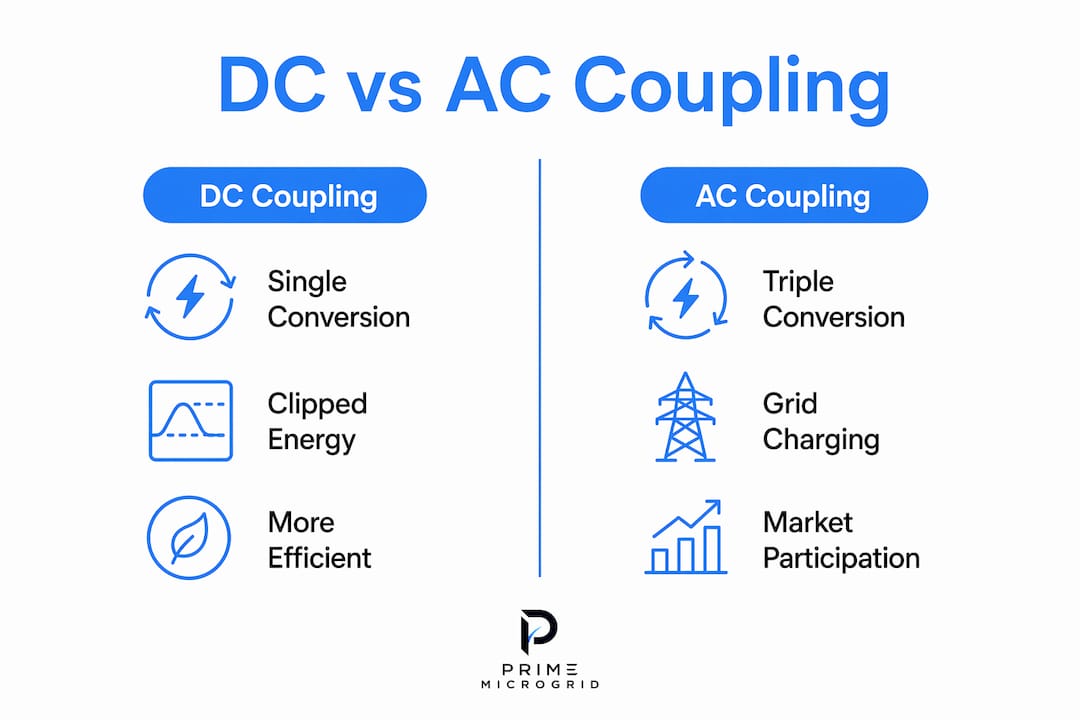
Inverter loading ratio (ILR) is a critical sizing variable. A high ILR means the solar array is oversized relative to the inverter, which causes clipping during peak production hours. DC coupling helps recover this clipped solar energy by routing the excess directly into the battery before it reaches the inverter's capacity ceiling. For systems with a high ILR, DC coupling can meaningfully increase total energy harvested over a year.
Battery sizing is where many homeowners make an expensive mistake. Battery sizing should prioritize meeting evening and overnight consumption rather than matching the solar array size. Most homes shift between 6 and 12 kWh of usage into evening hours. Buying a 20 kWh battery to match a 10 kW solar array wastes capital without delivering proportional value.
Commissioning is the final technical layer that most homeowners never see but that determines whether the system actually works during an outage. Integration commissioning includes setting up frequency-watt response and anti-islanding to maintain stable microgrid operation. Solar inverters must be configured to communicate grid states so the system knows when to island, when to reconnect, and how to manage power quality without grid support.
Pro Tip: Accurate sizing requires full-year simulation data, not back-of-envelope math. Ask your installer to model clipping losses and battery dispatch using at least 12 months of local irradiance data before finalizing equipment specs.
What storage technologies pair best with residential solar?
Electrochemical batteries are the most commonly coupled storage technologies with solar PV systems, and lithium-ion chemistry dominates the residential market in 2026. Lithium iron phosphate (LFP) cells in particular have become the standard for home storage because of their thermal stability, long cycle life, and declining cost per kilowatt-hour.
Beyond lithium-ion, several other technologies serve specific use cases:
- Thermal energy storage: Used primarily with concentrated solar thermal (CSP) plants, not residential PV. Stores heat in molten salt or similar media for later electricity generation.
- Compressed air energy storage (CAES): Suited for utility-scale applications. Requires geological formations or large pressure vessels, making it impractical for homes.
- Flywheels: Deliver very fast response times and high power density but low energy capacity. Better for frequency regulation than overnight storage.
- Flow batteries (vanadium redox): Scalable capacity, long cycle life, and no degradation from deep cycling. Cost and complexity currently limit residential adoption, but commercial projects are growing.
- Hydrogen fuel cells: Store surplus solar as hydrogen via electrolysis, then generate electricity on demand. Promising for long-duration storage but not yet cost-competitive for most homeowners.
For the vast majority of residential solar-plus-storage systems, lithium-ion remains the practical choice. The technology is mature, widely supported by installers, and compatible with every major solar inverter platform. Emerging chemistries like sodium-ion may shift that calculus within the next few years, but in 2026 they remain early-stage for home applications.
The solar battery integration decision ultimately comes down to three variables: how many hours of backup you need, how much daily cycling the battery will handle, and what your budget allows per kilowatt-hour of usable capacity.
Key takeaways
Solar-plus-storage integration works by coupling a battery to a solar array through either DC or AC topology, with the coupling method, inverter configuration, and commissioning software determining system efficiency, resilience, and backup capability.
| Point | Details |
|---|---|
| DC vs. AC coupling | DC coupling recovers clipped energy and is more efficient; AC coupling is easier to retrofit without replacing hardware. |
| Battery sizing rule | Size the battery to cover evening and overnight load (6 to 12 kWh for most homes), not to match the solar array size. |
| Commissioning matters | Anti-islanding and frequency-watt response settings must be configured correctly for reliable outage backup. |
| Storage extends solar value | Without a battery, solar energy must be used instantly or wasted; storage enables use after sunset and during outages. |
| Technology choice | Lithium-ion (LFP) is the dominant residential chemistry in 2026, with flow batteries and hydrogen emerging for longer-duration needs. |
What I've learned designing solar-plus-storage systems
The most common misconception I encounter is that a bigger battery automatically means a better system. Homeowners see a 20 kWh battery and assume it will cover everything. What actually matters is whether the battery's power rating matches the loads you need to run simultaneously during an outage, and whether the solar array can recharge it within a reasonable window on a typical day. A well-sized 10 kWh system with a strong recharge rate outperforms an oversized 20 kWh system that takes two cloudy days to refill.
The second thing I've seen trip up otherwise good installations is skipping proper commissioning. The hardware can be perfect, but if the inverter's grid profile is set incorrectly or the anti-islanding threshold is misconfigured, the system will either fail to island during an outage or trip offline unnecessarily. Software configuration is not a checkbox. It is the difference between a system that works when you need it and one that looks good on paper.
I'm also skeptical of the retrofit-versus-new-install framing that dominates most online discussions. The real question is what you're optimizing for. If you have an existing solar system with a high inverter loading ratio and significant clipping losses, DC coupling with a hybrid inverter replacement can pay for itself in recovered energy over time. If your existing system is sized conservatively and clipping is minimal, AC coupling is the smarter financial choice. There is no universal answer, and anyone who tells you otherwise is selling you a product, not a solution.
The direction the industry is moving is clear: integrated microgrids with smart controls, not standalone batteries. The homes that will have genuine energy independence in five years are the ones being designed today with load management, grid interaction, and software-driven dispatch built in from the start.
— David
Build a solar-plus-storage system designed for real resilience
Most battery backup products are designed to handle a single outage, not to function as a long-term energy management system. Primemicrogrid takes a different approach. Every residential system we design integrates solar generation, battery storage, smart controls, and load management into a single coordinated microgrid. The result is a home that manages its own energy, reduces grid dependence, and keeps running when the grid goes down.
If you're in the Mid-Atlantic region, explore our residential microgrid solutions built specifically for homes that want solar-plus-storage done right. Not sure whether a microgrid outperforms a standalone generator? Our microgrid vs. generator comparison breaks down the real cost and performance differences so you can make an informed decision.
FAQ
How does solar generation integrate with storage?
Solar panels produce DC electricity during daylight hours, which either powers your home directly or charges a battery through a DC-coupled or AC-coupled inverter system. The battery then discharges during evening hours, cloudy periods, or grid outages to maintain continuous power supply.
What is the difference between DC and AC coupling?
DC coupling connects the battery before the main inverter, enabling direct solar charging and clipping recovery but typically requiring inverter replacement. AC coupling adds a battery inverter on the AC side of an existing system, making it the standard retrofit method without hardware changes to the original solar installation.
How large should a home battery be for solar storage?
Battery capacity should be sized to cover evening and overnight consumption rather than matched to the solar array size. Most homes need between 6 and 12 kWh of usable storage, and oversizing beyond actual nightly load adds cost without meaningful benefit.
Can a solar-plus-storage system power a home during a grid outage?
Yes, provided the system is properly commissioned with islanding capability. The inverter must be configured with the correct grid profile and anti-islanding settings so it recognizes when the grid has failed and switches to backup mode automatically.
What battery technology works best with residential solar?
Lithium iron phosphate (LFP) batteries are the leading choice for residential solar integration in 2026, offering long cycle life, thermal stability, and broad inverter compatibility. Flow batteries and hydrogen storage are emerging for longer-duration applications but remain cost-prohibitive for most homeowners.