
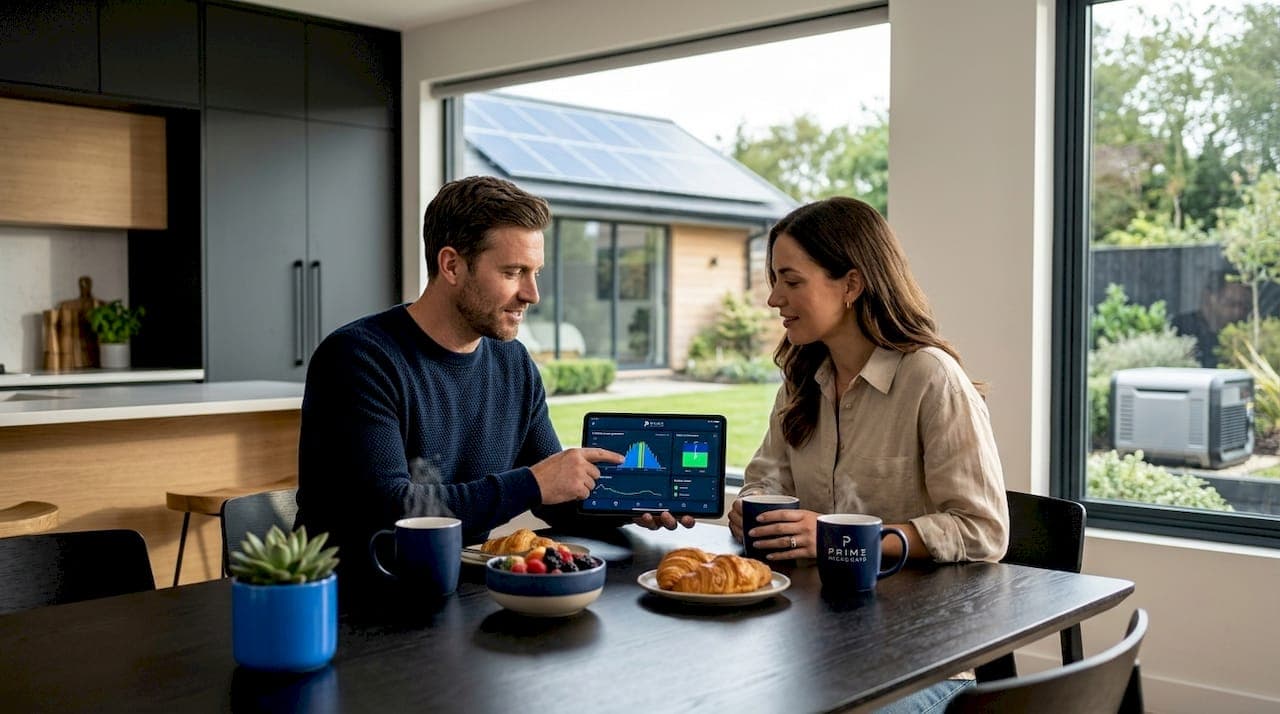
Most homeowners don't think about their power setup until the lights go out. Then it's too late. If you want to combine a solar generator battery home system that handles both short interruptions and multi-day outages, you need more than a portable battery on a shelf. You need a layered strategy, the right hardware, and a clear understanding of how these systems talk to each other. This guide walks you through every step, from sizing your system to wiring it safely, so you can make decisions with confidence.
Table of Contents
- Key takeaways
- How to combine solar generator battery home systems
- Safety and legal requirements before you start
- Step-by-step integration process
- Comparing your system design options
- Troubleshooting and optimizing your system
- My honest take on combining these systems
- How Primemicrogrid can help you design the right system
- FAQ
Key takeaways
| Point | Details |
|---|---|
| Layer your backup | Battery handles short outages instantly; a generator covers multi-day events automatically. |
| Safety hardware is non-negotiable | A transfer switch or interlock kit is required by code to prevent dangerous backfeed. |
| Voltage compatibility matters | Many portable stations only run 120V and cannot power 240V loads like central A/C or well pumps. |
| Size before you buy | Calculate your critical load requirements and match battery capacity and solar array size before purchasing equipment. |
| Modular systems grow with you | Expandable battery platforms let you start small and scale up as your energy needs change. |
How to combine solar generator battery home systems
When you combine solar energy systems with battery storage and a backup generator, you create what energy professionals call a layered backup strategy. Each layer handles a different type of outage scenario, and together they cover nearly every situation a homeowner faces.
A solar generator is an all-in-one unit that combines a battery, an inverter, a charge controller, and AC/DC outlets. Portable models range from a few hundred watts to several kilowatts. They charge from solar panels, a wall outlet, or a gas generator. A home battery system like the Tesla Powerwall or similar whole-home units is designed to integrate directly with your electrical panel. It charges from rooftop solar, the grid, or both, and switches on automatically during an outage.
Here is how each layer functions in practice:
- Battery system: Responds to outages in milliseconds with no noise and no fuel. Best for interruptions lasting a few hours. The Tesla Powerwall 3 offers 13.5 kWh capacity with a "blinkless" transition so your devices never notice the switch.
- Solar generator: Recharges daily from sun exposure, extending usable runtime without grid power. Units like the EcoFlow DELTA 3 Ultra Plus support 3 to 11 kWh expandable capacity and can reach 80% charge in under an hour with combined solar and generator input.
- Backup generator: Runs on propane, natural gas, or gasoline to refuel the battery during extended outages when solar production is insufficient. Layered backup systems let the battery handle short interruptions quietly and automatically while the generator activates for events lasting days.
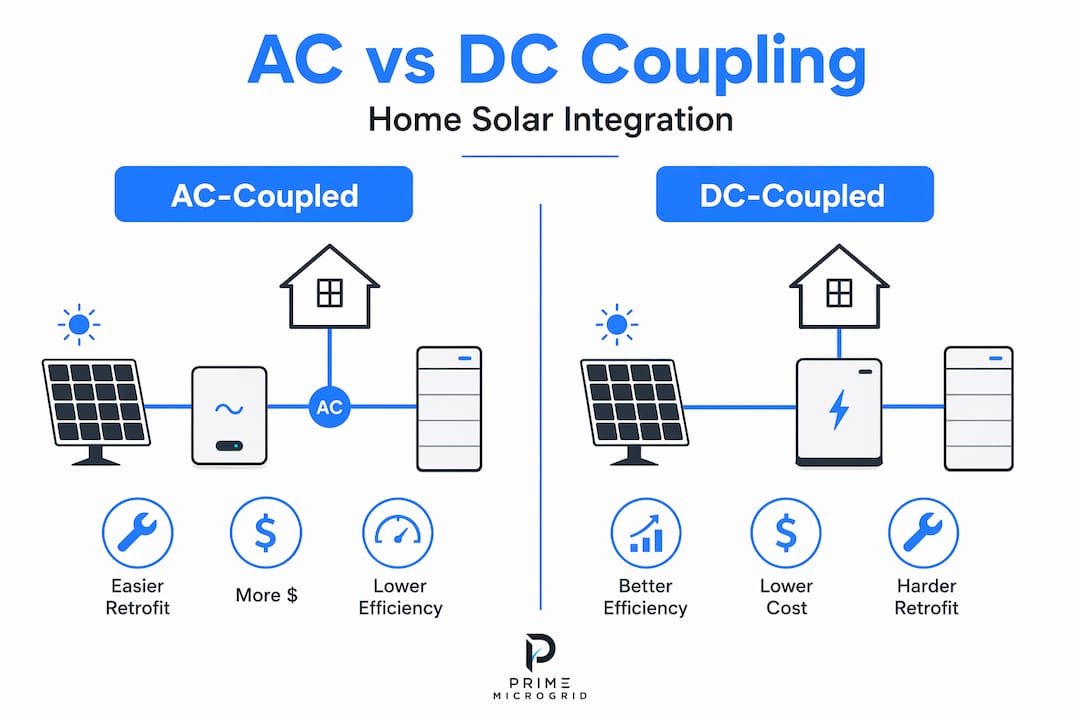
The connection between your solar array and battery can be either DC-coupled or AC-coupled. DC-coupled means solar panels wire directly into the battery's charge controller, which is more efficient. AC-coupled retrofits route solar output through a microinverter first, then feed it into the battery system's dedicated PV input. The AC-coupled approach requires configuring specialized PV input terminals and commissioning the system through a control app, which adds steps but works well when you already have grid-tied solar installed.
Pro Tip: If you are starting fresh with no existing solar panels, choose a DC-coupled setup. You get better efficiency and simpler wiring with fewer points of failure.
Safety and legal requirements before you start
This is where most DIY projects go wrong. Connecting any generator or external power source directly to your home's outlets without proper switching hardware creates a serious risk called backfeed. Backfeed sends electricity back onto the utility lines, creating a lethal hazard for utility workers who assume the line is dead.
The only safe and legal method to connect a portable solar generator to your home's wiring is through a dedicated hardware chain: a generator inlet box wired to a transfer switch or interlock kit at your main panel. There are no shortcuts here.
Key requirements to address before installation:
- Transfer switch or interlock kit: Physically prevents your home from being connected to both the grid and the generator at the same time.
- Generator inlet box: A weatherproof outdoor outlet where you plug in the generator's power cord, rated for the amperage your system requires.
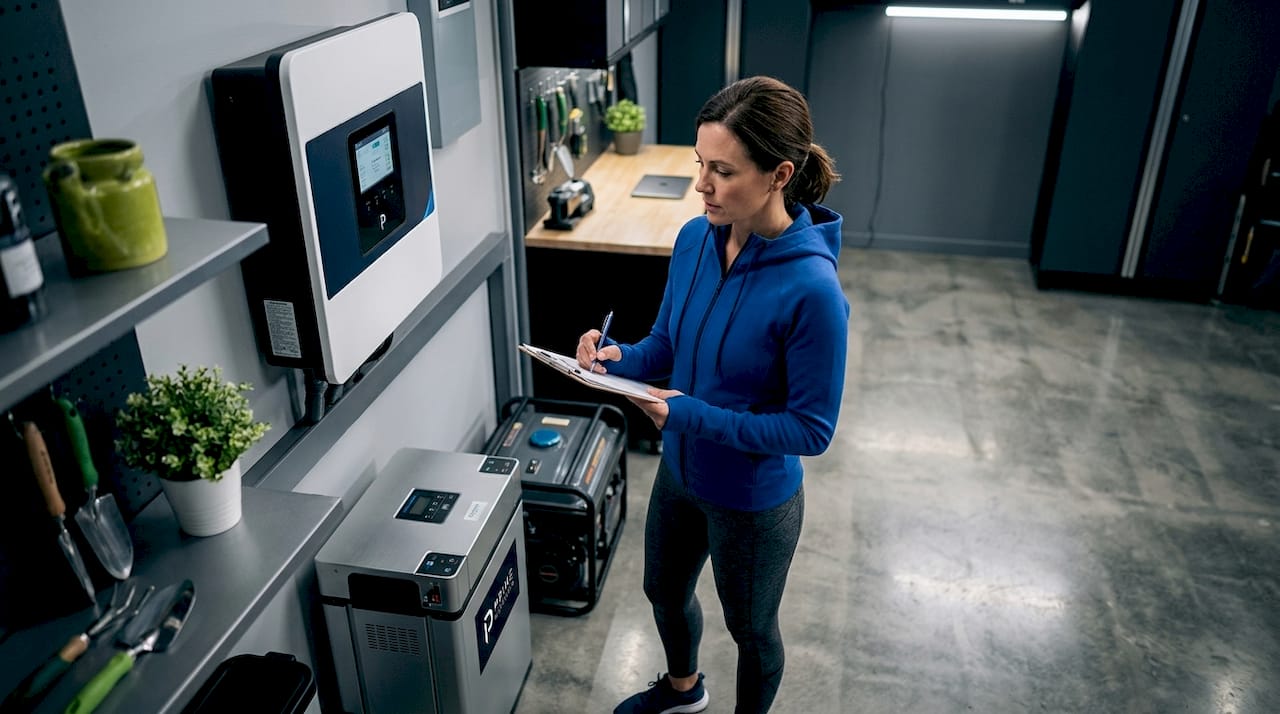
- Voltage matching: Many portable power stations are rated for 120V only. If you need to power 240V loads like a central air conditioner, electric dryer, or well pump, you need a unit or inverter rated for 240V split-phase output.
- Licensed electrician: Professional installation of transfer switches and inlet boxes is mandatory for code compliance and insurance validity.
- Equipment certification: Look for UL or ETL listing on all components. Uncertified equipment can void your homeowner's insurance.
Never plug a generator into a wall outlet, even for "just a second." This is called backfeeding, and it is illegal in every U.S. jurisdiction. It can kill utility workers and destroy your home's wiring.
Pro Tip: Ask your electrician about a whole-panel interlock kit instead of a subpanel transfer switch. It costs less and gives you flexibility to choose which circuits to power manually, rather than locking you into a pre-selected set of critical circuits.
Step-by-step integration process
Planning your solar generator setup correctly before buying equipment saves thousands of dollars and prevents compatibility problems later.
- Assess your critical loads. List every appliance you need during an outage, including its wattage and estimated daily runtime. Refrigerator, lights, internet router, sump pump, and medical equipment should come first. Total that up to get your minimum daily kilowatt-hour requirement.
- Size your battery and solar array. A good rule: your battery should store at least 1.5 times your daily critical load. Your solar array should be able to fully recharge that battery on an average sun day. If you live in the Mid-Atlantic or Northeast, plan for 3.5 to 4.5 peak sun hours per day.
- Choose compatible equipment. Match inverter output ratings to your load requirements. Modular battery platforms like the Anker Solix F3800 Plus start at 3.84 kWh and scale to over 27 kWh, with two units paired for 12,000W inverter output.
- Install the generator inlet box and transfer switch. This is electrician territory. Have your licensed professional install the inlet box outside and wire it to either a transfer switch or an interlock kit at your main breaker panel.
- Configure charging modes. Most modern solar generators and home battery systems support three charging modes: solar priority, grid charging, and hybrid (solar plus grid or solar plus generator simultaneously). Set solar as your primary and generator as your backup charging source.
- Set up monitoring. Most current systems include smartphone apps that show real-time state of charge, solar input, load consumption, and charging source. Use these to spot problems early and optimize how you run appliances during an outage.
| Step | Key action | Who does it |
|---|---|---|
| Load assessment | Calculate daily kWh for critical circuits | Homeowner |
| System sizing | Match battery, solar, and inverter capacity | Homeowner + installer |
| Equipment purchase | Select certified, compatible hardware | Homeowner |
| Electrical installation | Install inlet box and transfer switch | Licensed electrician |
| System configuration | Set charging modes and app connectivity | Homeowner + installer |
| Monitoring setup | Connect app, test failover, verify alerts | Homeowner |
Comparing your system design options
Not every home needs the same setup. Your choice depends on your budget, how long you expect outages to last, and whether you want true energy independence or just reliable backup.
| Design | Upfront cost | Outage coverage | Solar integration | Best for |
|---|---|---|---|---|
| Battery only | Medium | 4 to 12 hours | Direct | Short, frequent outages |
| Solar generator standalone | Low to medium | 12 to 24 hours | Built-in | Smaller homes, flexibility |
| Battery plus rooftop solar | High | 1 to 3 days | Full | Near-daily solar production |
| Hybrid: battery + solar + generator | High | Unlimited | Full | Whole-home independence |
The hybrid solar generator setup is the most capable option. It costs more upfront but eliminates almost every failure mode. The layered approach uses the battery for instant, silent response and the generator to recharge the battery during prolonged cloudy periods or high-demand events.
AC-coupled versus DC-coupled also affects your cost model significantly. If you are retrofitting solar power storage solutions onto an existing grid-tied system, AC-coupling avoids rewiring your panels. If you are building from scratch, DC-coupling is more efficient and often less expensive to install.
Expandability deserves weight in your decision. Modular upgrades let you add battery capacity over time without replacing your core inverter hardware, which matters as electricity rates rise and your household energy needs shift.
Troubleshooting and optimizing your system
Even a well-designed system needs attention. Here are the issues homeowners encounter most often when installing a solar generator system, and how to handle them.
- Undersized battery: If your battery hits zero before the grid returns, add a second battery module before upgrading your solar array. Storage is almost always the bottleneck, not solar input.
- Transfer switch not engaging: Check your generator's output voltage and frequency first. A mismatch between generator specs and your home wiring is a common cause. Your electrician can test and adjust this.
- Generator running too long: Running a gas or propane generator continuously burns fuel and increases maintenance costs. Configure your system to use the generator only when battery state of charge drops below 20 to 30 percent, then shut it off once the battery reaches 80 percent.
- Battery degradation: Most lithium iron phosphate (LFP) batteries in home backup applications are rated for 3,000 to 6,000 charge cycles. Avoid regularly charging to 100 percent or discharging below 10 percent to extend battery life.
- Seasonal solar drops: Winter sun hours can be 40 to 50 percent lower than summer peak in northern states. Plan your system for your worst-case solar month, not your best.
Pro Tip: Schedule a full system test twice a year. Disconnect from the grid manually, run your critical loads for two hours on battery and solar alone, and verify every circuit you expect to work actually does. This catches problems before a real outage does.
My honest take on combining these systems
I've worked with enough homeowners to know that the biggest mistake in planning a solar battery home system is not undersizing the battery. It's skipping the planning phase entirely and buying hardware that sounds impressive in a review but doesn't fit the home.
Portable power stations get marketed as whole-home backup. Most of them aren't. A 3 kWh unit might cover your refrigerator and lights for a night, but it will not run your well pump or keep the house at a reasonable temperature in August. I've seen homeowners spend $4,000 on a portable station and still lose their food during a three-day outage because the unit couldn't handle 240V loads or recharge fast enough from the small panel kit they bought alongside it.
What actually works is starting with your loads, not with a product. Know what you need to keep running, for how long, in the worst conditions. Then build backward to your battery size, your solar array, and whether you need a generator in the mix. For most whole-home scenarios, the answer is yes. You need a generator in the stack. Not because solar and batteries fail, but because January clouds in the Northeast are real and three consecutive overcast days will drain any reasonable battery bank.
The whole-home approach is almost always worth the additional planning and cost. The systems that frustrate people are the ones assembled piecemeal without a design.
— David
How Primemicrogrid can help you design the right system
Building a hybrid solar and battery backup system that actually works for your home takes more than buying the right hardware. It takes design work: calculating loads, selecting compatible components, sizing the solar array, and making sure every piece of the system communicates correctly under real outage conditions.
Primemicrogrid specializes in exactly this kind of work. Whether you need a residential microgrid solution in the Mid-Atlantic region or a home battery backup system built around your specific critical loads, Primemicrogrid designs systems around your home's actual needs, not a catalog package. Primemicrogrid's approach combines battery storage, solar generation, generator integration, smart controls, and load management into a single coordinated system. If you want reliable power independence without the guesswork, reach out to Primemicrogrid for a personalized energy assessment.
FAQ
Can I combine solar batteries from different brands?
Mixing battery brands in a single system is generally not recommended. Most battery management systems are designed to work with specific cell chemistries and communication protocols, and mixing brands can cause charging imbalances, safety faults, or voided warranties.
What size battery do I need for a whole-home solar backup?
Most whole-home systems need between 10 and 30 kWh of storage depending on your critical loads. Start by calculating your daily essential energy use, then size your battery to cover at least one to two days without solar input.
Is a transfer switch required for a solar generator setup?
Yes. A transfer switch or interlock kit is required by electrical code whenever you connect any generator to your home's wiring. It prevents backfeed, which is a serious safety and legal issue.
How long can a solar generator battery system run a home?
Runtime depends entirely on battery capacity and load. A 13.5 kWh system like the Tesla Powerwall 3 can run a typical home's critical loads for 12 to 24 hours. Adding solar input and a backup generator can extend that to indefinitely with proper sizing.
What is the difference between AC-coupled and DC-coupled solar battery systems?
DC-coupled systems connect solar panels directly to the battery's charge controller for higher efficiency and are best for new installations. AC-coupled systems convert solar output to AC power first and are a better fit for retrofitting onto an existing rooftop solar array.