
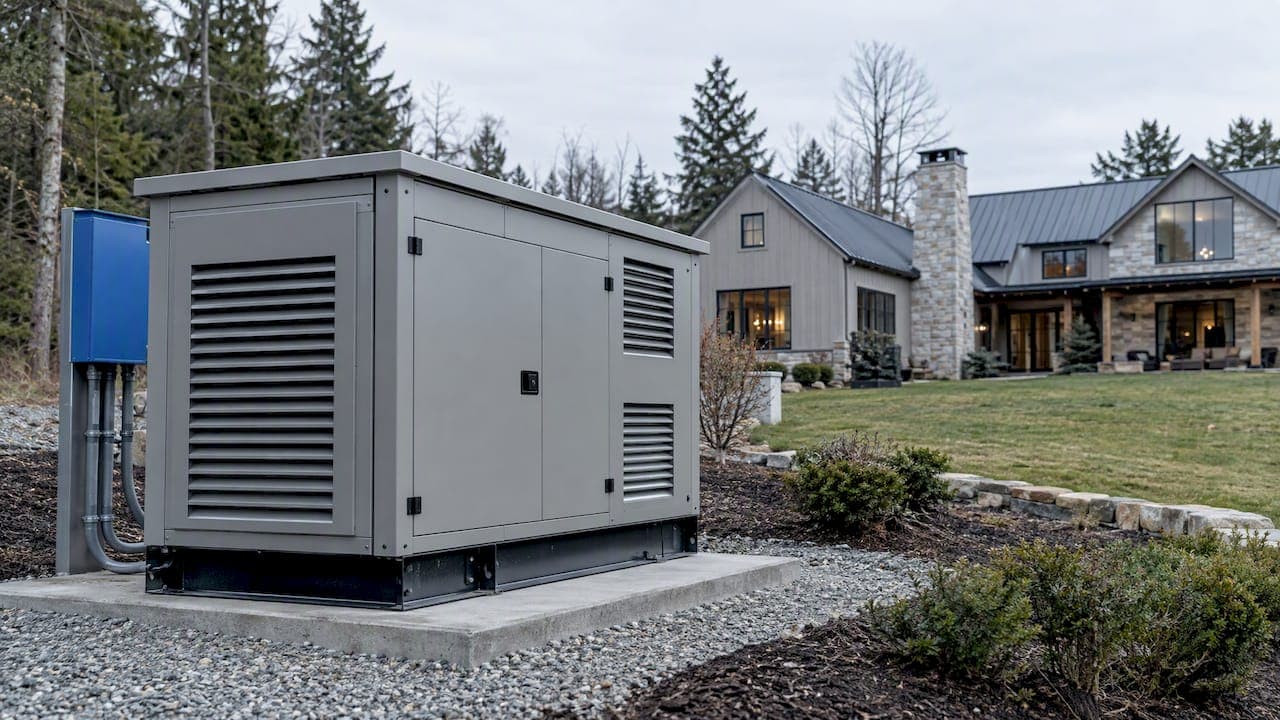
The fastest ways to quiet a generator are to move it farther away, isolate its vibration, fit an exhaust silencer, and house it in a ventilated acoustic enclosure. Expect real but bounded gains: a 2026 meta-analysis found a mean reduction of 14.66 dB across methods. Safety comes first: run portable units outdoors, away from windows, doors, and vents, because exhaust carries carbon monoxide.
TL;DR:
- The EPA recommends 20 feet from homes for portable generators, while CPSC staff recommend greater separation because exhaust can travel 25 feet or farther.
- Treat exhaust with a silencer rated for engine flow, vibration with properly loaded isolators, and casing noise with a heavy shell and interior absorption.
- Cummins guidance says standard steel or aluminum enclosures typically cut radiated noise by at least 10 dB(A); special enclosures and silencers can reduce more.
- For custom housings, verify manufacturer clearances and local code, keep intake air separate from exhaust, and test temperatures under sustained load before use.
Table of Contents
- How do generators make noise, and which source do you treat first?
- Which enclosure types and materials actually reduce generator noise?
- How do you keep CO and overheating out of an enclosure design?
- How does vibration isolation stop structure-borne noise?
- What exhaust silencers and intake attenuators should you fit?
- How do you build a soundproof generator enclosure step by step?
- When do ready-made and temporary barriers make sense?
- What do the research, EPA, CPSC, and NFPA say?
- How do you maintain a sound enclosure so it lasts?
- How does enclosure design affect generator cooling and performance?
- Which standards and regulations set noise limits for generators?
- How does an enclosure affect service access and maintenance?
- How does a sound enclosure fit into a microgrid or hybrid generator system?
- Our view: priorities for homeowners and property managers
- FAQ
- Sources
How do generators make noise, and which source do you treat first?
Noise reaches your ears through airborne sound and vibration. Airborne noise radiates from the machine through the air. Structure-borne noise travels as vibration through the pad, frame, or wall the generator touches, then re-radiates as a hum or rumble. Good treatment plans address both.
Common sources, from loudest to subtler:
- Exhaust: the raw output of the engine, often the dominant source until a silencer is fitted.
- Engine block and casing: mechanical and combustion noise radiating in every direction.
- Cooling fan and air intake: broadband whoosh that grows with load.
- Vibration path: feet, frame, and mounting surface turning engine shake into low-frequency drone.
Low-frequency sound is the stubborn part. Thin foam barely touches it, so you need mass (steel, MDF, dense layers) and distance. High-pitched noise is easier and yields to absorbers.
Match the fix to the source. Isolation mounts handle vibration, a muffler handles exhaust, and an enclosure handles radiated casing noise. Treat the loudest source first, then re-measure before spending more.
Which enclosure types and materials actually reduce generator noise?
You will see three broad categories: factory sound-attenuating enclosures, engineered multilayer enclosures, and light DIY quiet boxes. The first two are designed and tested as systems. The third works only if you respect airflow and clearances, which we cover below.
Materials serve different purposes:
- Blockers: steel, aluminum, or MDF shells that stop low-frequency sound by sheer mass.
- Absorbers: mineral wool or acoustic batting lining the interior to soak up mid and high frequencies.
- Mass and damping layers: mass-loaded vinyl (MLV) or constrained-layer panels that add weight without adding much thickness.
Blocking without absorbing makes a drum: sound bounces around inside and the box rings. Absorbing without blocking lets low tones sail through. You need both.
Here is a realistic benchmark. Cummins technical guidance states that standard steel or aluminum enclosures typically cut radiated noise by a minimum of 10 dB(A), while special sound-attenuating enclosures and silencers deliver larger reductions.
The tradeoffs are ventilation and cost. Every dB you gain from a tighter box costs you airflow, so a quiet enclosure is mostly a ventilation design problem wearing an acoustics costume.
How do you keep CO and overheating out of an enclosure design?
Start with the rule that overrides everything: never run a portable generator indoors, in a garage, basement, or shed. The EPA and the CPSC both stress that exhaust contains carbon monoxide that can incapacitate and kill, and that units belong outside, away from windows, doors, and vents. An acoustic box is not an exception to that rule.
Clearances deserve a careful read. NFPA 37 typically calls for 5-foot clearances for stationary engine installations, but CPSC staff reviewing stationary generator incidents found exhaust can travel 25 feet or more and recommended larger separations from openings. Treat code minimums as a floor, not a target. Point the exhaust away from the house, and never add deflectors that steer it back toward an opening.
Airflow and exhaust routing checklist:
- Verify the manufacturer's clearance and ventilation requirements before cutting a single panel.
- Mark the exhaust side and route it through a silencer to an outlet that discharges away from structures.
- Build baffled inlet and outlet ducts so air flows through while sound path lines are broken.
- Keep the intake air path separate from the exhaust path so hot, CO-laden gas is never drawn back in.
- Watch engine temperature during a sustained load run and open the vents up if it climbs.
- Install working CO alarms in occupied spaces nearby, and test them.
Pro Tip: Make the inlet and outlet openings slightly bigger than the manufacturer's minimum, then add baffle depth. It is easier to tighten up a vent that runs cool than to rescue an engine that runs hot.
How does vibration isolation stop structure-borne noise?
If your generator sits on a deck, concrete pad, or wall-adjacent slab, vibration can be louder than the engine itself once it enters the structure. Decoupling the machine from what it touches cuts the low-frequency drone that no amount of foam will fix.
Common isolation hardware:
- Rubber pads: simple and cheap, suited to smaller, lighter units.
- Neoprene mounts: a step up in damping, available in load ratings.
- Spring isolators: better for heavier equipment and lower frequencies.
- Floating platforms: a heavy base on isolators, decoupling the whole assembly.
Installation matters as much as the hardware. Size mounts to the generator's actual weight, because overloaded rubber goes solid and underloaded rubber does nothing. Level the unit so the load spreads evenly. Secure it so it cannot walk, but never bolt through the isolator in a way that creates a rigid shortcut back into the slab. Flexible connections for fuel and electrical lines keep vibration from sneaking out along the cables.
The payoff is less low-frequency transmission and less structure-borne noise radiating from walls or floors. For a deeper look at how vibration limits are specified in practice, this technical discussion of construction vibration limits is a useful companion read.
Pro Tip: Do a hand test after mounting. If you can feel the pad or nearby wall buzzing while the unit runs, vibration is still finding a path into the structure.
What exhaust silencers and intake attenuators should you fit?
Exhaust is usually the biggest single noise source, so a good silencer is often the best return per dollar. Two common families are:
- Reactive (chamber) silencers: use internal chambers to cancel low-frequency exhaust pulses.
- Dissipative silencers: use absorbent packing to soak up mid and high frequencies.
Many quality units combine both. The tradeoff is backpressure: more sound reduction usually means more restriction, and too much backpressure costs power and raises engine temperature. Choose a silencer rated for your engine's size and flow.
Intake and cooling air need attention too. Options include lined plenums, duct silencers, and baffles. Size them so cooling airflow stays whole, since a quiet intake that starves the engine is a failure.
Installation tips:
- Point the exhaust away from structures and openings, every time.
- Avoid small-radius bends and long, narrow runs that choke flow.
- Support the pipe so its weight and heat do not stress the engine outlet.
- Verify cooling under sustained load, not just during a brief test.
Exhaust components run hot, so keep clearance from combustibles and shield anything people or pets could touch.
How do you build a soundproof generator enclosure step by step?
This plan puts safety first and acoustics second, because an enclosure that fails on either is not worth building. Confirm your generator is a model that can legitimately run inside a ventilated housing, and check local code before you start. For permanent wiring work, our guide to generator grounding requirements covers what a wired installation involves.
Materials checklist: an outer shell (steel or MDF), mineral wool or rock wool for interior absorption, an MLV or similar mass layer, baffled vent boxes, vibration pads or isolators, and a compatible exhaust silencer.
Build steps:
- Check manufacturer clearances, mark the exhaust side, measure the unit with room for service, and confirm local code. Plan CO alarm placement and airflow before anything else.
- Build the frame and outer shell with sealed joints, leaving the exhaust side and service side planned in.
- Construct baffled inlet and outlet ducts with lined, offset paths so air passes but sound cannot go straight through.
- Line the interior with absorptive material and add the mass layer, keeping every vent path clear.
- Set the generator on isolators inside the shell, leveled and not touching the walls.
- Route the exhaust through the silencer and out through an external baffled outlet aimed away from the home.
- Run a sustained load test while watching engine temperature, check CO levels in nearby indoor spaces, and measure noise at set distances before and after. Adjust vents or baffling as needed.
Questions readers ask: Is a shed safe for a generator? Not unless it is engineered with proper ventilation and exhaust routing, which is the point of the steps above. How close can the box sit to the house? Follow the manufacturer and the CPSC guidance on larger separations.
When do ready-made and temporary barriers make sense?
Off-the-shelf options fall into three generic categories:
- Acoustic blankets and curtains: quick to hang, easy to move.
- Portable barrier panels: freestanding screens that block line of sight and some sound.
- Prebuilt steel acoustic enclosures: factory-built housings designed with ventilation in mind.
Temporary treatments suit events, rental generators, and short outages where a permanent build is overkill. Permanent installations are a different animal: they demand engineered ventilation and a safety review.
Set your expectations accordingly. Barriers and blankets usually deliver modest noise reductions, well short of what a purpose-built enclosure can do. They also do not remove the need for distance and correct exhaust orientation. Keep any blanket clear of hot surfaces and never wrap the unit so tightly that cooling air is blocked.
What do the research, EPA, CPSC, and NFPA say?
The safety record is consistent. OSHA, EPA, and CPSC guidance says portable generators belong outdoors and well away from openings, and notes that operating a generator within 7 feet of a home has been linked to significant CO poisoning incidents. The EPA recommends 20 feet from all homes for portable units. A simulation study found placement and exhaust direction strongly affect indoor CO exposure.
On acoustics, the evidence is just as clear: a mean 14.66 dB reduction across noise-control strategies, with engineered enclosures and high-efficiency silencers outperforming simple barriers, according to the 2026 systematic review.
How do you maintain a sound enclosure so it lasts?
An enclosure is a sealed, warm, vibrating environment, which is rough on materials. Plan a routine rather than waiting for a problem.
Inspect at least seasonally. Look for corrosion on steel shells, swelling or delamination in MDF, and loose fasteners shaken free by vibration. Check that door gaskets still seal, because a gap of a few millimeters leaks surprising amounts of noise.
Absorbers need attention. Mineral wool that gets wet loses performance and can sag, so keep rain, condensation, and fuel or oil mist away from it. Facing materials that resist moisture and oil help, and any torn facing should be repaired promptly. Dust and debris clog baffles and vent screens, so clear them before they restrict airflow.
Isolators age. Rubber hardens, cracks, and compresses over time, and a worn mount quietly turns back into a rigid shortcut for vibration. Replace pads on a schedule suited to your climate and run hours.
Exhaust parts see the harshest duty. Check silencer mounting, pipe supports, and joints for leaks, since an exhaust leak inside a box is both loud and a hazard.
Finally, match materials to your weather. Coastal salt, heavy snow, and high heat each demand different coatings and fasteners. Our look at hurricane-rated generator enclosures shows what weatherized construction involves when wind and water loads matter. Keep a simple log of inspections and part replacements so you can spot trends, such as a vent that clogs every spring.
How does enclosure design affect generator cooling and performance?
A generator needs air for combustion and cooling. An enclosure puts a box around both, so every design choice trades noise against thermal margin.
Heat is the main risk. Engines and alternators reject a lot of heat, and if the box recirculates that warm air, intake temperature climbs, power drops, and components wear faster. Overheating shortens engine life and, at the extreme, can trigger shutdowns or fires. This is why ventilation sizing is never optional.
Good design separates flows. Cool air enters low through a baffled, lined inlet, passes the cooling fan and engine, and leaves through a baffled outlet positioned so hot discharge cannot loop back to the inlet. Larger duct cross-sections with deeper baffles quiet the openings without choking the flow, which is the right way to buy silence.

Backpressure from the exhaust silencer and restriction from the intake attenuator both reduce available power. The effect is usually small for correctly sized parts and grows quickly when parts are undersized or bends are tight.
Test rather than assume. Run the unit under sustained load, watch engine temperature, and compare it against a run without the enclosure. If temperatures climb meaningfully, enlarge the openings or add forced ventilation. A modest thermostat-controlled fan can help, but it adds its own noise and a power draw, so treat it as a last step.
Do not forget altitude and ambient heat. A box that works on a mild spring day can struggle in a summer heat wave, so test in realistic conditions when you can.
Which standards and regulations set noise limits for generators?
Noise limits mostly come from local rules rather than one national number. Municipal noise ordinances, homeowner association covenants, and permit conditions typically set the cap, often as a maximum sound level measured at the property line and sometimes with stricter limits at night. Because these vary widely, check with your local building or code office before you buy or build.
Safety standards sit alongside noise rules and often govern the enclosure itself. NFPA 37 covers stationary combustion engine installations, including the 5-foot clearances for engine installations from combustible materials noted in the OSHA, EPA, and CPSC guidance. As discussed earlier, CPSC staff recommended revising separation guidance toward at least 25 feet from openings, so a design that merely meets the minimum may still leave you exposed.
Permanent standby installations also touch electrical code, fuel gas code, and sometimes zoning setbacks. An enclosure that changes exhaust routing, ventilation, or fuel connections can trigger permit and inspection requirements.
Practical steps: find your local ordinance and note the measurement point and time limits, read your generator's installation manual for approved enclosure conditions, and ask your inspector whether a custom housing needs review. If you are unsure, a licensed installer can handle the paperwork and confirm compliance. Keep records of your noise measurements. If a neighbor complains, a dated reading taken at the property line is far more persuasive than a guess.
How does an enclosure affect service access and maintenance?
The quietest box is useless if you cannot change the oil. Sound enclosures add walls between you and routine tasks, so design for service from the first sketch.
List the jobs you will actually do: oil and filter changes, air filter swaps, spark plug or fuel system work, battery checks, and control panel access. Place access doors or removable panels where those components sit, and size them so you can work with tools, not just peek inside.
Doors need serious seals. Use compression gaskets and latches that pull the door tight, because an access door is the weakest acoustic point in the box. Lined, overlapping door edges reduce leaks. Hinged doors beat bolted panels for jobs you repeat often, while bolted panels suit rarely touched areas.
Leave working room. A common mistake is wrapping the box tight around the generator, forcing you to disassemble it for a filter change. Extra interior clearance costs a little size and pays back every service visit.
Think about shutdown and safety too. Keep the controls, stop switch, and fuel shutoff reachable, and make sure hot exhaust components are shielded where you will reach. Mark panel purposes clearly.
Consider how runtime will be monitored. A window, a remote display, or a status light lets you check the unit without opening a sealed box, which also preserves the noise reduction while it runs. If a technician has to service your unit, accessible panels keep labor time down. Good access is not a luxury. It is what keeps the enclosure from being abandoned or tampered with later.

How does a sound enclosure fit into a microgrid or hybrid generator system?
Treat the generator as one component in a larger power plan, not a standalone noisemaker. In a hybrid system, batteries cover most of the load and the generator starts only to recharge or cover peaks. That changes the noise picture: a generator that runs for short, planned stretches at steady, efficient loads is quieter on average than one grinding through long, variable outages. Our guide on linking battery storage to a backup generator walks through how that pairing works.
Controls matter. Smart controls can schedule generator runtime away from sleeping hours, hold the engine at its efficient load point, and shorten run time. Less run time means less noise exposure for you and your neighbors, and it lowers the thermal stress on the enclosure.
Siting becomes a system decision. The generator, batteries, inverters, and switchgear each have their own clearance, ventilation, and access needs, and they should be laid out together. Putting the generator farthest from occupied spaces and openings, with exhaust aimed away, serves both safety and noise goals. Understanding how a standby power system is installed helps you see where an enclosure fits in the whole layout.
Enclosure ventilation, fuel supply, and electrical connections should be planned with the rest of the system, not bolted on later. That is where engineering earns its keep. If you are weighing a permanent solution, our Hybrid Generator Systems and Estate Microgrid Systems are designed around the interactions between components in the property’s power system.
Our view: priorities for homeowners and property managers
Safety and compliance come first, and carbon monoxide risk should drive both where the generator sits and how the enclosure is built. A quiet unit that sends exhaust toward a window has failed. DIY works for temporary barriers and simple isolation. For large standby units, units near occupied buildings, or any enclosure that alters exhaust, ventilation, or fuel systems, bring in a licensed installer. Expect conservative acoustic gains, and measure before and after.
— Prime Microgrid
FAQ
What is a generator zombie box?
A generator zombie box is a slang name for a homemade or improvised enclosure built around a generator to muffle its noise. Quality varies widely. Many skip ventilation and clearance planning, which makes airflow, overheating, and carbon monoxide the main concerns.
Which diesel generator is the quietest?
Quietness depends on size, load, and housing rather than one model. A unit in a purpose-built sound-attenuating enclosure with a quality silencer will be much quieter than the same engine open to the air. Compare dB(A) ratings at a stated distance and ask about the enclosure.
Are home generators noisy?
Portable and open-frame generators are loud, mainly from exhaust and engine noise. Enclosures, silencers, vibration isolation, and distance all help. A 2026 meta-analysis found a mean reduction of 14.66 dB across noise-control methods.
How can I make my generator box soundproof?
Combine a heavy shell, interior absorbers, a mass layer, baffled vents, isolation mounts, and an exhaust silencer. Then test under sustained load for heat and CO risk. No box is fully soundproof, and ventilation always limits how far you can go.
How far should a generator sit from my house?
The EPA recommends 20 feet from all homes for portable units, with exhaust pointed away from openings. Follow your manufacturer's instructions and local code for stationary installations.
Sources
- Using Portable Generators Safely
- Advances in generator noise mitigation: A systematic review and meta-analysis of structural design, acoustic materials, and active noise control systems