
When a storm knocks out power for two days, the question you wish you'd answered earlier is: which backup system was actually worth the money? To compare battery backup vs generator cost, you need to look at more than the sticker price. The real decision lives in installation expenses, fuel bills, maintenance, tax credits, and how long each system lasts. This guide breaks down every layer of that cost picture so you can make a confident, informed choice for your home or property.
Table of Contents
- Key takeaways
- Compare battery backup vs generator cost: the basics
- Upfront and installation costs in detail
- Long-term operating and maintenance costs
- Performance factors that shape cost-effectiveness
- How to choose the right backup solution
- My honest take after seeing these systems up close
- Power your home with the right backup system
- FAQ
Key takeaways
| Point | Details |
|---|---|
| Upfront costs differ sharply | Generators run $7,000–$15,000 installed; battery systems range $10,000–$50,000 depending on capacity. |
| Batteries get a 30% tax credit | The federal Investment Tax Credit reduces battery system costs significantly; generators do not qualify. |
| Generators cost more to run | Fuel and annual maintenance can add $50–$150 per day during outages plus $200–$600 per year in service costs. |
| 20-year total ownership favors batteries | Battery storage costs roughly half as much as a standby generator over a 20-year period when fuel is factored in. |
| Your load and outage length decide it | Short outages favor batteries; extended, high-demand outages often favor generators with a steady fuel supply. |
Compare battery backup vs generator cost: the basics
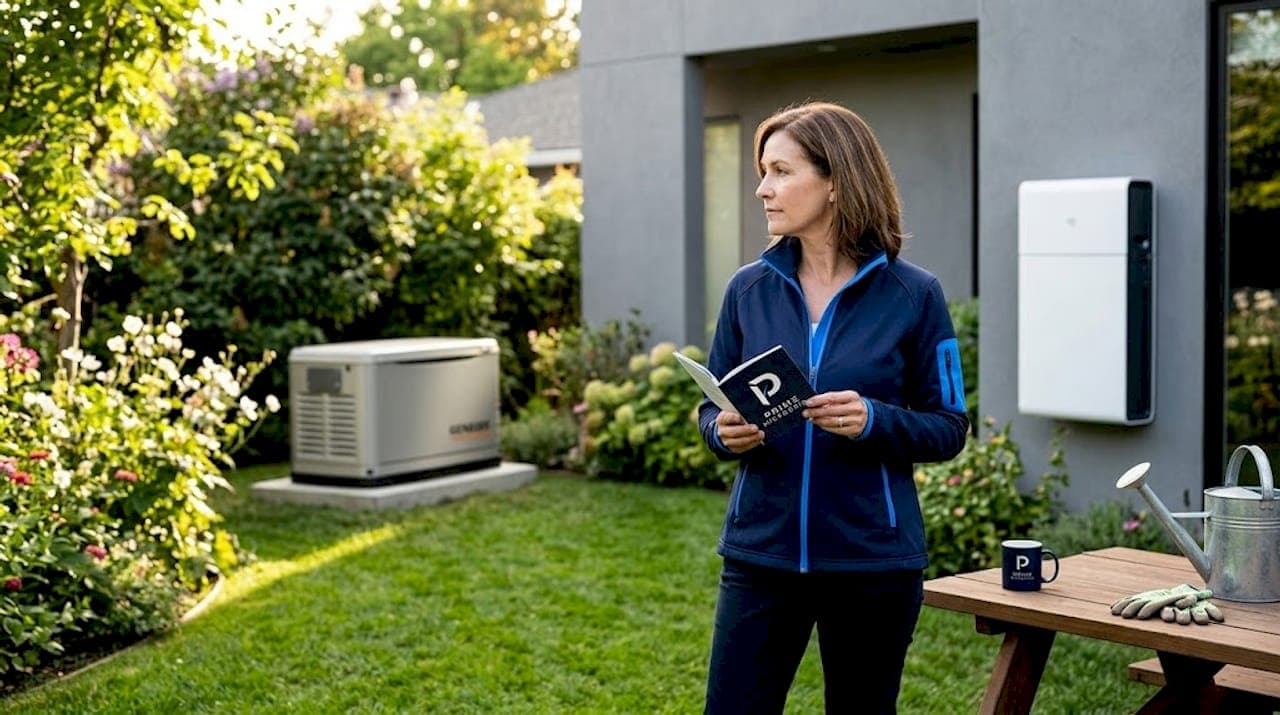
Before you can weigh costs, you need to understand what you're actually buying. A home battery backup system stores electricity, either from the grid or from solar panels, and releases it when the grid goes down. The most recognized units on the market today hold roughly 10–13 kilowatt-hours each, which covers essential circuits for several hours to overnight. They operate silently, produce zero emissions, and turn on instantly during an outage.
A standby generator, by contrast, runs on natural gas, propane, or diesel. It sits outside your home, connects to a transfer switch, and fires up automatically within seconds of detecting an outage. Generators produce power continuously as long as fuel flows, making them a natural fit for extended outages measured in days rather than hours.
Here's a baseline cost table for a battery backup vs standby generator comparison:
| System type | Typical installed cost | Fuel cost | Maintenance per year |
|---|---|---|---|
| Standby generator (11–22 kW) | $7,000–$15,000 | $50–$150/day operating | $200–$600 |
| Single battery unit (10–13 kWh) | $10,000–$20,000 | None | Minimal |
| Whole-home battery setup | $25,000–$50,000 | None | Minimal |
The generator wins on upfront cost per kilowatt of output. A 22-kilowatt generator at $15,000 installed can power an entire house including central air. Getting equivalent whole-home battery coverage requires multiple units and a load management panel, which pushes costs significantly higher.
Key cost components to factor into your backup power cost comparison:
- Equipment price (generator unit or battery unit)
- Transfer switch or automatic transfer switch installation
- Electrical panel upgrades if required
- Permits and inspections
- Ongoing fuel and maintenance contracts
Upfront and installation costs in detail
Generator cost analysis starts around $3,000 to $5,000 for the unit itself, with installation labor, transfer switch wiring, and gas line connections pushing the total to $7,000–$15,000 installed. Larger generators sized for whole-home coverage land at the top of that range or beyond.
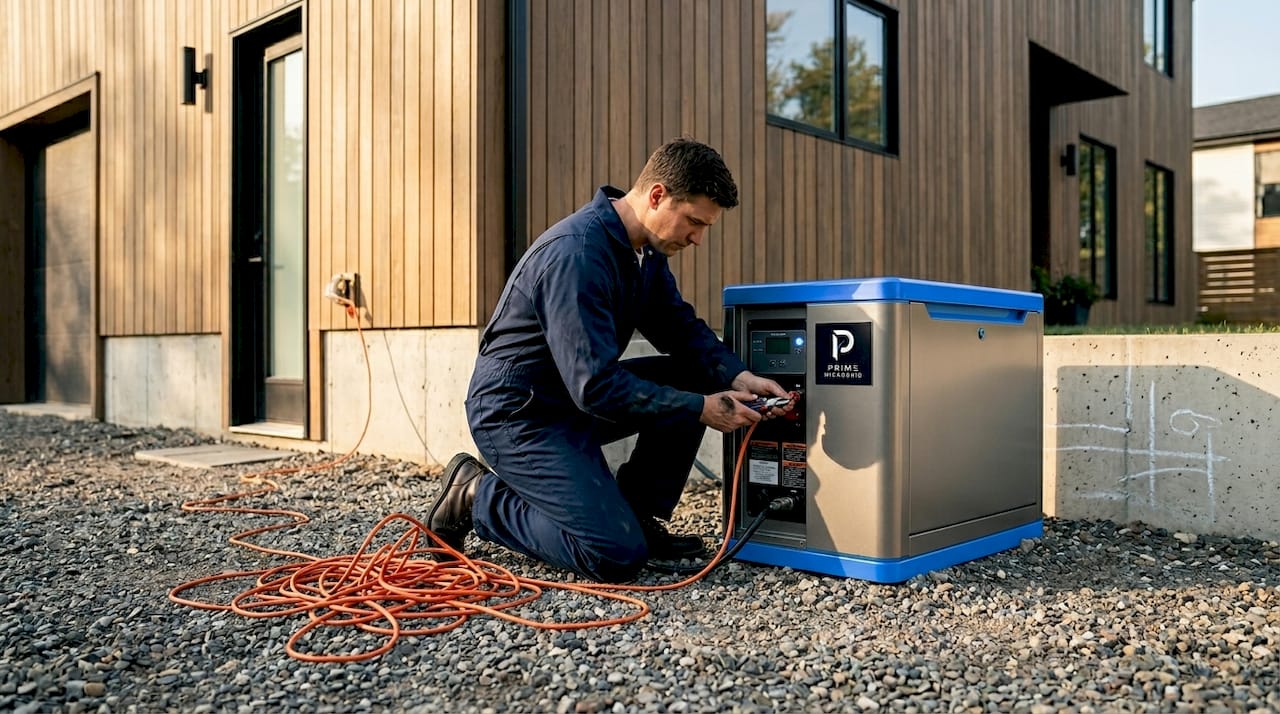
Battery system pricing depends heavily on how much storage capacity you need. A single unit covering essential circuits runs $10,000 to $20,000. If you want whole-home battery backup, you're often looking at two to four units, plus a smart load management panel, which brings the battery backup installation costs to $25,000 or more before any incentives.
Here's where batteries gain ground fast. Battery storage qualifies for the federal 30% Investment Tax Credit (ITC). On a $20,000 battery system, that's $6,000 back. On a $40,000 setup, it's $12,000. Generators receive no equivalent federal incentive. That tax credit shifts the generator vs battery prices equation considerably.
Installation complexity is where many homeowners get surprised. Older homes may need a panel upgrade to handle battery inverters. Permits vary by county. Some installations require trenching for conduit runs. These aren't hypothetical costs. They're common.
- Single battery unit: $10,000–$20,000 before incentives, $7,000–$14,000 after ITC
- Whole-home battery system: $25,000–$50,000 before incentives, $17,500–$35,000 after ITC
- Standby generator: $7,000–$15,000 with no federal tax credit
Pro Tip: Get at least three quotes and ask each contractor to itemize the cost of battery storage hardware separately from labor, permits, and electrical upgrades. That breakdown tells you where the real cost variation is hiding.
Long-term operating and maintenance costs
This is where the battery backup cost comparison gets interesting, because the generator's lower upfront price doesn't hold up over time.
Generators consume $50–$150 per day in fuel while running, and they require annual maintenance including oil changes, spark plug replacements, and load testing, which typically runs $200 to $600 per year with a service contract. If you use your generator during a week-long outage, you're burning through $350 to over $1,000 in fuel for that single event.
Battery systems run very differently. Battery maintenance is minimal, usually limited to firmware updates, occasional inspections, and keeping the unit within its temperature range. No fuel. No oil changes. No exhaust. The operational cost is essentially zero unless the battery needs replacement at end of life.
| Cost category | Battery system (20 years) | Standby generator (20 years) |
|---|---|---|
| Equipment and installation | ~$20,000–$35,000 (after ITC) | ~$10,000–$15,000 |
| Fuel costs | $0 | $15,000–$40,000+ (use dependent) |
| Maintenance | ~$500–$2,000 | $4,000–$12,000 |
| Replacement (end of life) | $10,000–$20,000 | $5,000–$10,000 |
| Estimated 20-year total | ~$39,434 | ~$78,012 |
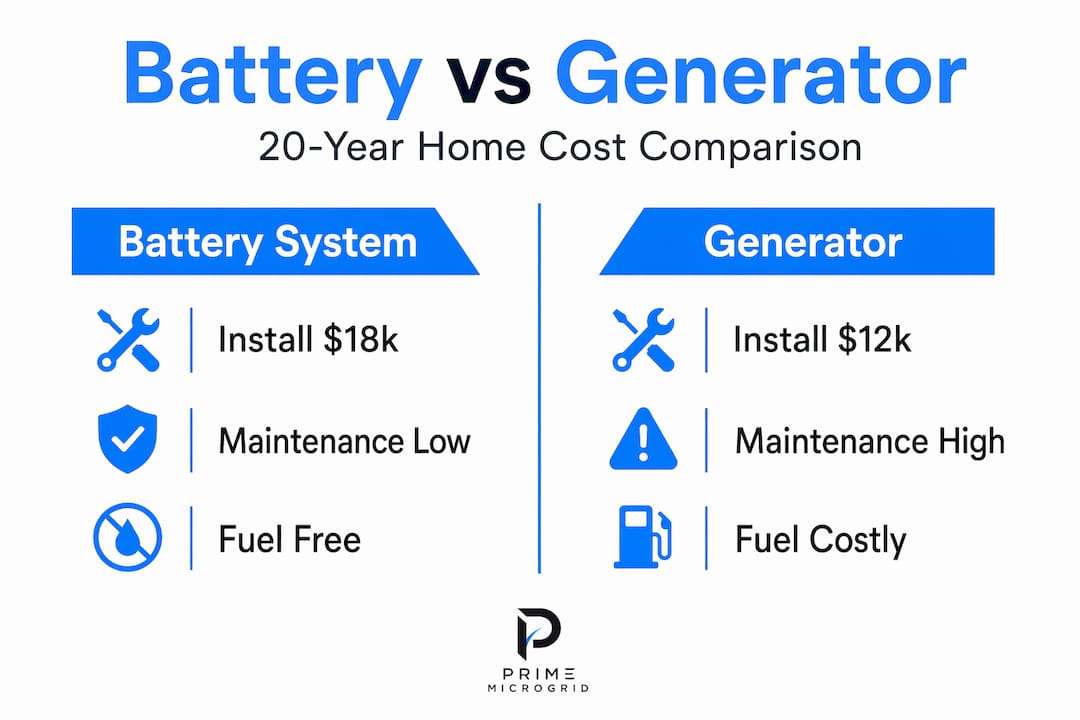
Battery systems typically last 10–15 years, while generators can run 15–25 years with proper service. That lifespan gap means battery owners should plan for one replacement cycle over a 20 to 25 year period. Even accounting for that, the 20-year cost of ownership for battery storage runs roughly half of what a standby generator costs over the same period.
Pro Tip: If you're in a region with frequent, multi-day outages, calculate your generator fuel cost based on your actual annual outage hours, not a hypothetical worst case. That number will clarify the long-term cost picture faster than any general estimate.
Performance factors that shape cost-effectiveness
Understanding generator vs battery efficiency helps you figure out which system actually delivers value for your specific load profile.
Generators handle power-hungry appliances better than a single battery unit. Central AC and large appliances draw high starting surges that a single 10-kilowatt battery struggles to manage. A properly sized standby generator can run your whole home without any load management. That's a real performance advantage, especially in hot climates where AC is non-negotiable.
Battery systems, on the other hand, work best when you define which circuits matter most. Running a refrigerator, lights, a few outlets, and a Wi-Fi router for 10–15 hours on one battery unit is entirely realistic. Trying to add central air to that equation on one battery is not. Whole-home battery coverage requires multiple units plus a load management panel, which is why the cost jumps so sharply between partial and full coverage.
Situations where generators provide better value:
- Outages lasting more than 24–48 hours are common in your area
- Your home has a large HVAC system, well pump, or electric range that must stay on
- You want whole-home coverage without the premium cost of multiple batteries
Situations where battery backup delivers better value:
- Outages in your area are typically short (under 12 hours)
- You're already paired with solar, where solar integration with batteries also reduces your electricity bill between outages
- Noise, exhaust, and outdoor footprint are practical concerns
Generators handle runtime for days or weeks with available fuel; batteries deliver hours per unit. That runtime gap is the most important performance variable in this entire comparison.
How to choose the right backup solution
Picking the right system comes down to honest answers about your specific situation, not what sounds best in a brochure.
Work through these questions before you request any quotes:
- How often does your area lose power, and for how long on average?
- Which appliances or systems are truly non-negotiable during an outage?
- What is your realistic budget for upfront cost versus willingness to absorb ongoing operating costs?
- Do you have or plan to install solar panels?
- Are there neighborhood restrictions on outdoor generator placement or noise?
Once you've answered those, the choice usually becomes clearer. If you're in the mid-Atlantic or Southeast where storms can knock out power for three to five days, the generator vs battery decision often tips toward a generator for pure reliability. If your outages average four to eight hours and you're pairing with solar, a battery system very likely wins on total cost.
Common mistakes homeowners make in this comparison:
- Comparing generator purchase price to battery installed price without accounting for the ITC
- Forgetting to add annual fuel and maintenance to the generator's lifetime cost
- Assuming one battery unit can cover the whole house without load management
- Not checking whether their electrical panel needs an upgrade before installation
Pro Tip: Ask any installer you consult for a written breakdown of both 5-year and 10-year total cost estimates, including fuel assumptions for the generator option. That side-by-side document makes the backup power cost comparison concrete instead of theoretical.
My honest take after seeing these systems up close
I've spent years helping homeowners think through backup power, and the single most common mistake I see is treating this as a purely financial spreadsheet exercise. The numbers matter. But so does the way you actually live.
In my experience, batteries genuinely justify their higher upfront cost for homeowners who lose power a few times a year for under 12 hours at a stretch. You get silence, automatic response in milliseconds, and real grid bill reduction when paired with solar. Those aren't abstract benefits. They change day-to-day life.
What I've found equally true is that generators remain the right call for rural properties, large homes, and anyone in a region with extended winter storms. The fuel costs are real, but so is the peace of mind that comes from knowing you can run your well pump, your heat, and your refrigerator for a week straight without rationing power.
The installation complexity of batteries is consistently underestimated. I've seen projects where panel upgrades and permit delays added $3,000 to $5,000 to the original quote. That doesn't make batteries a bad choice. It makes getting a thorough site assessment before you commit a critical step.
My overall view: stop comparing sticker prices and start comparing 10-year total cost scenarios built around your actual outage history and load requirements. That's the only number that tells the real story.
— David
Power your home with the right backup system
Primemicrogrid designs custom backup power systems that start with your actual energy needs, not a one-size-fits-all product recommendation. Whether you're evaluating battery storage, a standby generator, or a hybrid system that integrates solar and smart load management, Primemicrogrid builds solutions around reliability and long-term cost performance.

If you're in the mid-Atlantic region, explore residential microgrid options designed specifically for homes like yours. You can also review the microgrid cost guide for a detailed breakdown of what different backup configurations actually cost to install and operate. Primemicrogrid's team can walk you through a full cost comparison for your specific home, help you understand which incentives you qualify for, and size a system that doesn't leave you guessing.
FAQ
How much does a home battery backup system cost installed?
A single home battery unit costs $10,000 to $20,000 installed, while whole-home configurations using multiple batteries range from $25,000 to $50,000. The 30% federal Investment Tax Credit can significantly reduce that out-of-pocket cost.
How much do generators cost for whole-home backup?
Standby generators typically cost $7,000 to $15,000 installed depending on size and fuel type. Unlike battery systems, generators do not qualify for the federal Investment Tax Credit.
Which is cheaper over 20 years: battery or generator?
Battery storage costs approximately $39,000 over 20 years compared to roughly $78,000 for a standby generator when fuel and maintenance are included. The generator's lower upfront cost reverses significantly once ongoing fuel and service expenses accumulate.
Can a single battery run my whole house during an outage?
A single battery unit can power essential circuits like lighting, refrigeration, and outlets for several hours, but cannot handle whole-home loads including central AC without multiple units and a load management system.
Should I pair a battery backup with solar panels?
Yes, pairing a battery with solar panels is one of the strongest ways to improve cost-effectiveness. Solar charges the battery during daylight hours, extends backup duration, and reduces your normal electricity bill, making the overall system more economical than a generator for many homeowners.