
Choosing a provider for microgrid and distributed energy systems often means facing either generic solar-plus-battery kits not suited for estate-scale operations or enterprise platforms priced beyond single-site needs. Many options only offer off-the-shelf packages with insufficient engineering attention to long-term reliability, site-specific loads, or comprehensive backup functionality. This comparison lays out custom engineering, automation, and pricing differences across leading providers so you can secure the right fit for your property or portfolio requirements.
Table of Contents
Prime Microgrid
At a Glance
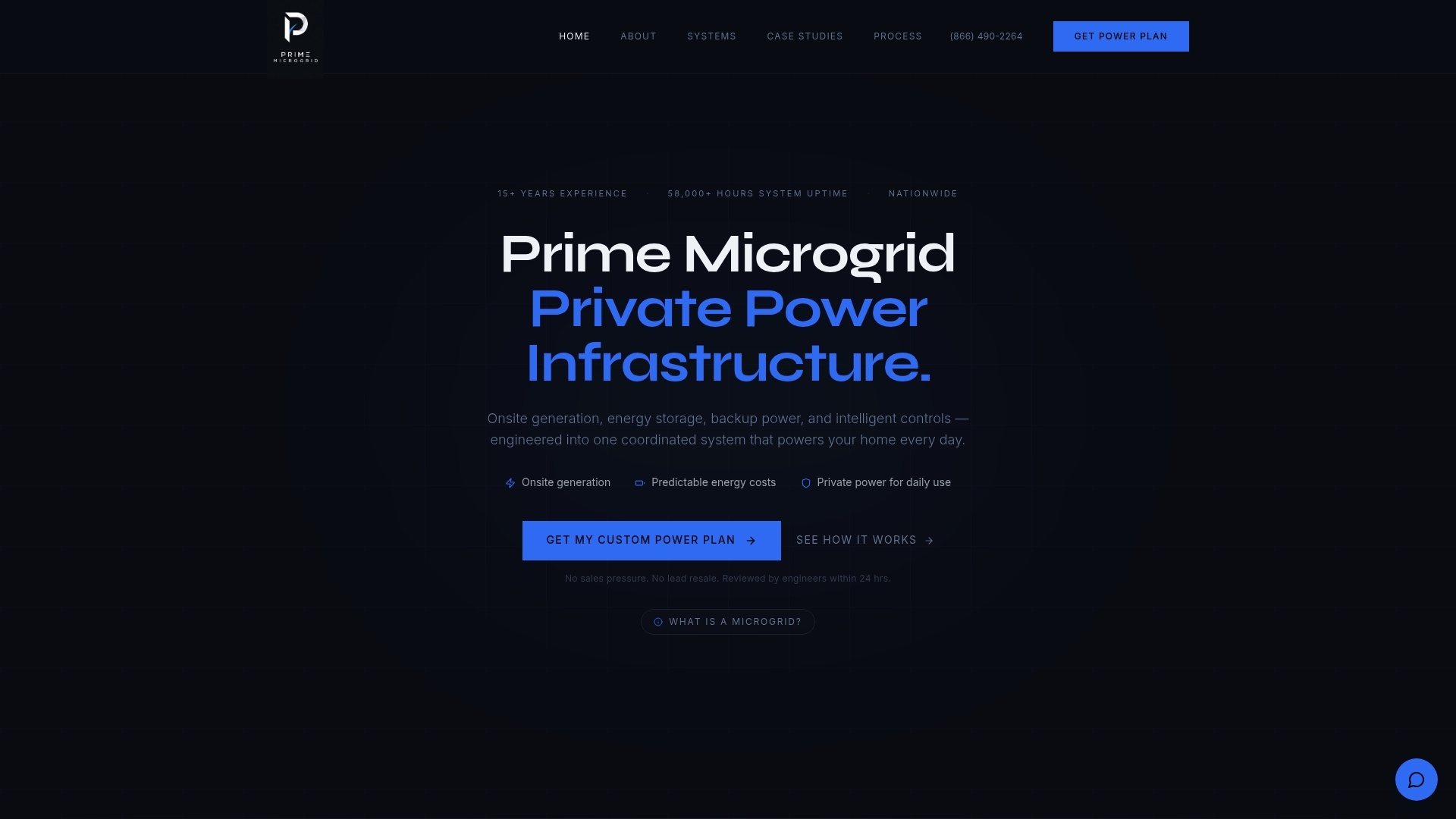
Custom microgrid projects start at about $80,000 and can exceed $400,000, reflecting full-property engineering rather than boxed kits. Prime Microgrid focuses on whole-property resilience with onsite generation, storage, and automated controls built from an engineering-led load analysis.
Core Features
-
Custom-engineered power systems sized from a detailed load analysis for whole-property support.
-
Integration of onsite generation options including solar, wind, and generator redundancy.
-
Battery storage paired with automatic source switching and load management to keep everything on during outages.
-
Real-time remote monitoring and smart controls that support scalability and future upgrades.
Key Differentiator
Company-led load analysis drives the design phase rather than selecting off-the-shelf components. That engineering-first method yields systems sized for actual estate loads, planned expansion, and specific failure modes. The result is a single integrated package that covers generation, storage, controls, and backup with fewer post-install surprises.
Pros
-
Highly customized designs reduce the risk of undersizing. When a system is modeled to real measured or estimated loads, you avoid mid-life replacement or add-on costs.
-
Seamless failover and automatic source switching remove manual intervention during outages so the house remains fully operational without staff on site.
-
A strong engineering focus prioritizes long-term reliability over aggressive short-term cost savings, which matters for high-value properties.
-
Systems support full-property loads rather than only critical circuits, giving owners consistent comfort and appliance availability during extended outages.
-
Remote monitoring enables diagnostics and firmware updates without repeated on-site visits, speeding troubleshooting and lowering travel-related downtime.
Cons
- High initial investment; the typical $80,000–$400,000+ range makes these systems unsuitable for small or budget-conscious homes.
Who It's For
Owners of large homes, estates, farms, or remote properties that require autonomous, whole-property power continuity and can budget for engineered solutions. This fits clients focused on long-term reliability, extended outage protection, and minimal manual system management.
Unique Value Proposition
Starting every project with an engineered load analysis lets Prime Microgrid right-size battery capacity, generator redundancy, and control logic up front. That approach reduces the chance of unexpected mid-life upgrades and lowers lifecycle replacement risk compared with piecemeal retrofits or generic solar-plus-battery packages.
Real World Use Case
A coastal estate in Delaware was engineered with solar arrays, layered battery storage, and generator redundancy so the property sustained full-home operation through hurricane-force storms and prolonged utility outages. Remote monitoring kept the owner informed and technicians focused on targeted maintenance.
Pricing
Project pricing ranges from about $80,000 to $400,000 and up depending on system size, complexity, and redundancy requirements. Final costs reflect engineering, equipment, installation, controls, and commissioning rather than an off-the-shelf kit.
Website: https://primemicrogrid.com
SolBid
At a Glance
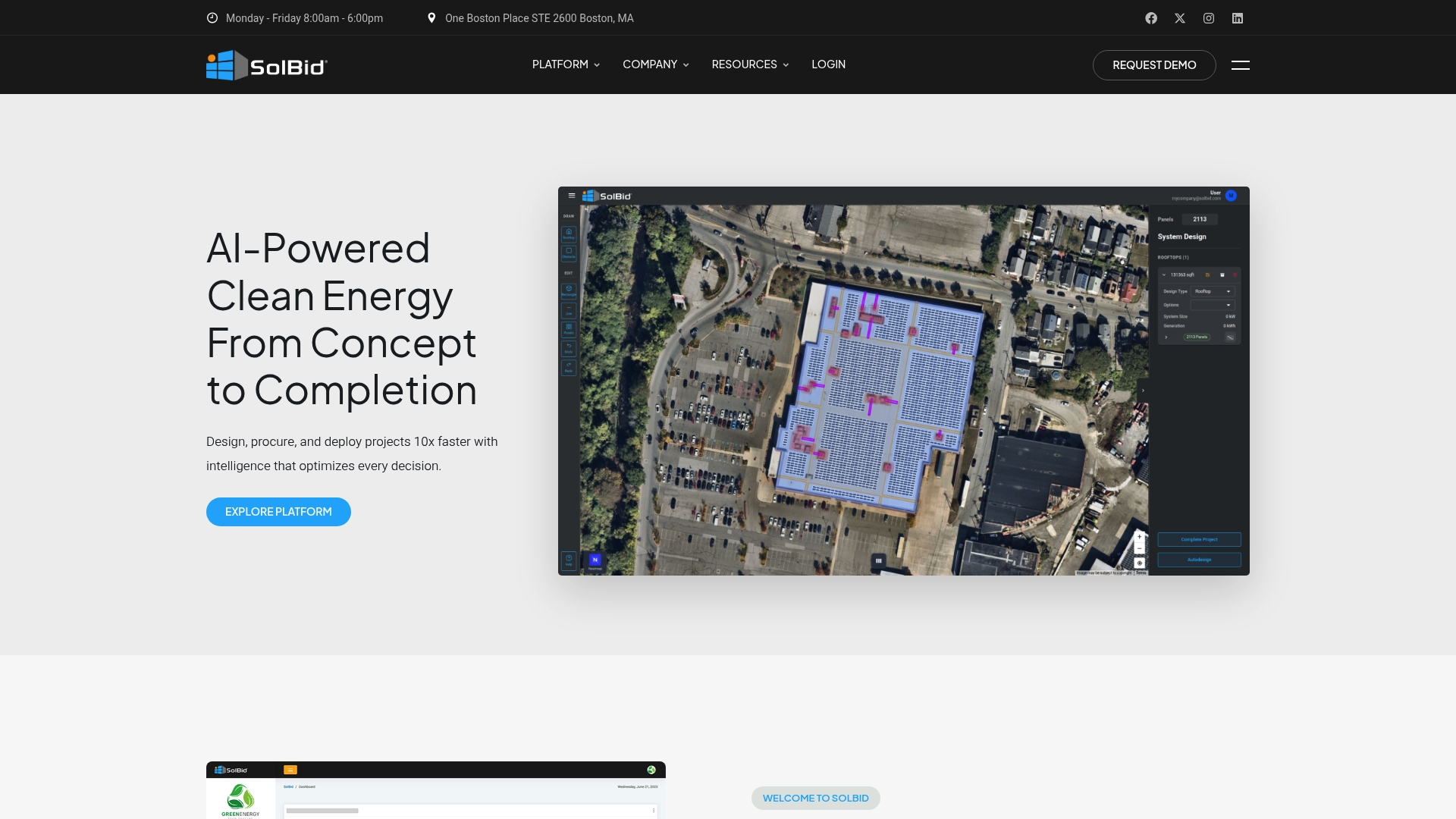
Starts at $3,240/year for the Basic tier — pricing that frames SolBid as an enterprise offering rather than a single-project tool. The vendor advertises SOC 2 Type II security, which the company highlights for larger customers.
Core Features
- AI-powered portfolio feasibility analysis for rapid multi-site screening and prioritization.
- Accurate virtual site designs built from real-site and utility data to reduce onsite surveys.
- Comprehensive cost estimates and bankable financial forecasts for investor-ready packages.
- Automated integration of utility rates, incentives, and labor inputs for faster costing.
- Real-time energy production and greenhouse gas modeling to support sustainability reporting.
Key Differentiator
SolBid pairs automated feasibility with embedded engineering services so teams get both software outputs and professional project support. That combined model reduces back-and-forth between analysts and engineers, but it is aimed squarely at large developers and corporate programs rather than homeowners or small installers.
Pros
- Powerful automation reduces manual site screening time. For portfolios with dozens of sites, SolBid speeds evaluation by consolidating geospatial, buildability, and financial inputs.
- The AI-driven feasibility engine helps prioritize high-return sites before committing field crews, which cuts early-stage cost burn.
- Financial modeling produces investor-friendly outputs and scenario comparisons, useful when you need bankable numbers quickly.
- Professional engineering and project management support shortens handoffs from design to permitting, keeping schedules tighter.
- That SOC 2 Type II claim above suggests attention to enterprise security and data controls preferred by corporate buyers.
Cons
- Publicly available third-party reviews show a highly polarized user sentiment, with several strongly negative reports.
- Numerous reports allege withdrawal and payment issues; those complaints raise red flags around contract and billing practices.
- Repeated complaints about hidden costs and transparency suggest procurement teams should request explicit, line-item quotes before committing.
When It May Not Fit
If you are a homeowner, a small installer, or managing a single rooftop project, SolBid’s price and enterprise orientation will be overkill. Also, procurement teams that cannot tolerate vendor reputation risk should approach cautiously and require references.
Who It's For
Large commercial and industrial solar developers, corporate sustainability teams, and major EPC firms that manage multi-site portfolios and need integrated feasibility, design, and financial modeling with optional engineering support.
Real World Use Case
A developer evaluates 40 retail rooftops across three states. SolBid screens sites with AI feasibility scores, generates virtual designs and cost estimates, and produces consolidated financial models that the developer uses to secure a construction loan and speed site-by-site approvals.
Pricing
Starts at $3,240 per year for Basic, $5,396 per year for Professional, with Enterprise plans available by custom quote for larger portfolios and added professional services.
Website: https://solbid.com
SolarReviews

At a Glance
SolarReviews' marketing materials present an accurate solar cost and savings calculator that requires no personal information and aims to estimate savings using house location and utility data. The site also pairs those estimates with consumer reviews and a network of pre-screened local installers.
Core Features
- No-input solar cost and savings calculator that uses location and utility data to project economics.
- Unbiased consumer reviews of solar companies and equipment, with editorial independence stated by the vendor.
- Comparison tools for solar prices and equipment brands so you can put systems side by side.
- Network of pre-screened, highly rated local installation professionals to support selection and quoting.
- Educational articles and expert commentary on system design, financing, and warranties.
Key Differentiator
The vendor advertises the combination of its calculator plus independent reviews as the central advantage. That pairing means you can generate a location-based cost estimate without entering contact details, then use the same site to vet installers by review history and equipment comparisons.
Pros
-
The calculator produces quick, location-specific estimates so you get a realistic baseline before sales calls. Many homeowners report the numbers match installer quotes closely.
-
The company positions its review program as independent, which helps when you want to read unvarnished experiences rather than marketing blurbs.
-
Pre-screened local installers shorten the shortlist process and reduce the time you spend checking credentials and references.
-
Educational resources explain financing options, permit considerations, and equipment tradeoffs in plain language suitable for homeowners.
-
Comparison tools make it easy to compare equipment specs and price estimates on the same page rather than flipping between vendor sites.
Cons
-
Some homeowners report inconsistent lead quality from the site’s lead generation services, and some installers say follow-up from leads varies by region.
-
Because listings rely on user reviews, the site is vulnerable to biased or manipulated entries despite moderation efforts.
-
Several professional users report friction with verification and account management workflows when claiming or updating business profiles.
-
Customer follow-up marketing calls associated with some leads may feel aggressive to homeowners who requested only estimates.
When It May Not Fit
If you need a fully vetted, contractor-only referral program with contract guarantees, this comparison model may feel incomplete. The platform relies on public reviews and lead generation, which means installer quality and follow-up can vary by market. Professionals seeking a predictable lead funnel report mixed experiences.
Who It's For
Homeowners in the United States who want to build a short list before inviting installers to quote. The site fits owners who prefer to estimate savings privately, read peer reviews, and compare equipment and pricing before sharing contact details.
Real World Use Case
A homeowner runs a no-input estimate for their New Jersey roof, narrows results to panels and inverters they trust, and then reads multiple installer reviews in their county. They use the pre-screened installer list to request three quotes and schedule onsite assessments.
Website: https://solarreviews.com
Comparative Analysis
Microgrid and Distributed Energy Systems Comparison
Choosing the right microgrid and energy system ensures an optimized solution tailored to your specific energy needs.
| Product | Core Feature | Key Differentiator | Best For | Pricing | Notable Limitation |
|---|---|---|---|---|---|
| Primemicrogrid | Custom-engineered whole-property resilient microgrids | Engineering-first approach right-sizing solutions | Large estates and remote properties | $80,000–$400,000+ | High upfront investment for small properties |
| SolBid | AI-powered portfolio feasibility analysis | Integration of AI tools with professional services | Large commercial and industrial solar developers | $3,240–$5,396/year | Polarized reviews on vendor practices |
| SolarReviews | Consumer-friendly solar estimates and comparisons | Calculator paired with independent solar reviews | U.S. homeowners exploring solar installations | Not disclosed | Varied lead quality affects user experience |
Explore Reliable Alternatives to Solar-States.com with Primemicrogrid
When searching for dependable and tailored energy solutions beyond typical solar platforms like solar-states.com alternatives, many property owners face challenges with generic designs that do not address whole-property needs or long-term resilience. Primemicrogrid stands out by delivering custom-engineered microgrid systems built on detailed load analysis to optimize battery storage, onsite generation, and smart controls. This approach provides true energy independence and uninterrupted power for homes, farms, and commercial sites.
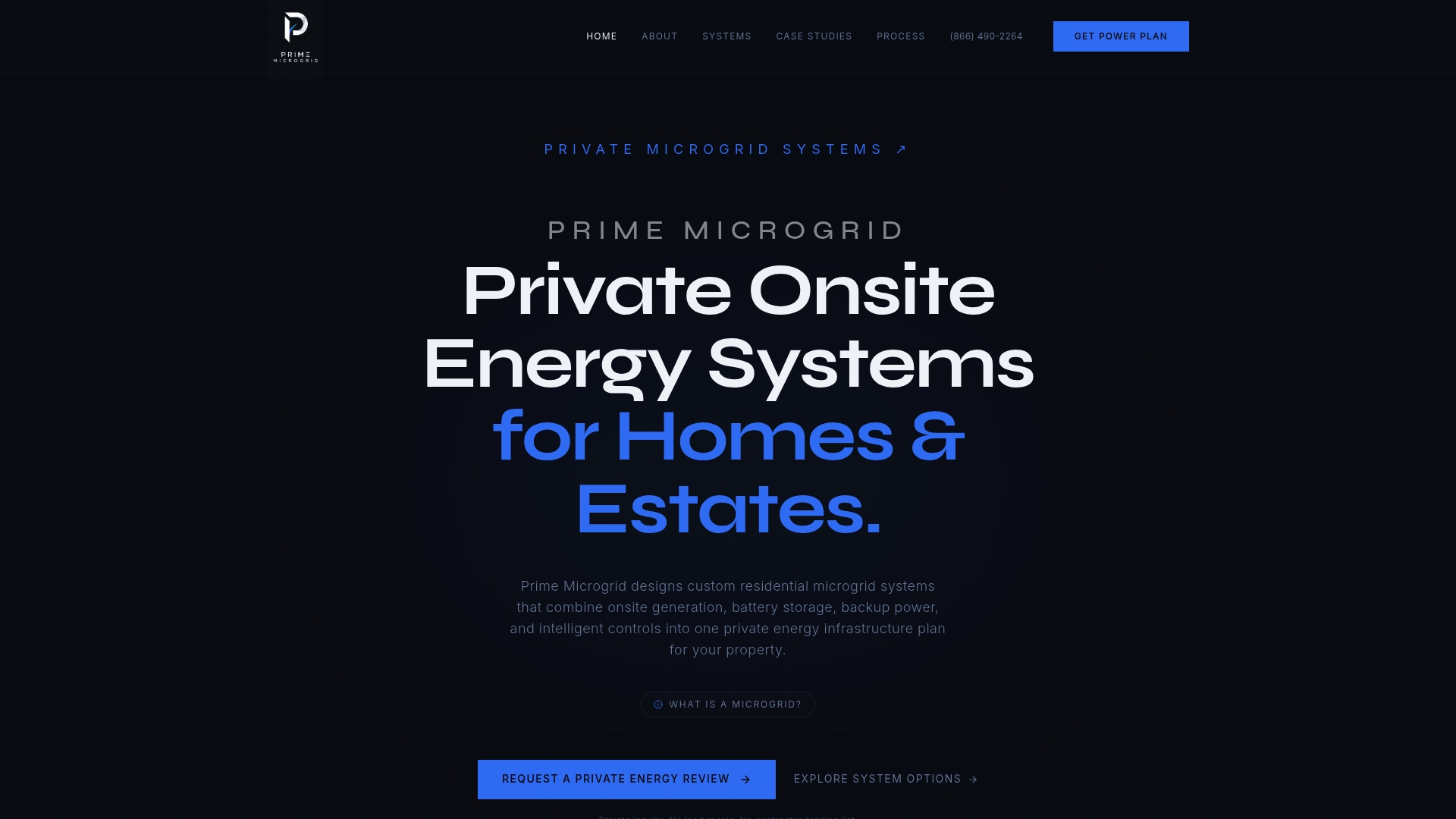
Discover how you can protect your property against outages and reduce energy costs with solutions designed just for you. Visit Primemicrogrid to learn more and get a tailored assessment that fits your unique requirements. Take charge of your energy future with expert guidance and robust microgrid design today.
Frequently Asked Questions
How does Primemicrogrid enhance whole-property resilience?
Primemicrogrid ensures whole-property resilience through custom-engineered power systems tailored to specific load analysis. This approach means residents can rely on onsite generation and automatic source switching during outages, ensuring continuous power across their property. Interested clients can consult with Primemicrogrid to initiate a tailored load analysis for their needs.
What is the difference between Primemicrogrid and SolBid?
SolBid excels with its AI-powered portfolio feasibility analysis, which quickly screens multiple sites for solar potential. While this feature is beneficial for large commercial portfolios, Primemicrogrid is designed for individual properties needing tailored power solutions, making it more suitable for estate owners. Clients seeking comprehensive whole-property support should explore Primemicrogrid's offerings.
What unique advantage does Primemicrogrid offer?
A unique advantage of Primemicrogrid is its company-led load analysis, which informs the design phase for each microgrid system. This method greatly reduces risks of undersizing and subsequent costly modifications, allowing for a more reliable energy solution. Homeowners interested in a sustainable and reliable power source can reach out to Primemicrogrid to learn more.
Can I achieve reliable power continuity with Primemicrogrid?
Yes, Primemicrogrid provides systems that support full-property loads, ensuring consistent power availability during outages. This capability gives owners security in knowing their entire property is equipped for sustained power, making it an appealing option for those requiring high-level resilience. Interested homeowners should contact Primemicrogrid to discuss their specific needs.
How does remote monitoring benefit Primemicrogrid users?
Remote monitoring offers Primemicrogrid users real-time diagnostics and the ability to perform firmware updates without requiring on-site visits. This feature not only speeds troubleshooting but also decreases downtime related to maintenance needs. For prospective clients, this means they can expect efficient service and rapid response to any issues that arise.