
Securing reliable and expert support for power system engineering, grid interconnection studies, and renewables integration often stalls due to unclear scopes, slow consultant turnaround, or missing technical depth. Many vendors lack project-based transparency, offer inconsistent milestone enforcement, or restrict deliverables to informational documents instead of actionable site or system upgrades. This guide lets you compare custom microgrid design firms and power system consulting providers on engineering rigor, regulatory expertise, deliverable quality, and contract practices so you can match the right vendor to your project timelines and risk tolerance.
Table of Contents
- Prime Microgrid
- GridTech Solutions
- Dendrite Consulting
- Elevate Energy Consulting
- Comparative Analysis on Power System Providers
Prime Microgrid
At a Glance
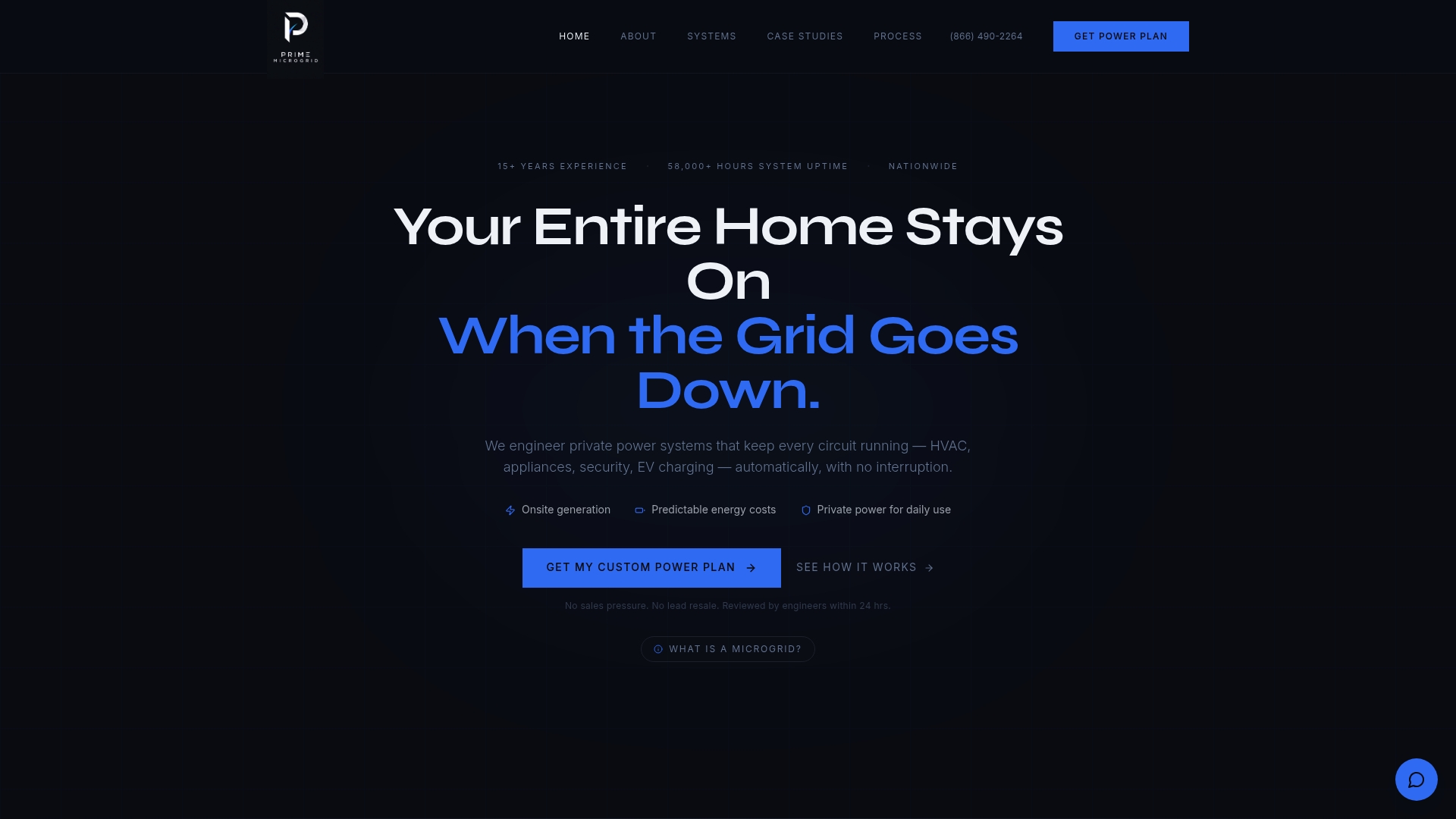
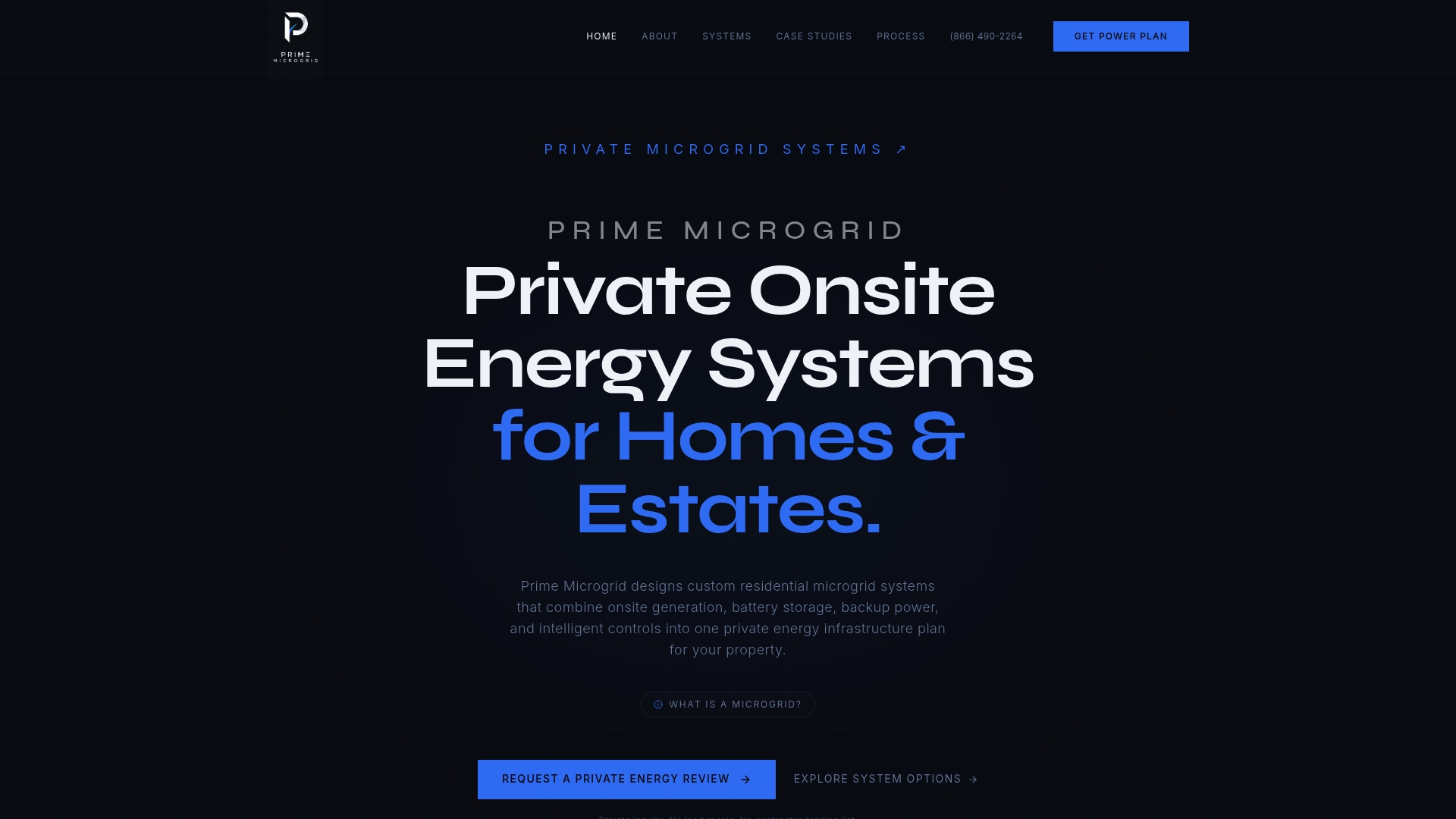
Keeps every circuit powered automatically during outages. Prime Microgrid designs and deploys custom private power systems for residential estates and high-value properties that operate independently of the utility grid and prioritize whole-property continuity.
Core Features
- Custom engineered microgrid systems tailored to a property’s measured loads and resilience goals.
- Whole-property power support including HVAC, security, and EV charging so critical circuits remain online.
- Automatic load balancing with switching and outage protection to manage generation, storage, and backup sources in real time.
- Integration of onsite solar generation, energy storage, and backup generators for layered resilience.
- Remote monitoring and autonomous system management for owner oversight from anywhere.
Key Differentiator
Engineered, not installed — each system is built around a comprehensive load analysis and modeling process. The design coordinates multiple energy sources and control logic so the system runs as an integrated whole rather than a collection of add-ons.
That engineering-first approach changes project scope. You pay for design and verification up front, and the components and controls are selected to meet the modeled loads and outage duration targets.
Pros
-
Highly customized systems reduce unexpected gaps in backup power. A system designed around measured loads will keep key circuits online where generic packages fail.
-
Supports full property load during extended outages so HVAC, security, and EV charging can continue when the grid is down.
-
Combines multiple energy sources to improve uptime and efficiency. Solar, batteries, and generators work together under a single control strategy.
-
Engineered for long-term reliability with commissioning and testing steps that lower the risk of failure when an outage occurs.
-
Remote system monitoring gives owners near real time visibility and reduces the need for on site technical troubleshooting.
Cons
- Higher initial cost compared with off-the-shelf products. The custom engineering, permitting, and installation process is more involved and typically raises upfront budget requirements for large properties.
Who It's For
Owners of large residences or estates seeking whole-home power resilience and energy independence, especially where outages are frequent or utility reliability is poor. Also a fit for property managers who require automated failover and remote diagnostics.
Unique Value Proposition
Full-circuit autonomy with automated switching and real time management. Prime Microgrid delivers a verified system that keeps every circuit powered by matching generation and storage to the property load profile rather than sizing by rule of thumb.
That verification reduces the common gap between expectation and reality when a packaged backup solution is pushed beyond its limits.
Real World Use Case
A waterfront estate in Delaware with frequent grid disruptions received a system that pairs solar, high capacity batteries, and generator redundancy. The site now maintains continuous full-home operation through hurricanes and multi-day outages with automatic transfer and remote alerts.
Pricing
Not applicable. Pricing is project based and informational only. Prime Microgrid follows a consultative quote model because each design, permitting requirement, and installation timeline differs by property size and objectives.
Website: https://primemicrogrid.com
GridTech Solutions

At a Glance
Founded in 2023 with a small team focused on inverter-based resource modeling and IEEE 2800 compliance, GridTech positions itself as an engineering-first provider for interconnection and NERC work. The vendor advertises proven success across major North American ISOs and utilities.
Core Features
GridTech provides power system modeling and validation including detailed IBR models and transient stability analysis. Interconnection application support covers feasibility, impact, and facilities studies with documentation for regional ISOs.
The service set also includes NERC compliance studies, harmonic analysis, and validation against IEEE 2800 standards. Deliverables are technical reports, model submissions, and study files suitable for engineering review boards.
Key Differentiator
GridTech's advertised strength is its specialization in IBR modeling combined with a regulatory focus on IEEE 2800 and NERC compliance. That specialization makes the firm helpful for projects where inverter behavior and compliance documentation are gating items for approval.
Compared with Primemicrogrid, GridTech is narrower in scope. Primemicrogrid designs customer-sited generation and integrated systems; GridTech concentrates on grid studies and regulatory acceptance work.
Pros
-
Deep regulatory focus. The team produces model validations and compliance packets that speak the language of ISO and utility engineers, which speeds technical review cycles.
-
Technical depth for IBRs. Their modeling work addresses transient and harmonic behavior, reducing the back-and-forth that often stalls interconnection studies.
-
End-to-end study support. From feasibility studies through facilities analysis and final reports, clients get study-ready outputs that can be submitted to system operators.
-
Competitive pricing and transparent process. Several clients reported efficient engagements and clear scopes that helped control costs against consultant alternatives.
Cons
-
Turnaround can be slow. Some users reported longer delivery times which can hurt aggressive project schedules.
-
Communication gaps. A few clients noted response time and coordination could improve during peak study phases.
-
Not a turnkey hardware or site solution. GridTech does not provide construction, on-site commissioning, or packaged hardware systems.
-
Pricing varies by scope. While competitive, estimates sometimes require follow up to get a fixed fee rather than a range.
When It May Not Fit
If you need a single vendor to deliver hardware, construction, and commissioning, GridTech is not the right fit. Rapid deployment timelines that demand same-week studies will also clash with the longer turnarounds some clients report.
Who It's For
Renewable developers, utilities, industrial load operators, and compliance teams that need deep IBR modeling and formal NERC or ISO-grade study packages. Ideal when technical validation and regulatory acceptance are the immediate bottlenecks.
Real World Use Case
A solar developer hired GridTech to prepare interconnection impact and facilities studies, validate inverter models to IEEE 2800, and submit documentation to the regional ISO. That engagement helped move the approval process forward with fewer technical data requests.
Pricing
Pricing is provided case by case and depends on study complexity and scope. The product data lists pricing as informational only, so expect project estimates after an initial scoping conversation.
Website: https://gridtechsolution.com
Dendrite Consulting
At a Glance
Dendrite Consulting reports over 10 years of experience in energy sector data analytics and focuses on siting and transmission analysis for renewable projects. The firm pairs grid modeling with policy analysis to help developers weigh interconnection value against transmission cost and risk.
Core Features
- Data driven project siting analysis that ranks candidate interconnection points by modeled deliverability and congestion exposure.
- Transmission capacity assessment using industry power flow software to map thermal limits and voltage constraints for proposed sites.
- Sensitivity analyses for risk mitigation that test market and weather scenarios and identify basis and wheeling exposures.
- Cost of transmission evaluation covering wheeling charges and basis risk tradeoffs for generation revenue modeling.
- Guidance on regulatory and policy implications for state agencies, FERC filings, ISOs, PUCs, and load serving entities.
Key Differentiator
The vendor advertises a hybrid approach that couples industry standard power flow software with customized algorithms tailored for renewable siting. That combo aims to produce site rankings that reflect both physical grid limits and market economics rather than simple proximity to a substation.
Pros
- Specialized focus on renewable development makes their output more actionable than generalist consultants when interconnection queues are congested.
- The modeling scope covers both physical and market layers so teams see tradeoffs between transmission cost and merchant revenue potential.
- Custom algorithms accelerate screening across dozens of candidate sites which shortens the early stage evaluation cycle for developers.
- Forward looking policy analysis helps projects account for likely ISO or state rule changes that alter interconnection value.
- That experience claim above suggests institutional knowledge in reading queue and market dynamics across multiple regions.
Cons
- Limited public detail on the specific software stack and model parameters makes technical audit difficult for an outside engineer.
- No third party reviews or client testimonials are available online to validate delivery quality or turnaround times.
- No published pricing or fixed service packages which forces a bespoke proposal process and makes budgeting harder for early stage projects.
When It May Not Fit
If you need an off the shelf software subscription with transparent per seat pricing this offering will feel like a consulting engagement not a product. Teams seeking publicly auditable model code or open source workflows may find the limited public tooling detail a blocker. Small property managers with routine behind the meter needs will likely prefer turnkey interconnection services from a vendor with published rates.
Who It's For
Renewable developers, utility planners, and policy analysts running interconnection screening and transmission valuation work. It can also serve property managers or community microgrid sponsors who need deep grid modeling to justify larger battery or distributed resource investments.
Real World Use Case
A developer with multiple candidate sites used Dendrite Consulting to rank interconnection points by delivered energy value after wheeling costs. The result changed the preferred site and lowered expected transmission spend. The engagement reduced technical uncertainty prior to a costly queue application.
Pricing
Pricing is not published. The firm provides informational materials online but lists no standard service packages. Prospects should plan for a scoped proposal and fee estimate rather than a fixed up front price.
Website: https://dendriteconsulting.com
Elevate Energy Consulting
At a Glance
Third-party reviews report severe project delays, demands for large upfront payments, and allegations of deceptive business practices tied to Elevate Energy Consulting. Public-facing information is sparse, and no detailed service menus or published fee schedules are available for public review.
Core Features
Public pages provide limited detail, but the firm is described as offering advisory work across core power system areas.
- Renewables integration: guidance on connecting solar, wind, and distributed resources to existing networks.
- Transmission planning: studies and modeling to evaluate network upgrades and congestion management.
- Regulatory compliance: support for filings, permit strategy, and stakeholder engagement on rule changes.
Key Differentiator
The company positions itself as a full adviser for the energy transition while third-party reviews raise questions about execution and business conduct. That pairing of deep sector focus and reported delivery risk is the defining trade off for prospective clients.
Pros
Company statements and project summaries highlight several potential advantages, although independent reports do not consistently corroborate positive outcomes.
- Sector knowledge across grid planning and renewables integration, which can help translate policy goals into technical studies.
- Services described as adaptable to Utilities, Regulators, and Energy Developers, suggesting custom scopes rather than fixed packages.
- Active participation in industry projects and research, which can shorten onboarding for technical teams familiar with industry conventions.
- Experience with transmission modeling and compliance workflows that many clients require for regulatory submissions.
Cons
- Project delays: Multiple third-party reviews report slow deliveries and missed milestones on contracted work.
- Large upfront payment demands followed by disputed or delayed deliverables are reported by some customers.
- Allegations of deceptive business practices appear in public reviews and should factor into procurement and contract terms.
When It May Not Fit
If you need firm guarantees on delivery cadence, strict milestone enforcement, or a publicly documented pricing model, this provider may not match your requirements. Clients requiring immediate start dates or short, staged engagements should plan alternative options and stronger contractual protections.
Who It's For
Utilities, Regulators, and Energy Developers seeking expert consulting on grid modernization, renewables integration, and complex regulatory filings. Choose this firm only if you accept a higher execution risk and build in performance safeguards in the contract.
Real World Use Case
A Utility hired Elevate for transmission modeling and regulatory filings during a regional interconnection study. The scope covered load forecasts and scenario runs, but the engagement faced timeline slippage and required extended oversight from the Utility procurement team.
Pricing
No public fee schedule is published and the product data marks pricing as not applicable. Third-party reviews report instances of large upfront payments requested before delivery, so draft payment milestones and holdbacks into any statement of work.
Website: https://elevate.energy
Comparative Analysis on Power System Providers
For stakeholders evaluating options for energy resilience or grid compliance, the specific strengths and trade-offs of key service providers are crucial. Below, we analyze these dimensions against the user's requirements and highlight the distinctions among Prime Microgrid, GridTech Solutions, and Dendrite Consulting.
Engineering Depth vs. Implementation Impact
Prime Microgrid excels in delivering tailored power solutions for estate owners by focusing on measured load analysis and integrated system design. Its services aim to ensure whole-property power continuity, particularly during outages, where robustness and custom engineering are critical. Contrastingly, GridTech Solutions specializes in inverter-based resource (IBR) modeling and grid compliance studies. While technically proficient, its narrower focus lacks hardware integration or onsite commissioning, areas where Prime Microgrid thrives. Dendrite Consulting brings a hybrid of grid modeling and policy insight, particularly aiding renewable project siting; however, its services may feel distant for users needing immediate, scalable implementable solutions.
Compliance and Modeling Expertise
GridTech Solutions surpasses competitors in technical IBR validation and regulatory compliance, reducing bottlenecks during approval processes. This advantage significantly aids developers navigating complex interconnection requirements. Conversely, Prime Microgrid offers user-facing resilience without these compliance elements. Where modeling informs site choice and market positioning (a strength of Dendrite Consulting), the results can lack Prime's engineered guarantees of operational readiness.
Best Fit Scenarios
- For estate owners prioritizing integrated energy independence: Prime Microgrid provides solutions to maintain property-wide energy reliance, particularly for high-value properties prone to outages.
- For developers stalled by regulatory compliance issues: GridTech Solutions' meticulous modeling and IEEE/NERC support are where IBR documentation delays project approval.
- For renewable project planners selecting sites or transmission strategies: Dendrite Consulting leverages strategic policy and technical analyses to inform development decisions.
- For project managers requiring fast study turnaround: GridTech Solutions may experience delays that could hinder aggressive scheduling needs.
Our Pick for Customizable Power Resilience
Prime Microgrid addresses the unique challenge of property-wide energy autonomy via tailored design, making it in scenarios necessitating outage-proof continuity. However, for projects driven by regulatory thresholds or early-stage development, GridTech Solutions or Dendrite Consulting might fulfill those roles more effectively. A considered selection depends on the interplay of immediate operational needs, compliance dependencies, and long-term energy strategies to meet user objectives effectively.
Microgrid and Energy Consulting Services Comparison
Evaluate these platforms to identify the one that best aligns with your energy resilience and consulting needs.
| Product | Core Feature | Best For | Pricing | Notable Limitation |
|---|---|---|---|---|
| Primemicrogrid | Custom private power systems with load balancing | Large estates needing whole-home energy support | Not disclosed | Higher upfront cost due to custom engineering |
| GridTech Solutions | IBR modeling and IEEE 2800 compliance | Developers requiring interconnection technical support | Not disclosed | Turnaround delays for rapid project timelines |
| Dendrite Consulting | Energy siting and transmission analysis | Developers evaluating interconnection points | Not disclosed | Limited detail on software and service auditability |
| Elevate Energy Consulting | Advisory work for grid and renewable integration | Utilities needing grid modernization insights | Not disclosed | Reports of project delays and upfront payment issues |
Secure Your Power Future with Primemicrogrid
Choosing the right alternative to poweranalytics.com means addressing critical challenges like ensuring reliable energy backup, managing complex load demands, and integrating diverse energy sources smoothly. If you are looking to reduce outage risks while optimizing distributed energy resources, Primemicrogrid offers tailored microgrid solutions designed specifically for homes, farms, businesses, and commercial properties. Our approach starts with engineering your system around measured load profiles and integrates battery storage, generators, EV charging, and smart controls for real operational resilience.
Don’t settle for generic or partial solutions. Explore how Primemicrogrid’s custom energy management systems keep every circuit powered and reduce your energy costs. Visit our website now and schedule a consultation to design a system that delivers uninterrupted power exactly when you need it most.
Frequently Asked Questions
How does Primemicrogrid ensure continuous power during outages?
Primemicrogrid offers whole-property power support, ensuring critical circuits like HVAC, security, and EV charging remain operational during outages. This feature is essential for properties that require uninterrupted energy flow, especially in areas with frequent grid disruptions. Interested users can explore the tailored solutions that fit their specific power resilience needs.
What is the difference between Primemicrogrid and Elevate Energy Consulting?
Elevate Energy Consulting provides advisory work across core power system areas, focusing on integration and regulatory compliance, which can be useful for utilities and energy developers. In contrast, Primemicrogrid specializes in custom-engineered microgrid systems designed to keep every circuit powered, appealing to homeowners with specific energy independence needs. Users should consider what type of support—technical solutions or advisory services—they require to fulfill their projects.
Can I expect lower initial costs with off-the-shelf products compared to Primemicrogrid?
Off-the-shelf products generally have lower initial costs compared to Primemicrogrid, which involves custom engineering and permitting processes. While Primemicrogrid’s tailored systems might come with a higher upfront budget, they are specifically engineered to meet a property’s measured loads and resilience goals. Users seeking reliable power solutions should weigh long-term reliability and performance against initial investments.
Does Primemicrogrid provide remote monitoring capabilities?
Yes, Primemicrogrid features remote monitoring and autonomous system management that allows owners to oversee their power systems from anywhere. This functionality adds convenience and peace of mind for property owners, especially in emergency scenarios. Prospective customers should consider this capability if they prefer hands-off management of their energy systems.
How can I ensure my property is fitted with an optimal microgrid system?
Primemicrogrid conducts a comprehensive load analysis and modeling process to design systems optimal for specific property needs. This engineering-first approach guarantees that the system runs efficiently, mitigating common gaps in performance typically seen with generic solutions. Individuals interested in maximizing their energy efficiency can initiate a consultation to begin the analysis process.